
Close Menu
    Facebook X (Twitter) Instagram
    SciTechDaily
    • Biology
    • Chemistry
    • Earth
    • Health
    • Physics
    • Science
    • Space
    • Technology
    Facebook X (Twitter) Pinterest YouTube RSS
    SciTechDaily
    Home»Technology»Company Hopes to Have Carbon Nanotube COVID-19 Detector Available in June
    Technology

    Company Hopes to Have Carbon Nanotube COVID-19 Detector Available in June

    By Lawrence Berkeley National LaboratoryMay 22, 2020No Comments3 Mins Read
    Facebook Twitter Pinterest Telegram LinkedIn WhatsApp Email Reddit
    Share
    Facebook Twitter LinkedIn Pinterest Telegram Email Reddit
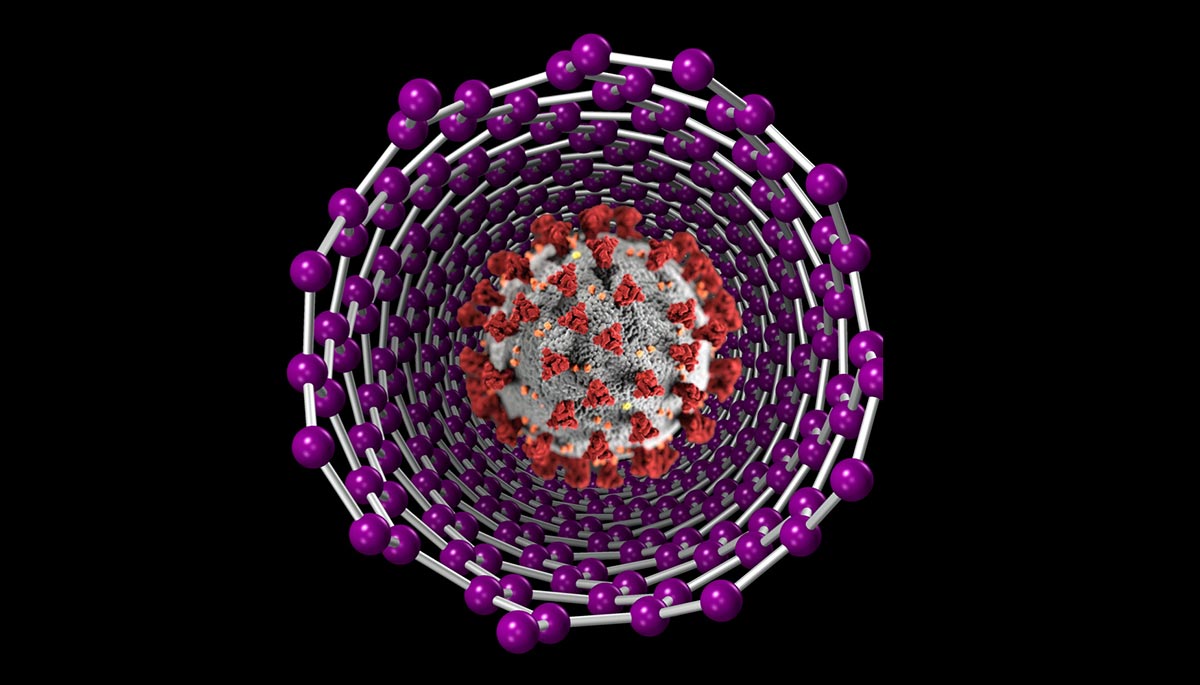
    Carbon Nanotube COVID-19 Detector
    Artistic illustration of a carbon nanotube COVID-19 detector. Credit: Zettl Research Group/Berkeley Lab

    How an atomically thin device could become a biotech breakthrough.

    A technology spun from carbon nanotube sensors discovered 20 years ago by Lawrence Berkeley National Laboratory (Berkeley Lab) scientists could one day help health care providers test patients for COVID-19, the disease caused by the coronavirus SARS-CoV-2.

    When Alex Zettl, Marvin Cohen, and their research teams at Berkeley Lab first demonstrated ultrasensitive oxygen sensors devised from carbon nanotubes – hollow carbon wires with walls no thicker than an atom – they envisioned a broad spectrum of applications, such as gas-leak detectors or air- and water-pollution detectors.

    Subsequent studies out of Zettl’s lab revealed that carbon nanotubes – or CNTs – could also be used to detect proteins or carbohydrates at the level of single cells for biological and medical applications. “CNTs’ exquisite chemical sensitivity had dramatic life-science implications that could benefit society,” Zettl said.

    But since Zettl normally investigates atomically thin materials known as nanomaterials for the Department of Energy’s “Novel sp2-Bonded Materials and Related Nanostructures” program, his lab is set up for launching exciting new experiments in quantum physics, not new applications for entrepreneurial startups.

    So in 2000, Zettl and Cohen, who are both senior faculty scientists in Berkeley Lab’s Materials Sciences Division and physics professors at UC Berkeley, branched out into the world of commercial spinoffs by co-founding the Emeryville-based biotech company Nanomix Inc. They currently sit on the company’s board of directors – Zettl participates as an adviser, and Cohen as a member.

    Today, the company is one of many U.S. companies vying for FDA Emergency Use Authorization (EUA) to deploy new diagnostic tests for COVID-19.

    Last month, the company was awarded approximately $570,000 in funding from the Department of Health and Human Services’ Biomedical Advanced Research and Development Authority (BARDA) to develop disposable cartridges that test for protein traces of the coronavirus – known as antigens – in nasal swab samples, and for antibodies to the coronavirus in blood samples.

    Patient samples loaded onto the cartridges are analyzed by the Nanomix “eLab,” a handheld testing device the company first developed more than five years ago in response to the Ebola virus epidemic.

    The cartridges rely on tiny carbon biosensors modeled after the Zettl and Cohen labs’ groundbreaking carbon nanotube technology to detect coronavirus antigens during the early stages of a current infection. In addition, the cartridges can test for antibodies the immune system builds up as part of our body’s natural defense mechanism against a previous SARS-CoV-2 infection. The company says the eLab system can produce test results in about 15 minutes.

    If granted FDA Emergency Use Authorization, the company hopes to have COVID-19-ready eLab products available for health care providers in June, and to scale up its supply and production capacity to provide hundreds of thousands of test kits, said Nanomix President and CEO David Ludvigson.

    “The fact that my research could help so many people is very rewarding. I’m happy that I was able to contribute in that way,” Zettl said.

    Never miss a breakthrough: Join the SciTechDaily newsletter.
    Follow us on Google and Google News.

    Biotechnology Carbon Nanotubes COVID-19 Lawrence Berkeley National Laboratory Nanotechnology
    Share. Facebook Twitter Pinterest LinkedIn Email Reddit

    Related Articles

    MIT Quantum COVID Sensor May Offer Faster, Cheaper, and More Accurate Detection of SARS-CoV-2

    MIT’s New Carbon Nanotube-Based Sensor Can Detect COVID-19 or Other Emerging Pathogens

    New DNA Sensor Quickly Determines Whether Viruses Are Infectious

    Avalanching Nanoparticles Break Barriers to Imaging Cells in Real Time

    Detecting COVID-19 Antibodies in 10–12 Seconds With a 3D Printed Test Chip

    COVID-19 Coronavirus Breathalyzer Test Developed

    On Mars or Earth, Biohybrid Can Turn CO2 Into Useful New Organic Products

    Generator Produces Electricity by Harnessing the Piezoelectric Properties of Biological Material

    Mapping the Pathways of Electrical Charge From Molecule to Molecule

    Leave A Reply Cancel Reply

    • Facebook
    • Twitter
    • Pinterest
    • YouTube

    Don't Miss a Discovery

    Subscribe for the Latest in Science & Tech!

    Trending News

    Monster Storms on Jupiter Unleash Lightning Beyond Anything on Earth

    Scientists Create “Liquid Gears” That Spin Without Touching

    The Simple Habit That Could Help Prevent Cancer

    Millions Take These IBS Drugs, But a New Study Finds Serious Risks

    Scientists Unlock Hidden Secrets of 2,300-Year-Old Mummies Using Cutting-Edge CT Scanner

    Bread Might Be Making You Gain Weight Even Without Eating More Calories

    Scientists Discover Massive Magma Reservoir Beneath Tuscany

    Europe’s Most Active Volcano Just Got Stranger – Here’s Why Scientists Are Rethinking It

    Follow SciTechDaily
    • Facebook
    • Twitter
    • YouTube
    • Pinterest
    • Newsletter
    • RSS
    SciTech News
    • Biology News
    • Chemistry News
    • Earth News
    • Health News
    • Physics News
    • Science News
    • Space News
    • Technology News
    Recent Posts
    • Scientists Were Wrong About This Strange “Rule-Breaking” Particle
    • Webb Space Telescope Uncovers Unexpected Ice Clouds on a Jupiter-Like World
    • 289-Million-Year-Old Reptile Mummy Reveals Origin of Human Breathing System
    • New Brain Discovery Challenges Long-Held Theory of Teenage Brain Development
    • Sharks Are Overheating as Warming Oceans Push Them to the Edge
    Copyright © 1998 - 2026 SciTechDaily. All Rights Reserved.
    • Science News
    • About
    • Contact
    • Editorial Board
    • Privacy Policy
    • Terms of Use

    Type above and press Enter to search. Press Esc to cancel.