
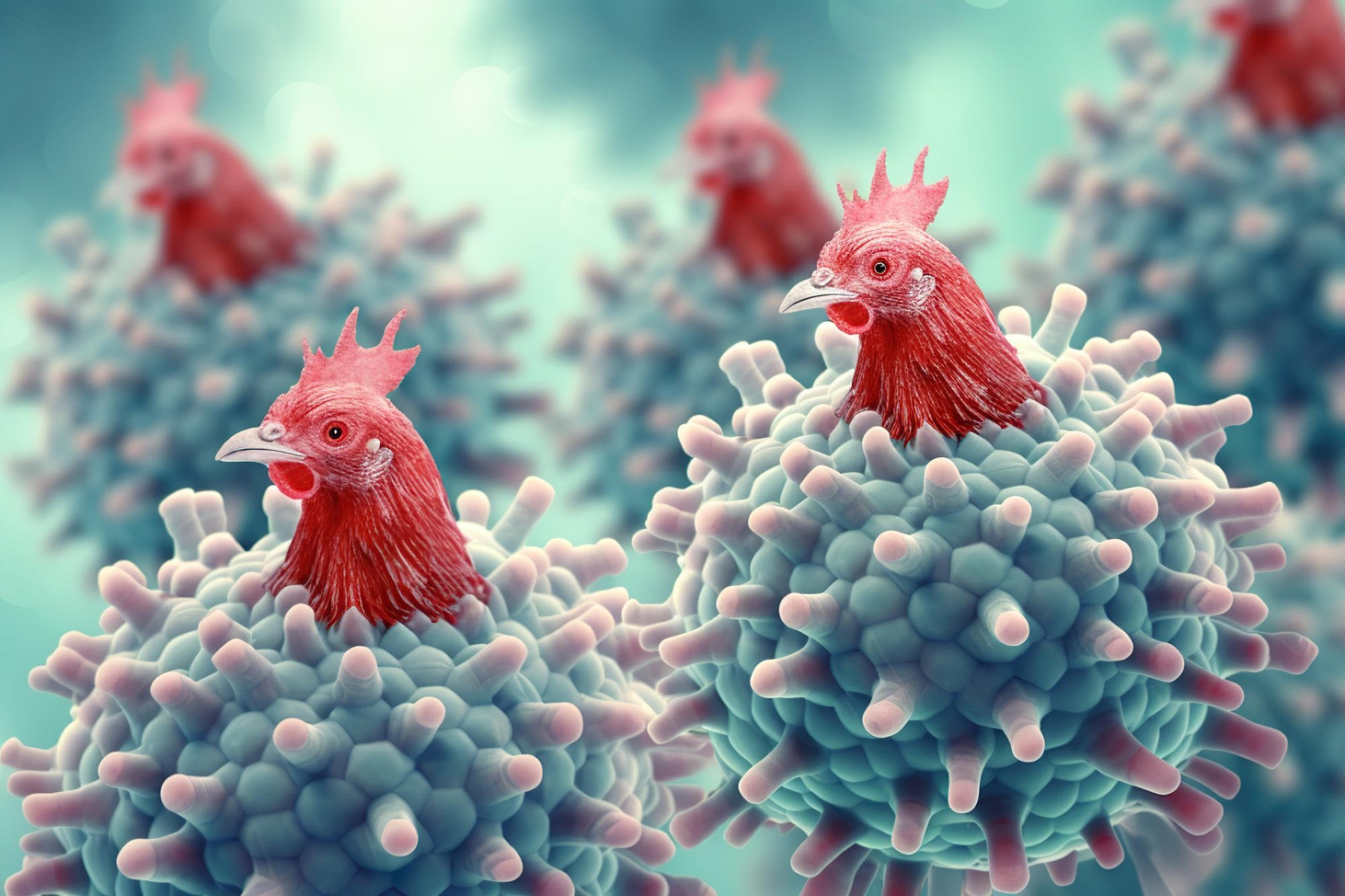
The findings have raised concerns regarding the conservation of wildlife and the health of ecosystems.
A study from the University of California, Davis, and the National Institute of Agricultural Technology (INTA) in Argentina reveals that the highly contagious H5N1 avian influenza virus has evolved to transmit among birds and marine mammals, presenting a direct risk to wildlife conservation efforts.
The study, published in the journal Emerging Infectious Diseases, is the first genomic characterization of H5N1 in marine wildlife on the Atlantic shore of South America.
For the study, scientists collected brain samples from four sea lions, one fur seal, and a tern found dead at the most affected sea lion rookery in Argentina. All tested positive for H5N1.
Genome sequencing revealed that the virus was nearly identical in each of the samples. The samples shared the same mammal adaptation mutations that were previously detected in a few sea lions in Peru and Chile, and in a human case in Chile. Of note, the scientists found all these mutations also in the tern, the first such finding.
“This confirms that while the virus may have adapted to marine mammals, it still has the ability to infect birds,” said first author Agustina Rimondi, a virologist from INTA. “It is a multi-species outbreak.”
We know this because the virus sequence in the tern retained all mammal-adaptation mutations. Such mutations suggest a potential for transmission between marine mammals.
“This virus is still a relatively low risk for humans,” said senior author Marcela Uhart, a wildlife veterinarian with the UC Davis School of Veterinary Medicine’s One Health Institute and director of its Latin America Program within the Karen C. Drayer Wildlife Health Institute. “As long as the virus continues to replicate in mammals, it may make it a higher concern for humans. That’s why it’s so important to conduct surveillance and provide early warning.”
The journey of H5N1
Uhart calls clade 2.3.4.4b — the current variant of H5N1 – “this new monster.” It emerged in 2020, while the human world was reeling from a different pandemic, COVID-19. Avian influenza began killing tens of thousands of sea birds in Europe before moving to South Africa. In 2022, it entered the U.S. and Canada, threatening poultry and wild birds. It migrated to Peru and Chile in late 2022.
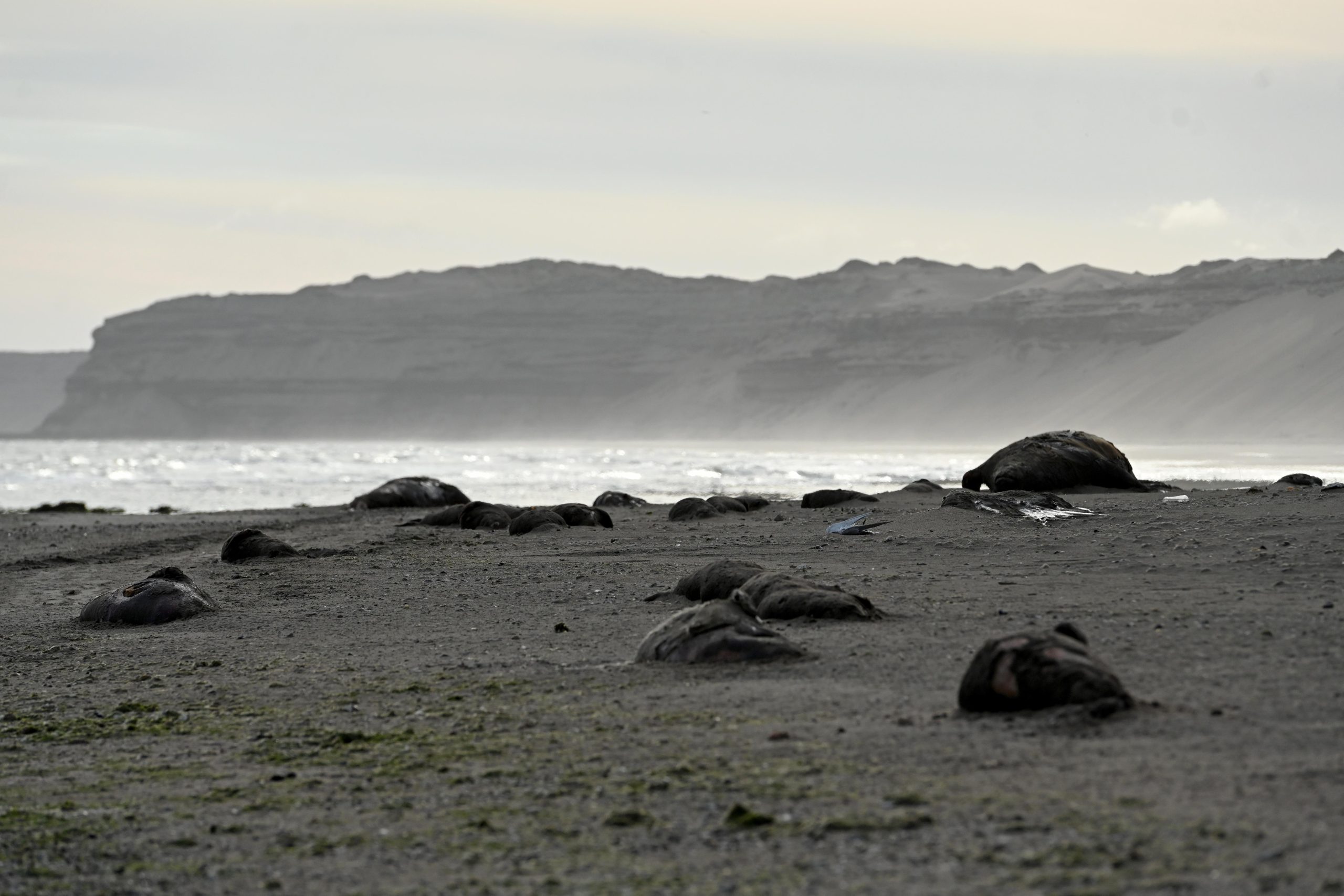
Then, almost exactly a year ago, in February 2023, highly pathogenic avian influenza entered Argentina for the first time. But it was not until August 2023 — when the virus was first found in sea lions at the tip of South America on the Atlantic coastline of Tierra del Fuego — that the virus unleashed its fatal potential in the region. From there, it moved swiftly northward, with deadly results, first for marine mammals and later for seabirds.
A recent paper Uhart co-authored showed a large outbreak killed 70% of elephant seal pups born in the 2023 breeding season. Mortality rates reached at least 96% by early November 2023 in the surveyed areas of Península Valdés in Argentina.
“When it first came to Argentina, we didn’t know if it would affect elephant seals,” Uhart said. “We never imagined the magnitude of what was to come.”
Since 2022, H5N1 in South America has killed at least 600,000 wild birds and 50,000 mammals, including elephant seals and sea lions in Argentina, Chile, and Peru, and thousands of albatrosses in the Malvinas/Falkland Islands.
Moving south
The virus is now heading southward from South America, and scientists are deeply concerned about its potential impact on penguins and other wildlife in Antarctica.
Uhart and Ralph Vanstreels, her colleagues at UC Davis’ Latin America Program in the School of Veterinary Medicine, are conducting wildlife surveillance for H5N1 in Antarctica this month.
“We need to keep an eye on the ability of this virus to reach species that have never been exposed to an H5N1 infection before,” Rimondi said. “The consequences in those species can be very severe.”
The concept of One Health honors the interconnectivity among humans, domestic animals, wildlife, and the environment. Interspecies disease outbreaks are unsettling examples of such connections and require global collaboration among public, wildlife, agricultural, health, and other sectors.
“We are trying to be at the forefront of documenting, recording, and providing early warning,” Uhart said. “We’ve been in this area for 30 years. We know these species. We work with scientists who have 30 years of data on these populations, so we can know what will be important for the future. We have to give voice to these poor creatures. Nobody’s taking note of how big this is.”
Reference: “Highly Pathogenic Avian Influenza A(H5N1) Viruses from Multispecies Outbreak, Argentina, August 2023” by Agustina Rimondi, Ralph E.T. Vanstreels, Valeria Olivera, Agustina Donini, Martina Miqueo Lauriente and Marcela M. Uhart, April 2024, Emerging Infectious Diseases.
DOI: 10.3201/eid3004.231725
Never miss a breakthrough: Join the SciTechDaily newsletter.
Follow us on Google and Google News.
1 Comment
Does this mean that we will also have to start wantonly killing fish and sea mammals, just as we kill millions of chickens each year to “protect” them from the bird flu?