

Genetically engineered plants could soon produce human milk sugars, making infant formula healthier and more affordable.
Approximately 75% of babies drink infant formula during their first six months, either exclusively or as a supplement to breastfeeding. While these formulas provide essential nutrients, they lack the roughly 200 prebiotic sugar molecules found in human breast milk, which are key to preventing diseases and fostering healthy gut bacteria. Since most of these sugars are difficult to synthesize, current formulas fail to replicate breast milk’s complete nutritional profile.
Researchers at the University of California, Berkeley and the University of California, Davis have made significant progress in bridging this gap by genetically engineering plants to produce these crucial sugars, known as human milk oligosaccharides (HMOs). Their study, recently published in the journal Nature Food, could help create a healthier, more affordable infant formula.
The Science of Engineering Sugar Metabolism in Plants
“Plants are these phenomenal organisms that take sunlight and carbon dioxide from our atmosphere and use them to make sugars. And they don’t just make one sugar — they make a whole diversity of simple and complex sugars,” said study senior author Patrick Shih, an assistant professor of plant and microbial biology and an investigator at UC Berkeley’s Innovative Genomics Institute. “We thought, since plants already have this underlying sugar metabolism, why don’t we try rerouting it to make human milk oligosaccharides?”
All complex sugars — including human milk oligosaccharides — are made from building blocks of simple sugars, called monosaccharides, which can be linked together to form a vast array of chains and branched chains. What makes human milk oligosaccharides unique are the specific set of linkages, or rules, for connecting simple sugars together that are found in these molecules.
Breakthrough in Human Milk Oligosaccharides Production
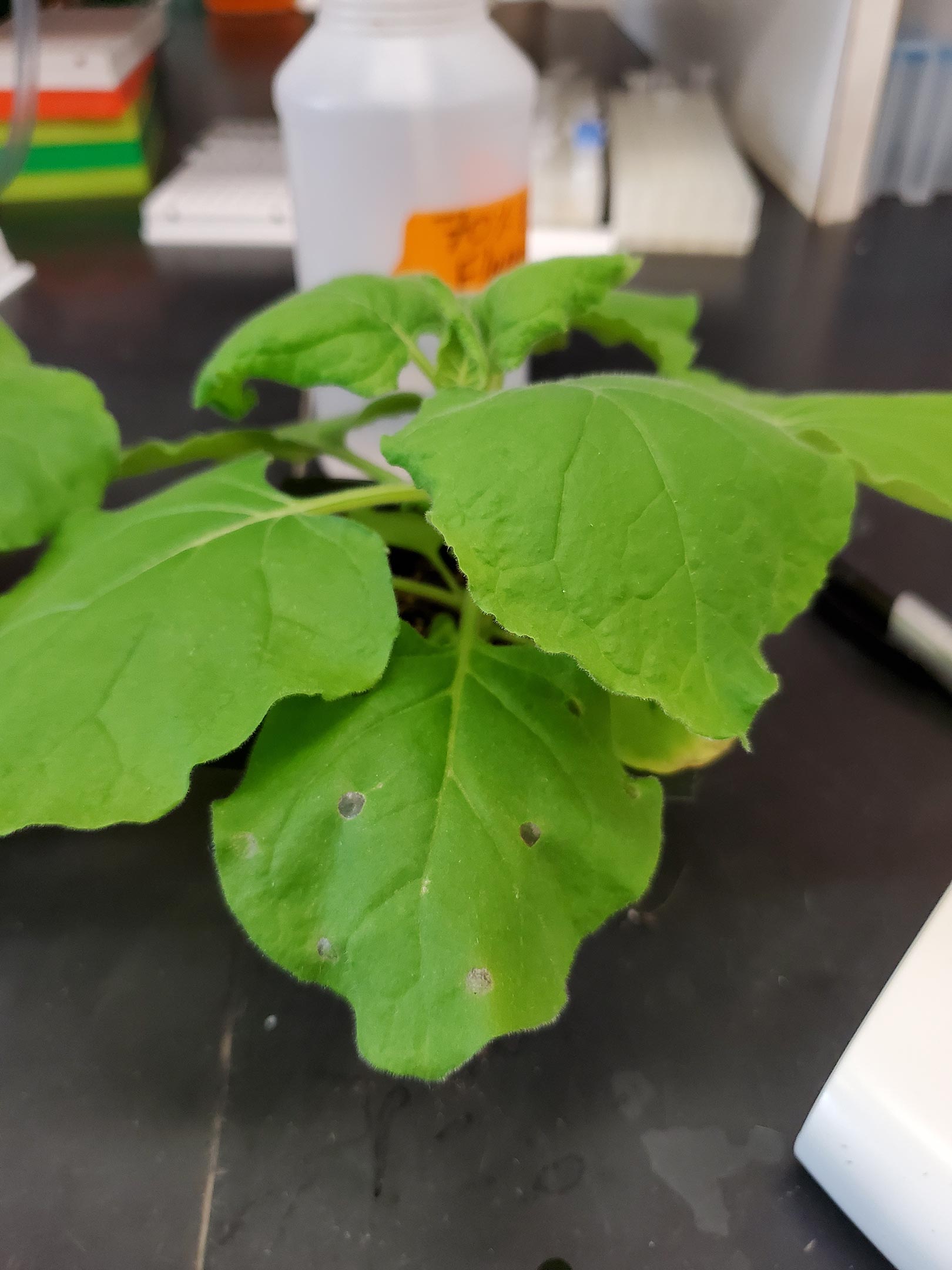
To convince plants to make human milk oligosaccharides, study first author Collin Barnum engineered the genes responsible for the enzymes that make these specific linkages. In collaboration with Daniela Barile, David Mills, and Carlito Lebrilla at UC Davis, he introduced the genes into the Nicotiana benthamiana plant, a close relative of tobacco.
The genetically modified plants produced 11 known human milk oligosaccharides, along with a variety of other complex sugars with similar linkage patterns.
“We made all three major groups of human milk oligosaccharides,” Shih said. “To my knowledge, no one has ever demonstrated that you could make all three of these groups simultaneously in a single organism.”
Barnum then worked to create a stable line of N. benthamiana plants that were optimized to produce a single human milk oligosaccharide called LNFP1.
“LNFP1 is a five-monosaccharide-long human milk oligosaccharide that is supposed to be really beneficial, but so far cannot be made at scale using traditional methods of microbial fermentation,” said Barnum, who completed the work as a graduate student at UC Davis. “We thought that if we could start making these larger, more complex human milk oligosaccharides, we could solve a problem that that industry currently can’t solve.”
Towards Commercializing Plant-based Human Milk Oligosaccharides
Currently, a small handful of human milk oligosaccharides can be manufactured using engineered E. coli bacteria. However, isolating the beneficial molecules from other toxic byproducts is a costly process, and only a limited number of baby formulas include these sugars in their mixtures.
As part of the study, Shih and Barnum worked with collaborator Minliang Yang at North Carolina State University to estimate the cost of producing human milk oligosaccharides from plants at an industrial scale and found that it would likely be cheaper than using microbial platforms.
“Imagine being able to make all the human milk oligosaccharides in a single plant. Then you could just grind up that plant, extract all the oligosaccharides simultaneously and add that directly into infant formula,” Shih said. “There would be a lot of challenges in implementation and commercialization, but this is the big goal that we’re trying to move toward.”
Reference: “Engineered plants provide a photosynthetic platform for the production of diverse human milk oligosaccharides” by Collin R. Barnum, Bruna Paviani, Garret Couture, Chad Masarweh, Ye Chen, Yu-Ping Huang, Kasey Markel, David A. Mills, Carlito B. Lebrilla, Daniela Barile, Minliang Yang and Patrick M. Shih, 13 June 2024, Nature Food.
DOI: 10.1038/s43016-024-00996-x
Funding: This work was supported in part by the National Institutes of Health, the U.S. Department of Energy, and the National Center for Complementary and Integrative Health.
Never miss a breakthrough: Join the SciTechDaily newsletter.
Follow us on Google and Google News.
2 Comments
Soylent Green is coming…
If it is better, it won’t be cheaper. Cheaper to make, maybe. Whoever the bean counters are that end up running the company, they won’t let it be sold cheap.
Should have engineered it into a plant that makes a lot of liquid, like aloe vera. Easy to take care of, too. Sugar cane is another possibility. It is already making sugars. No toxins to remove. And it grows fast.
Who is going to trust a tobacco plant?