
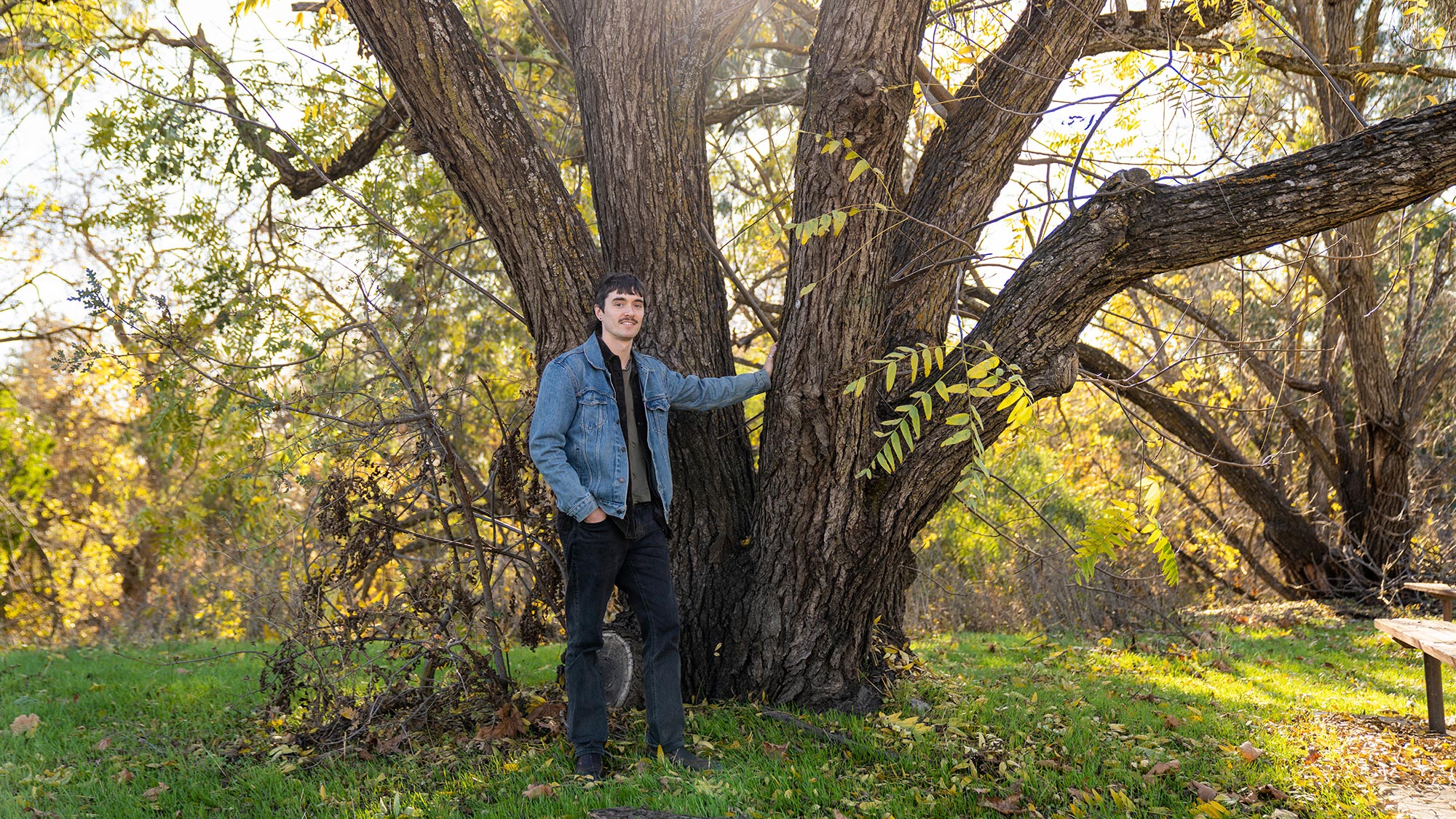
Biologists at UC Davis have uncovered a fascinating genetic mechanism in walnut trees, allowing them to alternate between male and female flowers each season—a trait stable for 40 million years.
This discovery not only sheds light on plant reproduction but also parallels mechanisms in human sex determination.
Unraveling the Sexuality of Walnut Trees
Biologists at the University of California, Davis, have uncovered the genetic basis behind the alternating sexes of walnut trees. Their research, published on January 3 in Science, identifies a mechanism that has remained stable in walnuts and their ancestors for an astonishing 40 million years. Intriguingly, this mechanism shares some similarities with sex-determination systems found in humans and other animals.
Flowering plants employ various strategies to avoid self-pollination. Some have physical structures that make self-pollination difficult, while others produce distinct “male” and “female” plants. Certain species, like walnut, hickory, and pecan trees, take a more dynamic approach by alternating male and female flowers within the same season. Remarkably, each walnut tree consistently follows one of two patterns: it either begins the season with male flowers (“male-first”) or with female flowers (“female-first”). This phenomenon was first noted by Charles Darwin in 1877. In the 1980s, Scott Gleeson, a graduate student at UC Davis, discovered that this flowering pattern is controlled by a single genetic locus.
Discovery of a Long-Standing Genetic Mechanism
“Walnuts and pecans have a temporal dimorphism where they alternate male and female flowering through the season,” said Jeff Groh, graduate student in population biology at UC Davis and first author on the paper. “It’s been known since the 1800s but hasn’t been understood at the molecular level before.”
This occurs in both domesticated walnuts and wild relatives, like Northern California black walnut. In wild species, the ratio of male-first to female-first trees is almost 1:1.
Groh and his doctoral advisor, Professor Graham Coop of the Department of Evolution and Ecology, made use of data from UC Davis’ walnut breeding program and also tracked flowering in native Northern California black walnut trees growing around the UC Davis campus. Assigning them to male-first or female-first groups, the researchers sequenced their genomes and identified sequences associated with the trait.
Evolutionary Insights: Mechanism Stability
In walnuts, they found two variants of a gene linked to female-first or male-first flowering. This DNA polymorphism appears in at least nine species of walnut and has been stable for almost 40 million years.
“It’s pretty atypical to maintain variation over such a long time,” Groh said. In this case, the two flowering types balance each other. If one flowering type becomes more common in the population than the other, the less common type gains a mating advantage, so it becomes more common. This pushes the system to a 50:50 equilibrium and maintains genetic variation.
Pecans, Groh found, also have a balanced genetic polymorphism determining flowering order, but in a different part of the genome to walnut. The pecan polymorphism appears to be older than in walnut, at over 50 million years.
How did walnuts and pecans, which are related, arrive at the same flowering mechanism through quite different genes?
It could be that the ancestors of walnuts and pecans converged on similar solutions as they evolved. But it’s also possible that this time-separated flowering system appeared even longer ago in this family, about 70 million years ago, but over time the exact genetic mechanisms to achieve it have changed.
Parallels to Animal Sex Determination
Intriguingly, this is similar to the way animal sex chromosomes work, with two structural variants (X and Y chromosomes in humans and other mammals) kept roughly in balance.
“There’s a clear parallel to a common mode of sex determination,” Groh said.
Reference: “Ancient structural variants control sex-specific flowering time morphs in walnuts and hickories” by Jeffrey S. Groh, Diane C. Vik, Matthew Davis, J. Grey Monroe, Kristian A. Stevens, Patrick J. Brown, Charles H. Langley and Graham Coop, 3 January 2025, Science.
DOI: 10.1126/science.ado5578
Additional authors on the paper are: Diane Vik, Matthew Davis, J. Grey Monroe, Kristian Stevens, Patrick Brown and Charles Langley, all at UC Davis. Funding was provided by grants from the U.S. Department of Agriculture, National Institutes of Health, National Science Foundation, the Davis Botanical Society and the American Society of Plant Taxonomists. This work made use of trees from the UC Davis Putah Creek Riparian Reserve; Gene Cripe of Turlock, Calif.; USDA Wolfskill Experimental Orchard; Sonoma Botanical Garden and the UC Botanical Garden at Berkeley.
Never miss a breakthrough: Join the SciTechDaily newsletter.
Follow us on Google and Google News.