
Non-native species can remain dormant for decades or even centuries before they begin to spread.
According to a new study led by the University of California, Davis, invasive plants can stay dormant for decades or even centuries after they have been introduced into an environment before rapidly expanding and wreaking ecological havoc.
The research, published in Nature Ecology and Evolution, looked at more than 5,700 species of invasive plants in nine regions around the globe. It represents the most comprehensive analysis of plant invasions conducted to date, said senior author Mohsen Mesgaran, an assistant professor in the Department of Plant Sciences at UC Davis.
“The longer it is dormant, we’re more likely to ignore it,” Mesgaran said. “This latency allows them to be overlooked, contributing to their eventual emergence as a serious invasive threat. They’re like invasive time bombs.”
Long periods of dormancy
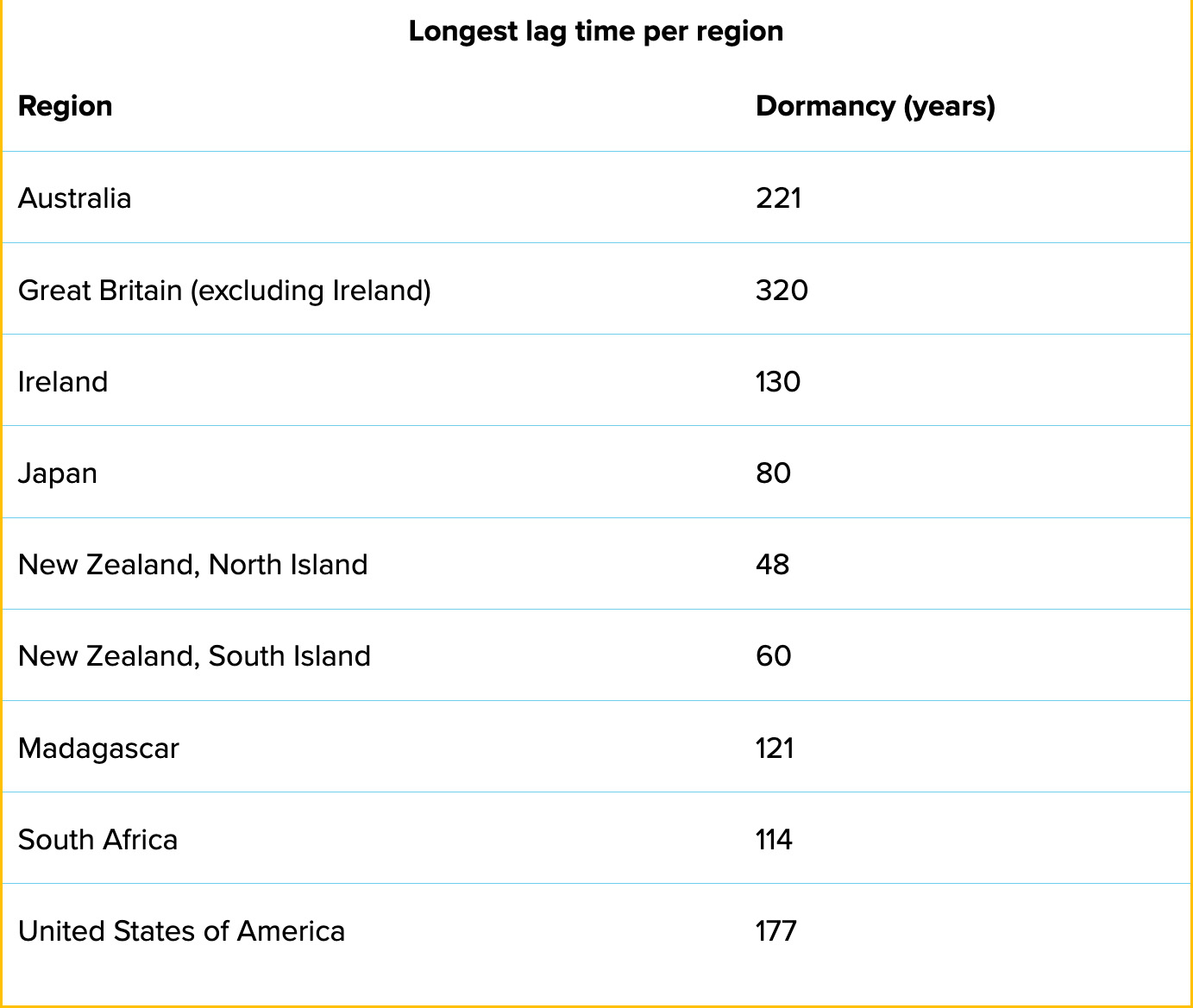
The international team found that nearly one-third of the invasive plants they analyzed exhibited lag periods between introduction and rapid expansion, with the average time being 40 years. The longest dormant period – sycamore maples in the United Kingdom — was 320 years.
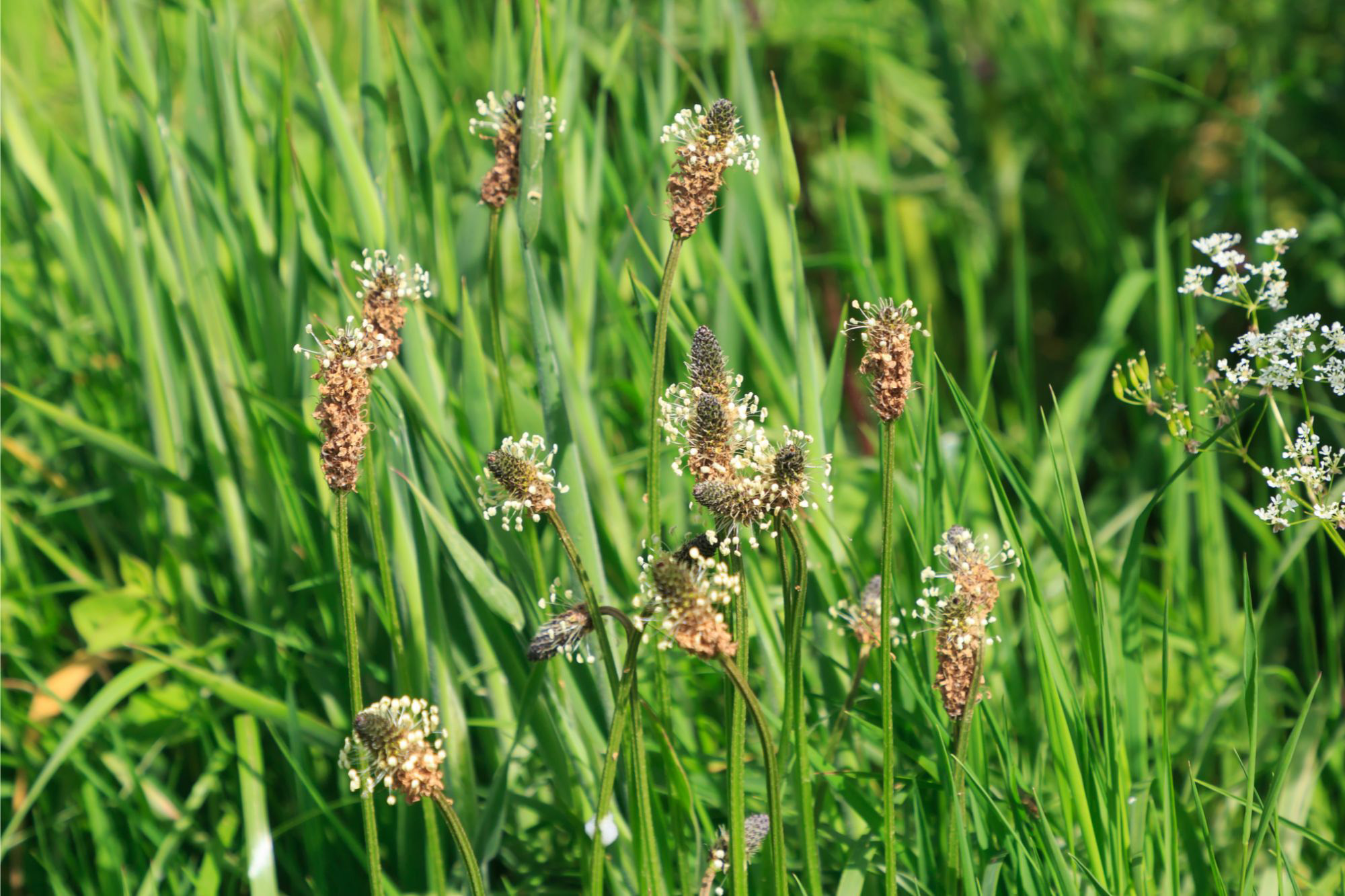
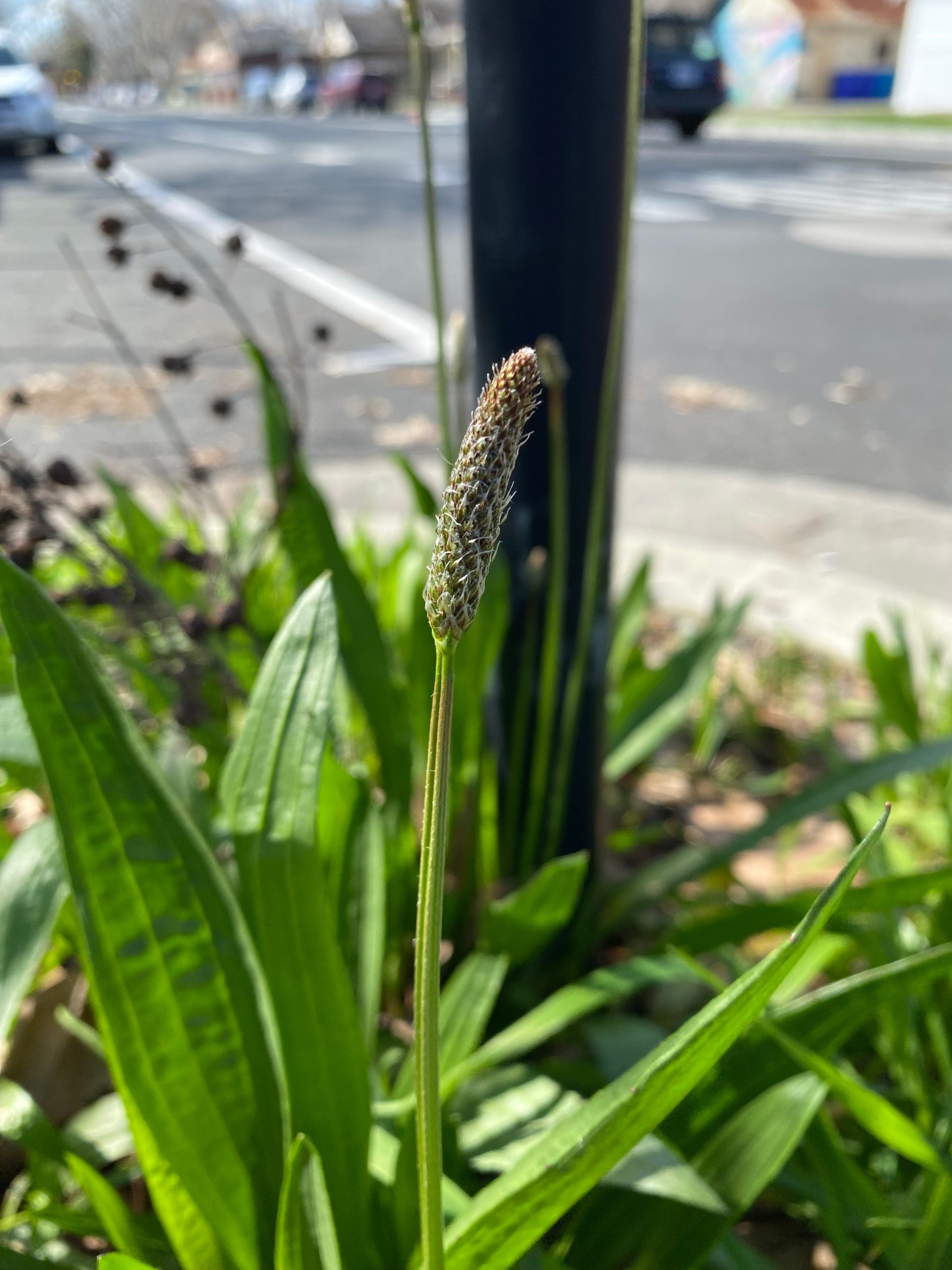
Consider the common lawn weed Plantago lanceolata, otherwise known as ribwort or buckhorn plantain, which has the longest dormancy in the United States, according to the report. Noxious to livestock and native plants, the plant was introduced in the United States in 1822 and is found widely here. Velvetleaf, which was introduced as a possible fiber crop, can be dormant for 50 years before it expands, threatening corn, soybean, and other crops as it sucks up water and nutrients.
Nonnative species are generally introduced in two ways: by accident or through intentional importation for medicinal, ornamental, agricultural, and other purposes. In California, about 65% of invasive plants were knowingly introduced.
“This lag phase may have played a role,” Mesgaran said. “They didn’t know. With an increase in trade and transportation and tourism, we’re going to have more problems.”
Global herbaria
The researchers generated a list of invasive plants in Australia, Great Britain, Ireland, Japan, New Zealand, Madagascar, South Africa, Japan, and the United States and used herbaria records, which are digitized and accessible online, to obtain global data on the location and time of species observations.
They then looked at trends to determine whether species exhibited dormant phases and, if so, for how long. A time series analysis was applied to detect lag periods, followed by a second analysis that compared climate during dormant and expansion phases.
In some of the species that invaded different regions, dormancy periods varied by location. In 90% of cases, climate conditions were different during times when the species spread, suggesting the plants waited for the right conditions or adapted to survive to an environment that was once unsuitable, Mesgaran said.
Planning for the future
Knowing that problems could loom in the future is key to managing pests and preventing widespread invasion and economic losses down the road. That means growers, policymakers and others should consider dormancy periods.
“The problem is most of the models that we have for risk assessment to see if the species are going to be invasive and a pest problem in the future don’t account for this lag phase or this dormant phase,” Mesgaran said. “It’s not that they’re not going to be a problem, it’s just the calm before the storm.”
The next steps in the research will be to examine the native climate of invasive species relative to conditions in these newer locations.
Reference: “Invading plants remain undetected in a lag phase while they explore suitable climates” by Philipp Robeck, Franz Essl, Mark van Kleunen, Petr Pyšek, Jan Pergl, Patrick Weigelt and Mohsen B. Mesgaran, 8 February 2024, Nature Ecology & Evolution.
DOI: 10.1038/s41559-023-02313-4
Scientists from Charles University and the Institute of Botany in Czech Republic, Stellenbosch University in South Africa, Taizhou University in China, University of Gottingen and University of Konstanz in Germany, University of Melbourne in Australia, and the University of Vienna in Austria contributed to the research.
Grants from the German Research Foundation, Czech Science Foundation, Czech Academy of Sciences, Belmont Forum, and European Biodiversity Partnership supported the research.
Never miss a breakthrough: Join the SciTechDaily newsletter.
Follow us on Google and Google News.