
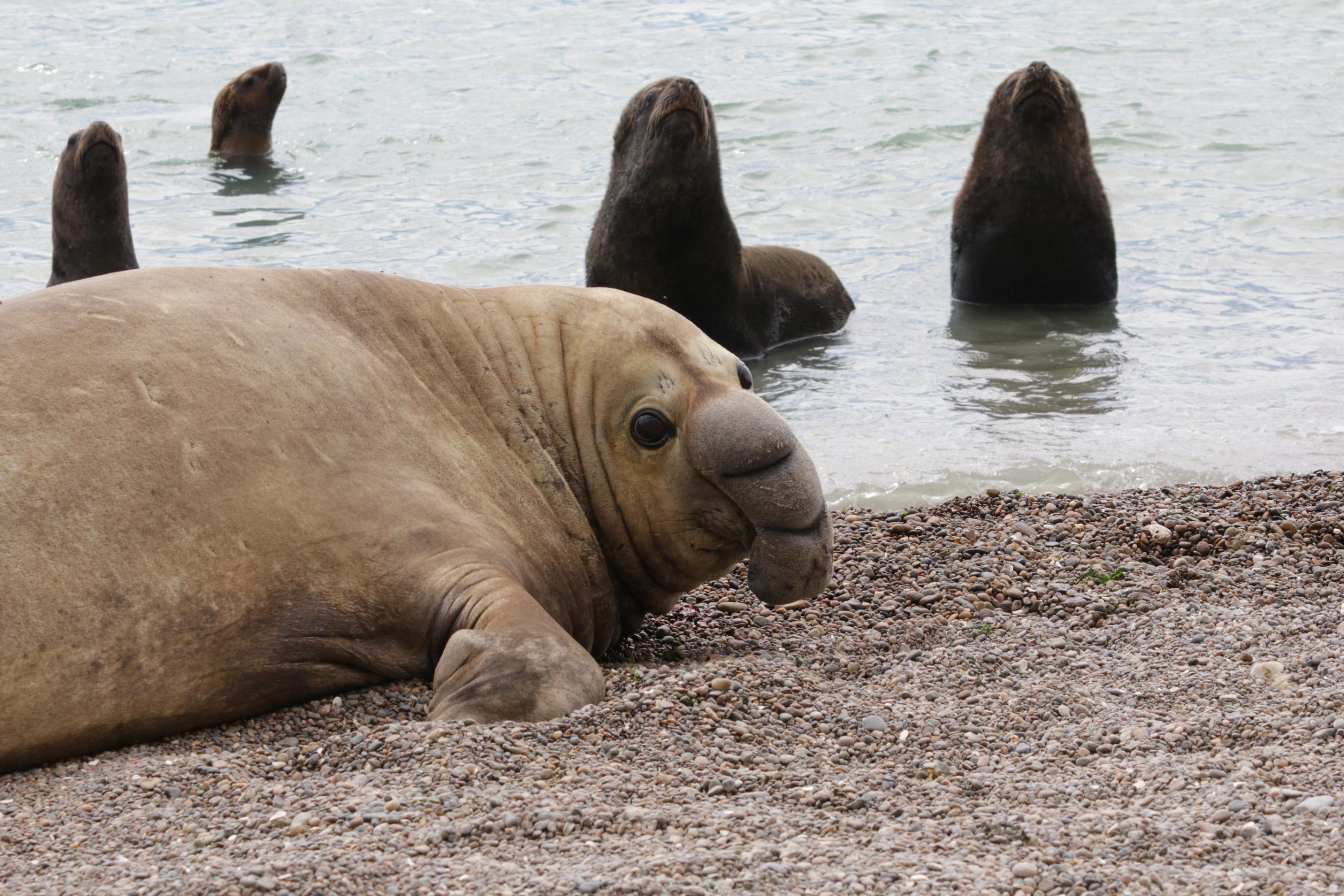
Elephant seal numbers in Argentina remain low after a deadly H5N1 outbreak, highlighting the virus’s dangerous adaptability.
The sound of barking elephant seals can be heard once again along the breeding grounds of Península Valdés, Argentina—but it’s quieter. Last year, a massive outbreak of H5N1 avian influenza killed over 17,000 elephant seals, including about 97% of their pups, and scientists estimate that only about a third of the usual number of elephant seals have returned.
“It’s beautiful to walk the beaches now and hear elephant seals again,” said Marcela Uhart, director of the Latin America Program at the UC Davis Karen C. Drayer Wildlife Health Center within the UC Davis School of Veterinary Medicine. “At the same time, we’re walking among piles of carcasses and bones, and seeing very few elephant seal harems, so it’s still disturbing.”

A new study published in Nature Communications and co-led by UC Davis and the National Institute of Agricultural Technology (INTA) in Argentina provides evidence of mammal-to-mammal transmission during the 2023 outbreak. It found that H5N1 spread efficiently among marine mammals. The outbreak in elephant seals was a stepping stone amid the first transnational spread of the virus in these species, extending across five countries in southern South America.
The study’s genomic analysis further found that, upon entering South America, the virus evolved into separate avian and marine mammal clades, which is unprecedented.

Valdés in October 2024. Following the massive outbreak of HPAI in 2023, only about a third of
the reproductive females returned to the colony in 2024. Harems were significantly smaller than
expected. Credit: Marcela Uhart, UC Davis
“We’re showing the evolution of H5N1 viruses that belong to genotype B3.2 over time since their introduction in South America in late 2022,” said virologist and co-leading author Agustina Rimondi of INTA and currently also with Robert Koch Institute. “This virus is capable of adapting to marine mammal species, as we can see from the mutations that are consistently found in the viruses belonging to this clade. Very importantly, our study also shows that H5 marine mammal viruses are able to jump back to birds, highlighting the need for increased surveillance and research cooperation in the region.”
This video compilation shows elephant seals infected with HPAI. The videos were shot in 2023 primarily for scientific documentation and outreach, and to help other wildlife care specialists recognize the clinical signs of HPAI. Credit: Ralph Vanstreels, UC Davis
Elephant Seal Census
The Wildlife Conservation Society in Argentina (WCS Argentina) estimated the population of returning elephant seals as part of a decades-long monitoring project.
“We were totally appalled by the dramatic impact of the epidemic of avian influenza on this population,” said co-author Valeria Falabella, WCS Argentina director of coastal and marine conservation. “It is likely that more than half of the reproductive population died due to the virus. It will take decades before the numbers are back to the 2022 population size.”
Falabella said the epidemic reversed decades of conservation efforts for the species, adding that most of the adult males and many of the most experienced and fertile females have not returned.

Tracking and monitoring the virus among elephant seals is a collaborative effort. As WCS Argentina conducts its census, Uhart and colleagues from UC Davis document and sample every animal that dies for signs of H5N1, and Rimondi and colleagues test and sequence them at the Institute of Virology, INTA.
So far, no elephant seals have tested positive this breeding season. Yet lingering questions remain from last year’s outbreak. For instance, scientists do not know if the virus was transmitted by aerosol, saliva, feces, or other means, or if surviving animals have built resistance via protective antibodies. Such questions remain highly relevant.
Over the past year, the virus has been widespread in wild birds and has caused outbreaks in poultry and U.S. dairy cows, with recent cases reported among dairy and poultry workers. The U.S. Department of Agriculture reported the first H5N1 case in swine in the United States on October 30. There is no known human-to-human spread of H5N1.

A Virus’ Journey
The current variant of H5N1 clade 2.3.4.4b began to cause problems at a global scale in 2020. While humans confronted the COVID-19 pandemic, H5N1 began killing tens of thousands of seabirds in Europe before moving to South Africa. In 2021, it entered the United States and Canada, threatening poultry and wild birds, and spread to South America in late 2022.
By February 2023, highly pathogenic avian influenza was detected in Argentina for the first time, affecting poultry primarily in inland central Argentina for five months. By August 2023, after two months of no outbreaks in poultry, the virus appeared in sea lions at the tip of South America off the Atlantic coastline of Tierra del Fuego island. From there, it moved swiftly northward, with deadly results, first for marine mammals and later for seabirds.

it matures for its life at sea (photo October 2024). A record low number of pups survived in
2023 due to HPAI. The 2024 season looks more promising even if overall numbers of seals
returning are significantly lower than expected. Credit: Marcela Uhart, UC Davis
In October 2023, following outbreaks in sea lions, the study authors surveyed the breeding colony of elephant seals at Punta Delgada along the coast of Península Valdés, recording unprecedented mass mortality. Test results confirmed that HPAI H5N1 was present in the seals, as well as in several terns that died at the same time.
The authors said continued monitoring and investigation is critically important to better understand the virus’ evolution. Its increased flexibility to adapt to new hosts could have global consequences for human health, wildlife conservation, and ecosystems.
Reference: “Epidemiological data of an influenza A/H5N1 outbreak in elephant seals in Argentina indicates mammal-to-mammal transmission” by Marcela M. Uhart, Ralph E. T. Vanstreels, Martha I. Nelson, Valeria Olivera, Julieta Campagna, Victoria Zavattieri, Philippe Lemey, Claudio Campagna, Valeria Falabella and Agustina Rimondi, 11 November 2024, Nature Communications.
DOI: 10.1038/s41467-024-53766-5
The study was funded by the WCS Argentina, UC Davis, and the National Institute of Agricultural Technology.
Never miss a breakthrough: Join the SciTechDaily newsletter.
Follow us on Google and Google News.