
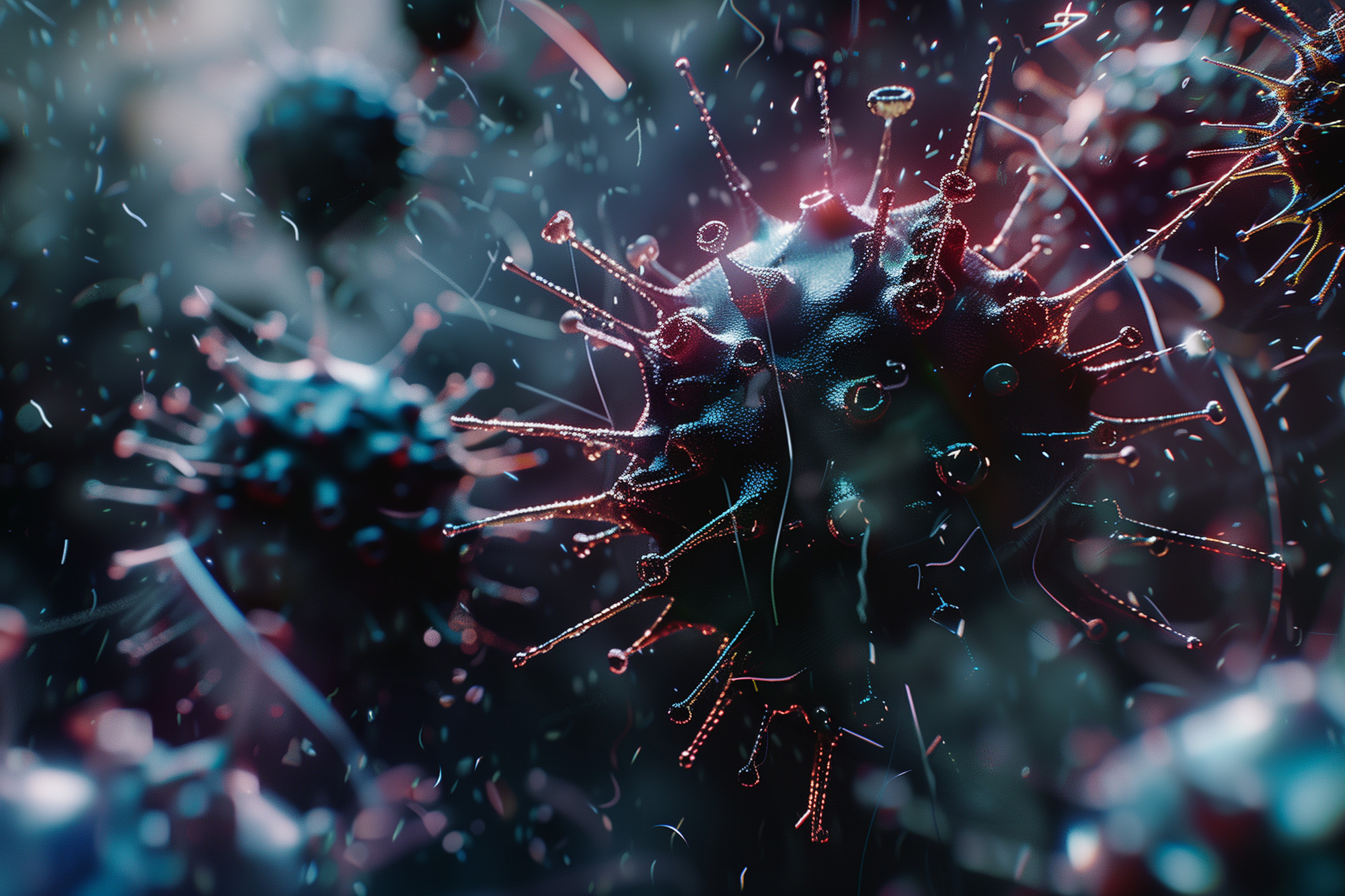
Scientists have uncovered how hepatitis C infects cells, which could lead to a vaccine. This discovery offers hope for preventing a virus that affects millions worldwide.
Approximately 58 million people worldwide are affected by chronic inflammation due to the hepatitis C virus, with 300,000 deaths occurring annually from the disease.
To date, treatments have been unable to lower the global incidence of hepatitis C, leading researchers to pursue vaccine development. However, progress has been hindered by insufficient understanding of the protein complex that allows the virus to enter cells.
A new study by a cross-disciplinary research team at the University of Copenhagen is about to change that.
“We are the first ever to identify the protein complex at the surface of the hepatitis C virus that enables it to bind to our cells,” says Associate Professor Jannick Prentø.
“This knowledge of the structure of the protein complex will enable us to design vaccine candidates that can prevent the virus from infecting the cells,” says Postdoc Elias Augestad.
The protein complex helps the virus bind to the cells. In the coronavirus, it is a so-called spike protein with the well-known spikes. In the hepatitis C virus, the structure is different, but the function of the protein complex is the same.
Paves the way for vaccine development
The study can be considered a blueprint for HCV vaccine development. Scientists hope to be able to use the new knowledge to develop a vaccine which will make the immune system produce antibodies that bind effectively to the surface of the hepatitis C virus and thus render it harmless.
“Expressing and cleaning up the protein complex is extremely difficult, which is why it has not been done before. The structure of these proteins on the surface of the hepatitis C virus makes them extremely vulnerable. Researchers did not know what they were dealing with, and therefore, whenever someone tried to reproduce these protein structures in the lab they would fall apart before they could get a chance to study them,” says Associate Professor Jannick Prentø.
“But we managed to describe their structure, and this has enabled us to reproduce these protein complexes outside the cell and study them closely,” says Associate Professor Pontus Gourdon.
Important UCPH collaboration
The research results which have been published in the journal Nature are a result of a collaboration between two departments at the Faculty of Health and Medical Sciences at the University of Copenhagen.
Jannick Prentø from the Department of Immunology and Microbiology and Hvidovre Hospital launched the project together with Postdoc Elias Augestad. Initially, the two researchers mainly worked on the challenging project alone, but then Jannick Prentø started looking for someone at the University with the necessary expertise in structure identification of so-called transmembrane proteins – a highly specialised field, which was key to determining how the hepatitis C virus can be prevented from spreading through the body.
This led him to Pontus Gourdon from the Department of Biomedical Sciences, Head of Molecular Cardiology and Membrane Proteins, and his colleague Kaituo Wang.
Reference: “The hepatitis C virus envelope protein complex is a dimer of heterodimers” by Elias Honerød Augestad, Christina Holmboe Olesen, Christina Grønberg, Andreas Soerensen, Rodrigo Velázquez-Moctezuma, Margherita Fanalista, Jens Bukh, Kaituo Wang, Pontus Gourdon and Jannick Prentoe, 4 September 2024, Nature.
DOI: 10.1038/s41586-024-07783-5
Never miss a breakthrough: Join the SciTechDaily newsletter.
Follow us on Google and Google News.
1 Comment
So, they’re close to making themselves another nice bioweapon.