
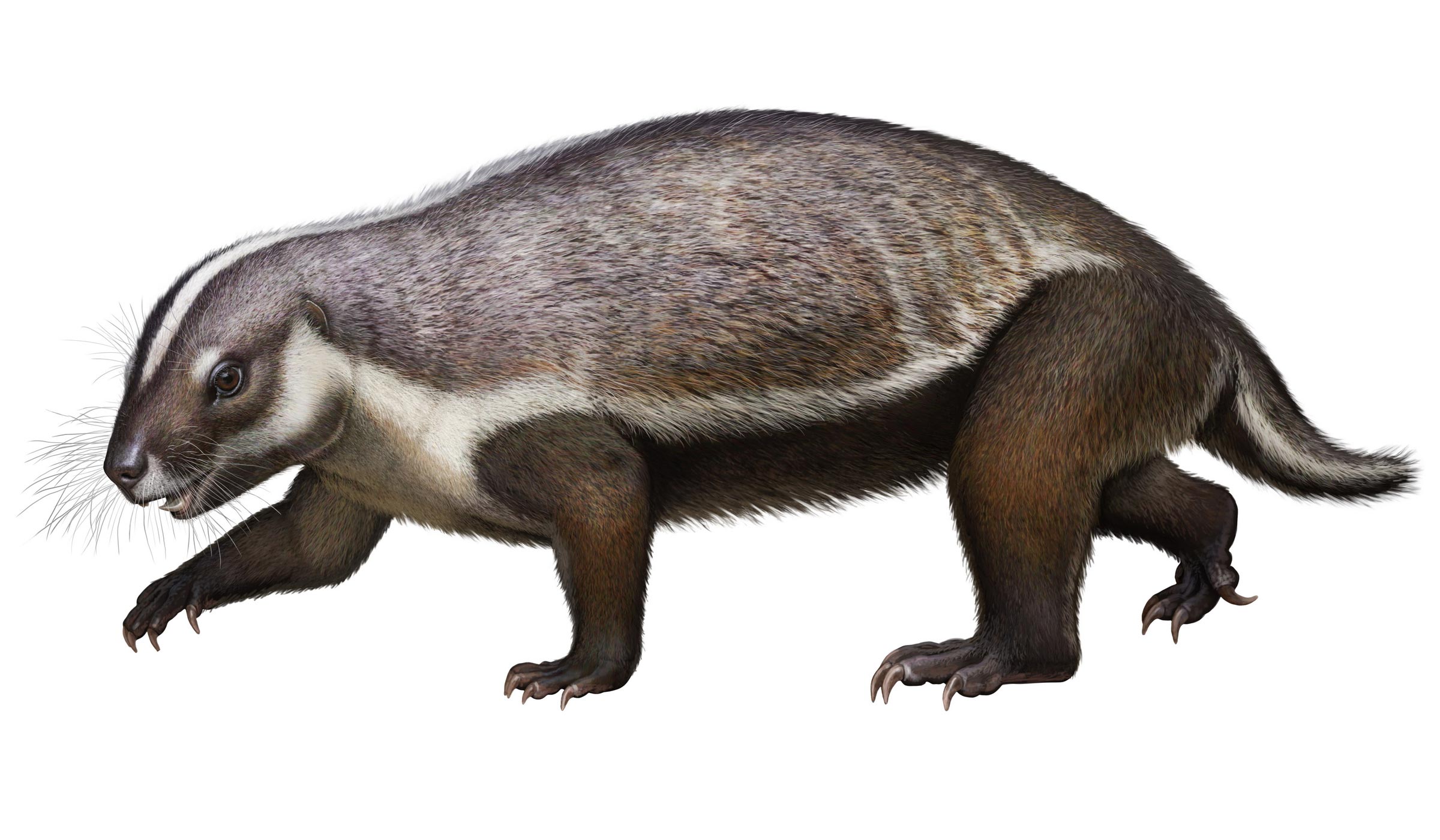
Adalatherium identified as part of enigmatic Southern Hemisphere mammalian group that lived at the time of dinosaurs.
Several years ago, Guillermo Rougier, Ph.D., professor in the Department of Anatomical Sciences and Neurobiology at the University of Louisville, was approached by David Krause, Ph.D., curator at the Denver Museum of Nature & Science, to help identify a complete, 3-D fossil he had discovered on Madagascar.
“When Dr. Krause showed it to me in a scientific meeting and asked me for my opinion, I said I had never seen anything like this,” Rougier recalled. “This mammal has teeth for which we have no parallel.”
Krause and a team of paleontologists discovered the fossil during an expedition in Madagascar and spent more than a decade working to determine where it falls in the long history of mammalian evolution and what it tells us about geography and changes in global fauna over time.
Rougier, a paleontologist who specializes in the study of the skull and teeth of ancient mammals, was intrigued and joined the international team of researchers to thoroughly analyze the fossil. Their analysis was published on April 29, 2020, in the journal Nature.
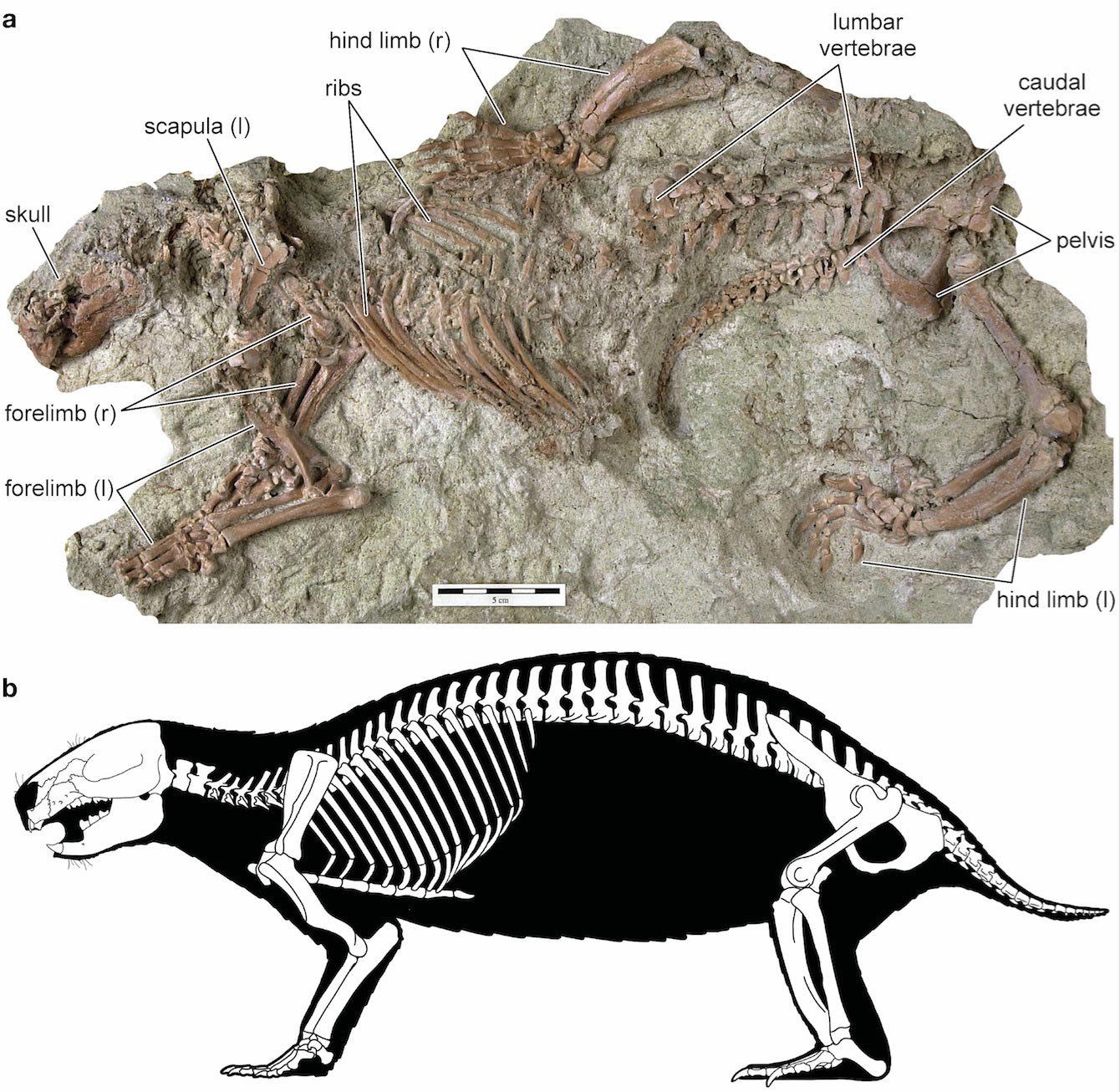
The fossil is remarkably complete, an extremely rare find for ancient mammals that lived alongside the dinosaurs. Rougier described the creature as very roughly resembling a beaver or a small capybara.
“First, it is surprising how complete it is,” Rougier said. “Second, this fossil is preserved in three dimensions. When you have an animal that dies and is preserved in the rocks, the weight of the rocks on top of it flattens it out. Often it looks like a steam roller ran over it. So you might have a complete skeleton but it will be the thickness of a piece of paper – all splat out. This animal was preserved in 3-D so this gives us a wealth of detail that we very rarely have in other specimens.”
The research team named the creature Adalatherium, which is translated from the Malagasy and Greek languages and means “crazy beast,” a nod to its bizarre characteristics. They placed it among gondwanatherians, a poorly known group of mammals found in various locations in the Southern Hemisphere. Rougier used the teeth and skull of the animal to figure out how to relate it to other mammals that were living at the time and afterward.
“Teeth in mammals reflect their ancestry, diet, and environment. In the case of Adalatherium, the morphology is so peculiar that it is hard to use the characters we normally use to establish family relationships,” Rougier said. “Mammalian systematics and evolution rest heavily on dental morphology, so when you do not have teeth – or they are so strange that you do not know what to do with them (think of anteaters, whales, armadillos, and pangolins) – we have a problem.”
Rougier was part of the expeditions in which the first gondwanatherians were discovered in his native Argentina in the 1980s, but relatively few specimens of the group have been found since then. That makes this unusually complete discovery in Madagascar exceptionally useful in forming a more accurate picture of the enigmatic group.
Madagascar, an island off the coast of Africa, is known for unique animal species that developed in isolation over millions of years. The island broke off from India and over a period of 100 million years moved toward Africa, yet never quite arrived, allowing the animals to evolve distinctly from the larger continents.
“Adalatherium is a product of this time of isolation when Madagascar was an island, detached from India and shifting towards Africa, but before there was any African influence. So it was basically an experiment, an example of what we call island biogeography or island evolution,” Rougier explained.
“Long isolated places produce very unique results in biology,” Rougier said. “These fossils keep reminding us of the unexpected forms and shapes that evolution can take over long periods of time in an isolated place. Adalatherium is an animal for which we don’t have any real parallels.”
Although the discovery of Adalatherium is a breakthrough in understanding the gondwanatherians, there still is a great deal the scientists do not know about the animals of this time and place.
“Adalatherium is just one piece, but an important piece, in a very large puzzle on early mammalian evolution in the Southern Hemisphere,” Krause said. “Unfortunately, most of the pieces are still missing.”
Read 66-Million-Year-Old ‘Crazy Beast’ Marooned on Mesozoic Madagascar for more on this research.
Reference: “Skeleton of a Cretaceous mammal from Madagascar reflects long-term insularity” by David W. Krause, Simone Hoffmann, Yaoming Hu, John R. Wible, Guillermo W. Rougier, E. Christopher Kirk, Joseph R. Groenke, Raymond R. Rogers, James B. Rossie, Julia A. Schultz, Alistair R. Evans, Wighart von Koenigswald and Lydia J. Rahantarisoa, 29 April 2020, Nature.
DOI: 10.1038/s41586-020-2234-8
Never miss a breakthrough: Join the SciTechDaily newsletter.
Follow us on Google and Google News.