
Close Menu
    Facebook X (Twitter) Instagram
    SciTechDaily
    • Biology
    • Chemistry
    • Earth
    • Health
    • Physics
    • Science
    • Space
    • Technology
    Facebook X (Twitter) Pinterest YouTube RSS
    SciTechDaily
    Home»Space»Curiosity Returns Images of “Snake River” & Explores “Yellowknife Bay”
    Space

    Curiosity Returns Images of “Snake River” & Explores “Yellowknife Bay”

    By Guy Webster, Jet Propulsion LaboratoryJanuary 7, 2013No Comments3 Mins Read
    Facebook Twitter Pinterest Telegram LinkedIn WhatsApp Email Reddit
    Share
    Facebook Twitter LinkedIn Pinterest Telegram Email Reddit
    NASA Mars Rover Curiosity Snake River
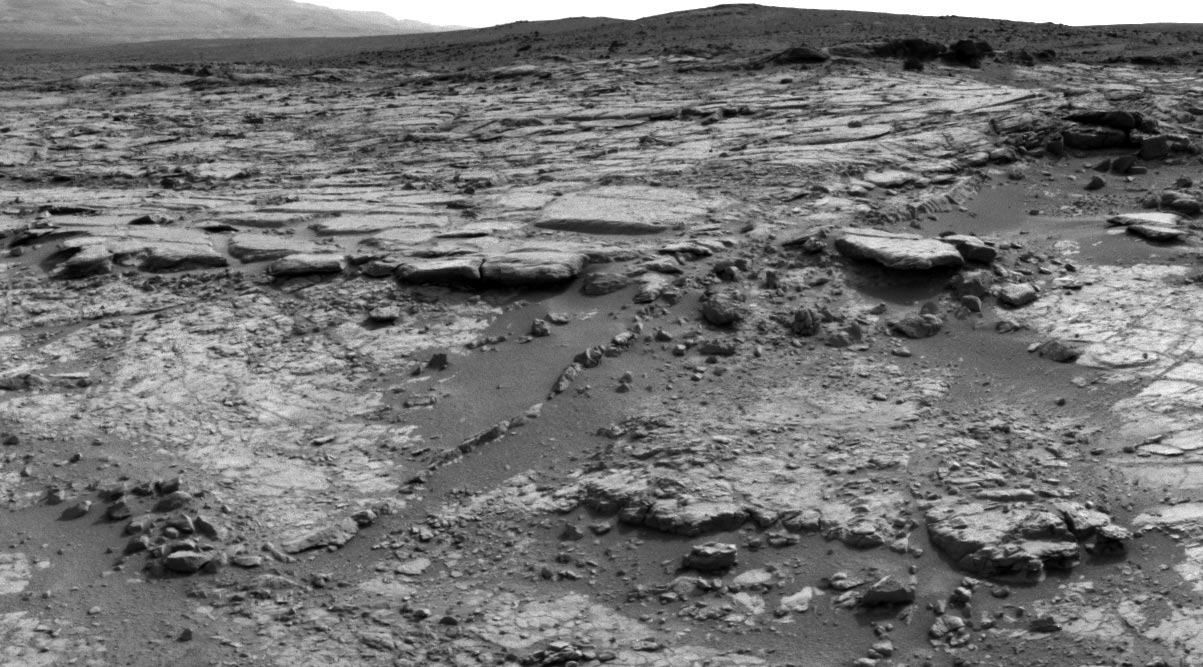
    The sinuous rock feature in the lower center of this mosaic of images recorded by the NASA Mars rover Curiosity is called “Snake River.” The images in the mosaic were taken by Curiosity’s Navigation Camera during the 133rd Martian day, or sol, of the rover’s mission on Mars (December 20, 2012). On Sol 147 (January 3, 2013), Curiosity drove about 10 feet (3 meters) to get a closer look at Snake River for before proceeding to other nearby rocks. Credit: NASA/JPL-Caltech

    Over the holidays, NASA’s Curiosity rover returned new images of “Snake River” and is now in a shallow depression called “Yellowknife Bay.” This is the 147th day of the mission and Curiosity has driven 702 meters on the Martian surface.

    After imaging during the holidays, NASA’s Mars rover Curiosity resumed driving on January 3 and pulled within arm’s reach of a sinuous rock feature called “Snake River.”

    Snake River is a thin curving line of darker rock cutting through flatter rocks and jutting above sand. Curiosity’s science team plans to get a closer look at it before proceeding to other nearby rocks.

    “It’s one piece of the puzzle,” said the mission’s project scientist, John Grotzinger of the California Institute of Technology in Pasadena. “It has a crosscutting relationship to the surrounding rock and appears to have formed after the deposition of the layer that it transects.”

    The drive during the mission’s 147th Martian day, or sol, on the Red Planet took Curiosity about 10 feet (3 meters) northwestward and brought the mission’s total driving distance to 2,303 feet (702 meters). The rover is within a shallow depression called “Yellowknife Bay,” which is a flatter and lighter-toned type of terrain from what the mission crossed during its first four months inside Gale Crater.

    During a holiday break for the rover team, Curiosity stayed at a location within Yellowknife Bay from which the rover took images of its surroundings. The team is evaluating possible first targets for use of Curiosity’s hammering drill in coming weeks. The drill will collect powdered samples from the interior of rocks for analysis by instruments inside the rover.

    “We had no surprises over the holidays,” said the mission’s project manager, Richard Cook of NASA’s Jet Propulsion Laboratory, Pasadena. “Now, Curiosity is back on the move. The area the rover is in looks good for our first drilling target.”

    NASA’s Mars Science Laboratory Project is using Curiosity to assess whether areas inside Gale Crater ever offered a habitable environment for microbes. JPL, a division of Caltech, manages the project for NASA’s Science Mission Directorate in Washington.

    Never miss a breakthrough: Join the SciTechDaily newsletter.
    Follow us on Google and Google News.

    Astronomy Curiosity Rover JPL Mars NASA Planetary Science
    Share. Facebook Twitter Pinterest LinkedIn Email Reddit

    Related Articles

    Mineralogy of Martian Soil Is Similar to Soils of Volcanic Origin in Hawaii

    Curiosity Rover Photographs Diverse Rocks

    Curiosity Prepares to Take Its First Scoop of Soil for Analysis

    Curiosity Finds Ancient Streambed on Mars

    NASA’s Curiosity Prepares for Use of Its Arm and Tools

    Curiosity Sends Back Radioed Words and New Telephoto View of Mars

    NASA’s Curiosity Readies for First Drive on Mars

    Color HiRISE Image of Curiosity Rover on Mars

    First 360-Degree Color Panorama From NASA’s Curiosity Mars Rover

    Leave A Reply Cancel Reply

    • Facebook
    • Twitter
    • Pinterest
    • YouTube

    Don't Miss a Discovery

    Subscribe for the Latest in Science & Tech!

    Trending News

    This Copper Drug Clears Alzheimer’s Brain Toxins and Boosts Memory

    Adults Over 65 Lost Massive Amounts of Weight With Ozempic

    How Flocking Birds “Defy” One of Physics’ Most Fundamental Laws

    Physicists Create a New Kind of Schrödinger’s Cat State From Exotic Quantum Building Blocks

    Your Diet Could Be Missing the Key Ingredient for Heart Protection

    Researchers Warn Widely Prescribed Blood Pressure Drugs Could Be Harming Diabetic Kidneys

    James Webb Spots Something Strange Between Day and Night on an Alien Planet

    How Ancient People Moved a 6-Ton Stone 700 Kilometers to Stonehenge

    Follow SciTechDaily
    • Facebook
    • Twitter
    • YouTube
    • Pinterest
    • Newsletter
    • RSS
    SciTech News
    • Biology News
    • Chemistry News
    • Earth News
    • Health News
    • Physics News
    • Science News
    • Space News
    • Technology News
    Recent Posts
    • Scientists Uncover Cause of Inflammatory Bowel Disease Solving Decades-Old Mystery
    • The Surprising Reason Swimming Could Be Better for Your Heart Than Running
    • Could Vitamin C Be the Secret to Keeping Your Brain Younger?
    • The Surprising Fix for Robot Traffic Jams
    • Near Absolute Zero, This Transistor Starts Acting Like a Brain Cell
    Copyright © 1998 - 2026 SciTechDaily. All Rights Reserved.
    • Science News
    • About
    • Contact
    • Editorial Board
    • Privacy Policy
    • Terms of Use

    Type above and press Enter to search. Press Esc to cancel.