
Close Menu
    Facebook X (Twitter) Instagram
    SciTechDaily
    • Biology
    • Chemistry
    • Earth
    • Health
    • Physics
    • Science
    • Space
    • Technology
    Facebook X (Twitter) Pinterest YouTube RSS
    SciTechDaily
    Home»Biology»“Deep Biosphere” Microbes: Life Is Bubbling Up From Sediments Deep Below the Ocean Floor
    Biology

    “Deep Biosphere” Microbes: Life Is Bubbling Up From Sediments Deep Below the Ocean Floor

    By Marine Biological LaboratoryMay 26, 2020No Comments4 Mins Read
    Facebook Twitter Pinterest Telegram LinkedIn WhatsApp Email Reddit
    Share
    Facebook Twitter LinkedIn Pinterest Telegram Email Reddit
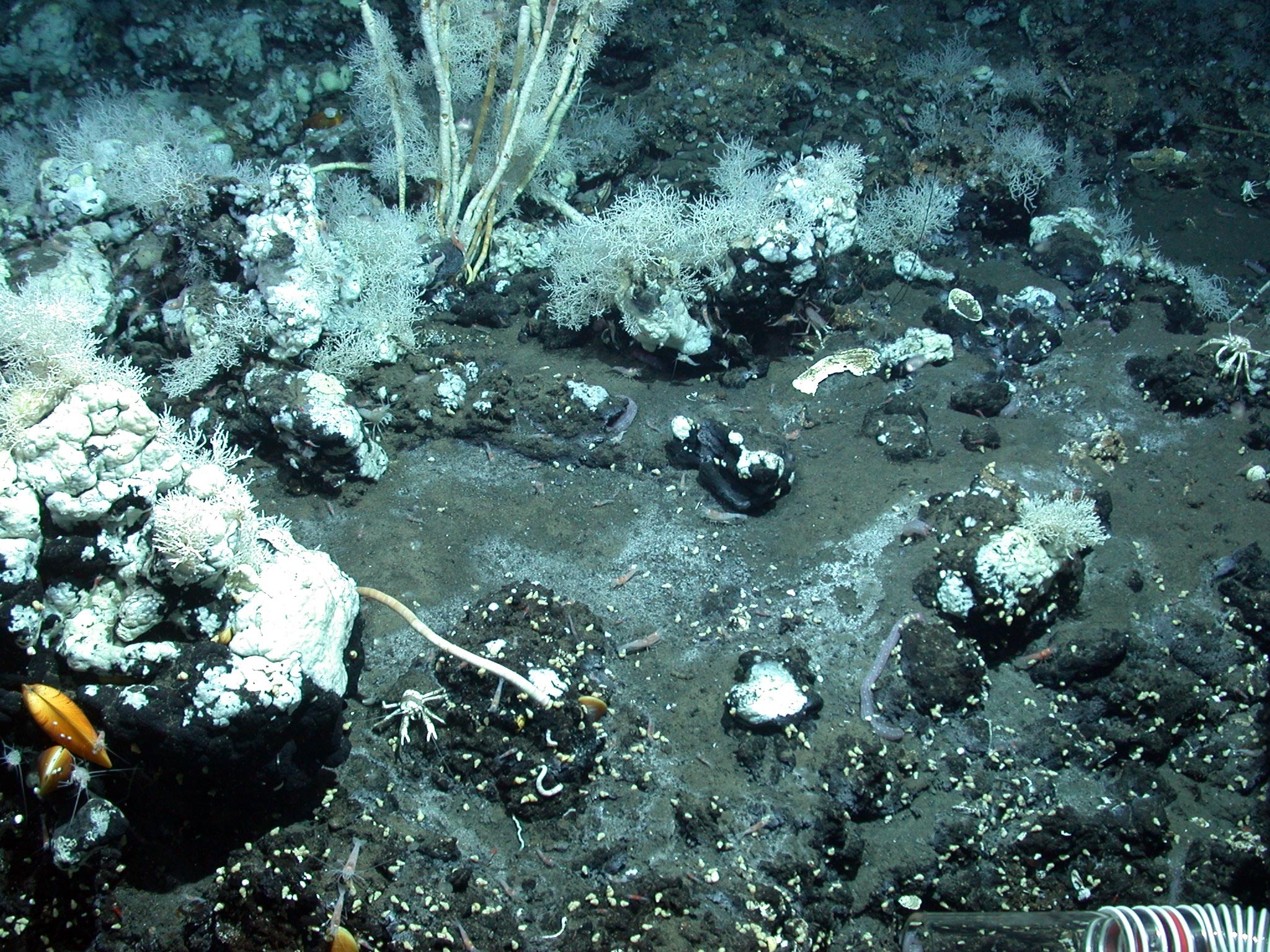
    Hydrocarbon Seep Gulf of Mexico
    Hydrocarbon seep in the southern Gulf of Mexico emitting a viscous petroleum, much like asphalt. Hydrocarbons serve as an energy source for microbes and in turn, microbial biomass is a food source for a diverse community of organisms including tube worms, mussels, crabs and shrimp. Credit: Center for Marine Environmental Sciences (MARUM), University of Bremen

    The COVID-19 pandemic is a stark reminder that we move through a world shaped by unseen life. Bacteria, viruses, and other microscopic organisms regulate the Earth’s vital functions and resources, from the air we breathe to all our food and most of our energy sources. An estimated one-third of the Earth’s microbes are literally hidden, buried in sediments deep below the ocean floor. Now, scientists have shown that these “deep biosphere” microbes aren’t staying put but are bubbling up to the ocean floor along with fluids from buried petroleum reservoirs. These hitchhikers in petroleum seeps are diversifying the microbial community that thrives at the seafloor, impacting deep-sea processes, such as carbon cycling, that have global implications.

    “This study confirms that petroleum seeps are a conduit for transporting life from the deep biosphere to the seafloor,” says co-author Emil Ruff, a scientist at the Marine Biological Laboratory (MBL), Woods Hole. The study, led by Anirban Chakraborty and Casey Hubert of the University of Calgary, is published this week in the journal Proceedings of the National Academy of Sciences.
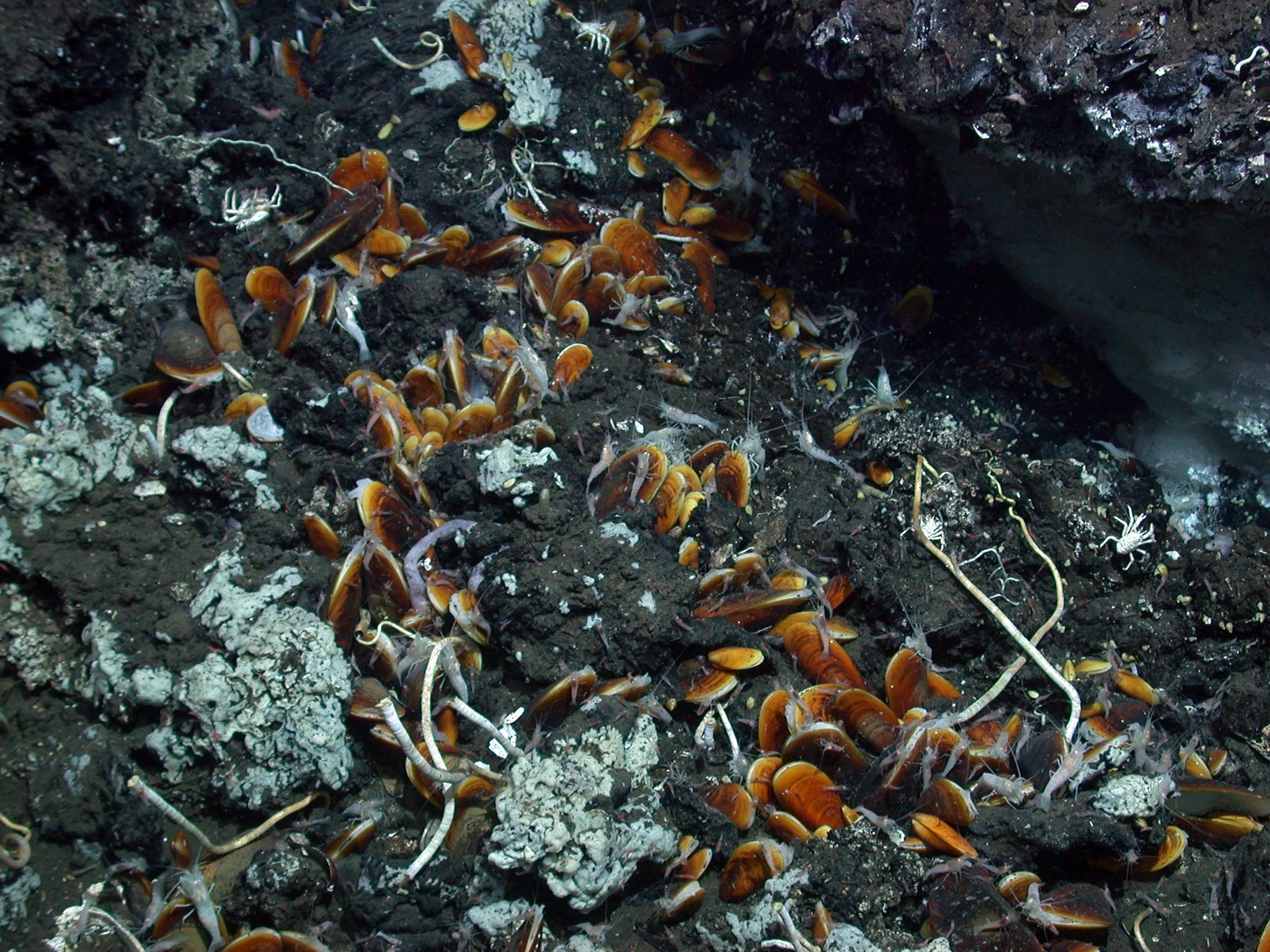
    Clams and Shrimp on Petroleum Seep
    Hydrocarbon seep in the southern Gulf of Mexico emitting a viscous petroleum, much like asphalt. Most animals found at hydrocarbon seeps, such as mussels and crabs, depend directly or indirectly on microorganisms that can oxidize the petroleum compounds. Credit: Center for Marine Environmental Sciences (MARUM), University of Bremen

    The team analyzed 172 seafloor sediment samples from the eastern Gulf of Mexico that had been collected as part of a 2011 survey for the oil industry. A fraction of these samples contained migrated gaseous hydrocarbons, the chief components of oil and gas. These petroleum seeps on the ocean floor harbored distinct microbial communities featuring bacteria and archaea that are well-known inhabitants of deep biosphere sediments.

    “Whereas sedimentation slowly buries microbial communities into the deep biosphere, these results show that it’s more of a two-way street. The microbes coming back up offer a window to life buried deeper below,” Hubert says. “These relatively accessible surface sediments give us a glimpse into the vast, subsurface realm.”

    Recovering Sediment Cores From Gulf of Mexico
    Recovering sediment cores from the Gulf of Mexico on the TDI-Brooks vessel R/V Brooks McCall. Credit: Daniel Brooks

    The study also adds a new dimension to understanding the metabolic diversity of seabed petroleum seep microbial communities. “If it weren’t for the microbes living at hydrocarbon seeps, the oceans would be full of gas and oil,” Chakraborty says.

    Co-authors Bernie Bernard and James Brooks of TDI-Brooks International obtained the 172 Gulf of Mexico sediment cores and performed geochemical testing on them, setting the stage for microbiology testing at the University of Calgary.

    “One of the strengths of this study is the large number of samples analyzed, allowing robust statistical inferences of the microbes present in the petroleum seeps,” Ruff says. Because the seafloor is so difficult to access, explorations of deep-sea ecosystems are often limited by the number and quality of samples. The team used metagenomic approaches to determine what microbes were present in the sediment samples, and genome sequencing of particularly interesting organisms to indicate what their activity in the subsurface might be.

    Reference: “Hydrocarbon seepage in the deep seabed links subsurface and seafloor biospheres” by Anirban Chakraborty, S. Emil Ruff, Xiyang Dong, Emily D. Ellefson, Carmen Li, James M. Brooks, Jayme McBee, Bernie B. Bernard and Casey R. J. Hubert, 30 April 2020, Proceedings of the National Academy of Sciences.
    DOI: 10.1073/pnas.2002289117

    Never miss a breakthrough: Join the SciTechDaily newsletter.
    Follow us on Google and Google News.

    Ecology Marine Biological Laboratory Marine Biology Metagenomic Oceanography Pollution
    Share. Facebook Twitter Pinterest LinkedIn Email Reddit

    Related Articles

    Scientists Find Microplastics in Fish From Pristine Pacific Waters

    Seagrass Meadows Turn Back the Clock on Ocean Acidification – Can Reduce Local Acidity by Up to 30%

    Deadly Attraction: Why Sea Turtles Eat Ocean Plastics

    Revealing the Structure of Bacterial Hitchhikers on Plastic Trash in the Ocean

    Biologists Explore the Effect of Coral Restoration on Caribbean Reef Fish Communities

    “Coughing” Scallops Are Early Warning System for Worsening Water Quality

    New Chinese Survey Reveals Extensive Coastal Pollution

    Jellyfish Bloom in Marine Ecologies As Ocean Health Declines

    Researchers Report That Anthropogenic CO2 Emissions Have Raised Ocean Acidity

    Leave A Reply Cancel Reply

    • Facebook
    • Twitter
    • Pinterest
    • YouTube

    Don't Miss a Discovery

    Subscribe for the Latest in Science & Tech!

    Trending News

    Scientists May Have Found the Key to Jupiter and Saturn’s Moon Mystery

    Scientists Uncover Brain Changes That Link Pain to Depression

    Saunas May Do More Than Raise Body Temperature – They Activate Your Immune System

    Exercise in a Pill? Metformin Shows Surprising Effects in Cancer Patients

    Hidden Oceans of Magma Could Be Protecting Alien Life

    New Study Challenges Alzheimer’s Theories: It’s Not Just About Plaques

    Artificial Sweeteners May Harm Future Generations, Study Suggests

    Splashdown! NASA Artemis II Returns From Record-Breaking Moon Mission

    Follow SciTechDaily
    • Facebook
    • Twitter
    • YouTube
    • Pinterest
    • Newsletter
    • RSS
    SciTech News
    • Biology News
    • Chemistry News
    • Earth News
    • Health News
    • Physics News
    • Science News
    • Space News
    • Technology News
    Recent Posts
    • Physicists Discover a Strange New Kind of One-Dimensional Particle
    • Scientists Discover Unexpected Climate Benefit Hidden in Forest Soils
    • The Grand Canyon’s “Swiss Cheese” Rocks Hold a Critical Secret
    • Scientists Discover 430,000-Year-Old Wooden Tools, Rewriting Human History
    • Scientists Make Breakthrough on 40-Year-Old 2D Physics Puzzle
    Copyright © 1998 - 2026 SciTechDaily. All Rights Reserved.
    • Science News
    • About
    • Contact
    • Editorial Board
    • Privacy Policy
    • Terms of Use

    Type above and press Enter to search. Press Esc to cancel.