
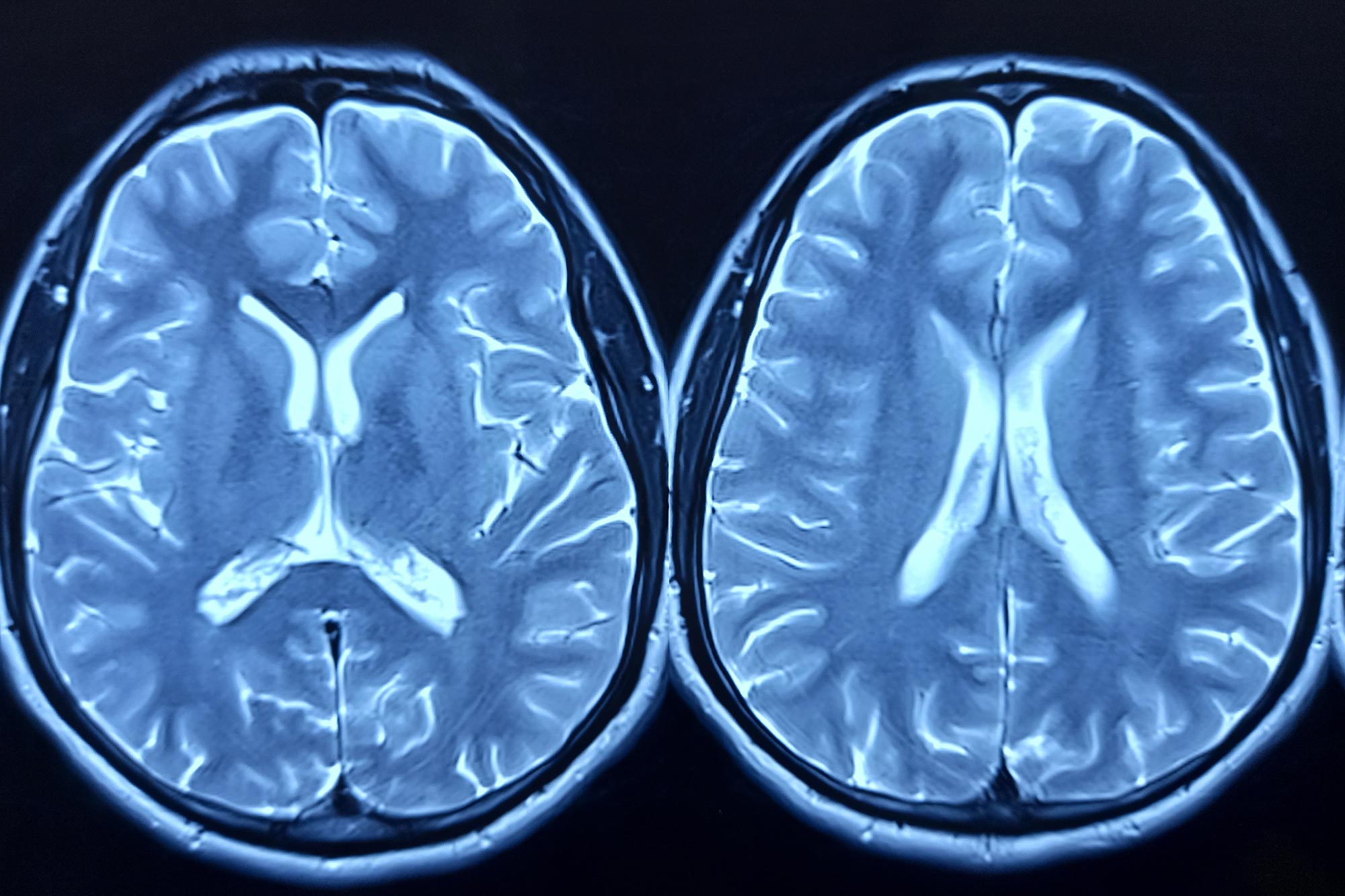
A Penn case study finds that a brain-computer interface shows the medication produces only short-term or incomplete effects on related brain activity in a patient with obesity, highlighting the need for further research.
A rare look at the brain activity of a patient with obesity and loss of control eating who was taking tirzepatide (sold as Mounjaro and Zepbound) showed that the drug can reduce signaling in the brain’s “reward center,” which is linked to food noise, although this effect was only temporary.
Scientists have been exploring whether this medication, a glucagon-like peptide-1 (GLP-1) and glucose-dependent insulinotropic polypeptide (GIP) receptor agonist created to treat Type 2 diabetes, could help address a broader set of impulse-related conditions such as binge eating disorder.
However, a new case study from the Perelman School of Medicine at the University of Pennsylvania, published in Nature Medicine, reports that while the findings are intriguing, current GLP-1 and GIP inhibitors may not yet be well suited for reliably managing these behaviors and will require additional study.
“This study offers major insights into how these drugs may work inside the brain and will guide us as we explore new indications,” said senior author Casey H. Halpern, MD, a professor of Neurosurgery, and head of the Division of Stereotactic and Functional Neurosurgery. “Until we better understand their action on the brain, it’s far too soon to call GLP-1 and GIP inhibitors miracle drugs for more conditions beyond type 2 diabetes and obesity.”
A common and debilitating condition
Loss of control eating is a widespread issue that affects millions of people living with obesity and other eating disorders. Binge eating disorder, or BED, is the most frequently diagnosed eating disorder in the United States and impacts at least more than 3 million individuals. Those who experience binge eating often feel unable to stop eating and continue well past the point of normal fullness.
Research shows that eating behaviors, including binge episodes, are shaped by brain networks involving the hypothalamus and the reward center known as the nucleus accumbens (NAc). The NAc plays a key role in the brain’s motivation system and influences choices related to pleasure and impulse regulation. Earlier studies have found that in people with obesity and BED, which often occur together, signaling within the NAc and its surrounding circuitry becomes disrupted.
Even without the diagnosis of BED, up to 60 percent of people with obesity report experiencing “food noise” or thinking about food constantly which leads to distress and dysregulated eating behaviors, like loss of control eating and binge eating. “Food noise” is also extremely common to treating disorders such as bulimia nervosa and even anorexia nervosa. It is particularly important to note that an association between the presence of binge eating and suicide risk has been established in patients with obesity and these eating disorders related to shared impulsive traits and the associated emotional dysregulation.
“Developing new ways to treat these patients is of the utmost importance,” said Halpern. “While many individuals taking GLP-1 and GIP inhibitors report a reduction in food noise, these medications are not FDA-approved to treat food preoccupation and its related impulsivity. In fact, their impact on human brain activity has only begun to be studied.”
A new approach to managing food noise
A 60-year-old woman, identified in the new report as “Participant 3,” was diagnosed with severe, treatment-resistant obesity, and struggled with food noise. She often had obsessive thoughts about food, leading to ordering takeout or continual snacking, even when she wanted to resist. She reported eating large amounts of food until she was uncomfortably full, preoccupied with both sweet and salty foods, especially pre-packaged cupcakes, fast-food roast beef sandwiches and French fries. Participant 3 also had Type-2 diabetes, and was prescribed dulaglutide, a GLP-1 inhibitor, which did not impact her weight or food preoccupation.
Participant 3 tried unsuccessfully to manage her obesity through all medical means possible, from bariatric surgery, to medication, to behavioral therapy, and medication for dysregulated eating behavior and weight loss. When these available treatments failed, she enrolled in Halpern’s clinical trial that involved brain surgery with implanted electrodes to interface with the brain with the later goal to stop the cravings before they start.
The brain-binge connection
Halpern’s previous research revealed distinctive electrical activity in the NAc that arises just before someone experiences food preoccupation and the urge to binge, but not when they are simply hungry before normal meals. A pilot trial previously led by Halpern and colleagues demonstrated that delivering high-frequency electrical stimulation to the NAc whenever the craving-associated signals occurred was able to prevent binge eating behaviors.
In this current trial with four participants enrolled, intracranial electroencephalography (iEEG) electrodes are implanted in the brain of a person with obesity suffering from loss of control eating, similar to the devices used to study and treat drug-resistant epilepsy and Parkinson’s disease. In this case, the device records electrical activity in the NAc as participants encounter foods that typically trigger binge eating episodes.
After establishing each participant’s baseline, Halpern’s team programs the electrodes to deliver high-frequency electrical stimulation to the NAc whenever the craving-associated signals occurred. During this six-month interval, earlier participants reported sharp reductions in their feelings of loss-of-control, and in the frequencies of their bingeing episodes.
A unique trial leads to an even more unique research opportunity
Since the first GLP-1 inhibitor did not work for her, Participant 3’s doctor prescribed tirzepatide to help manage her Type-2 diabetes before her surgery. Because diabetes can be a risk factor for infections after surgery, her dose was slowly increased to the maximum, leading up to, and following surgery to implant the electrodes. This provided researchers with a rare opportunity to observe how tirzepatide affects brain signals related to eating behavior in real time.
“Brain surgery to implant the electrodes is invasive, and thus it is extremely rare to study human brain activity in this way,” said Halpern. “Research fuels more research; This participant was already taking tirzepatide when she enrolled in the trial, but before any stimulation was delivered, giving us a unique opportunity to make foundational observations about how the drug alters brain signals.”
Short term suppression, long-term questions
After the electrodes were implanted and Participant 3 reached her full dose of tirzepatide, she reported no food preoccupation and her related NAc activity was silent. However, after a 5-month period, NAc activity was detected, consistent with what would be expected of someone with obesity, along with reports of severe food preoccupation—suggesting tirzepatide’s effects on this patient’s behavioral disorder were temporary, and the “food noise” was breaking through.
In contrast, the participants in the trial not taking tirzepatide showed the expected, elevated NAc activity and frequent episodes of food preoccupation, consistent with earlier findings from the Halpern Lab. The striking quiet in Participant 3’s NAc signaling and food preoccupation suggests that the tirzepatide was responsible for the temporary quieting of food noise.
“GLP-1 and GIP inhibitors are amazing medications at doing what they were developed for – managing blood sugar in people with type 2 diabetes and weight loss in obesity,” study investigator Kelly Allison, PhD, a professor of Psychiatry and Director of the Center for Weight and Eating Disorders. “This research shows us that they might be useful to manage food preoccupation and binge eating, but not in their current form.”
“Although this study only featured the data from one person taking tirzepatide, it provides compelling data about how GLP-1 and GIP inhibitors alter electrical signals in the brain,” said co-first author Wonkyung Choi, a PhD candidate in Halpern’s lab. “These insights should inspire further research into developing a treatment better tailored to the impulsivity traits of obesity and related eating disorders that is safe and long-lasting.”
Reference: “Brain activity associated with breakthrough food preoccupation in an individual on tirzepatide” by Wonkyung Choi, Young-Hoon Nho, Liming Qiu, Andrew Chang, Gustavo Campos, Robert L. Seilheimer, W. Bryan Wilent, David Bakalov, Nida Firdous, Marie Kerr, Disha Joshi, Gabriella Maze, Uros Topalovic, Daniel Batista, Nanthia Suthana, Anastassia Amaro, Matthew R. Hayes, Iahn Cajigas, Mario Cristancho, Kelly C. Allison, Bijan Pesaran, Katherine W. Scangos, Joshua I. Gold, Thomas A. Wadden and Casey H. Halpern, 17 November 2025, Nature Medicine.
DOI: 10.1038/s41591-025-04035-5
This research was supported by the National Institutes of Health (7UH3NS103446-03, 1R01MH124760-01A1, R25MH119043 and T32NS091008).
Never miss a breakthrough: Join the SciTechDaily newsletter.
Follow us on Google and Google News.
1 Comment
The scans are two different brains.