
Close Menu
    Facebook X (Twitter) Instagram
    SciTechDaily
    • Biology
    • Chemistry
    • Earth
    • Health
    • Physics
    • Science
    • Space
    • Technology
    Facebook X (Twitter) Pinterest YouTube RSS
    SciTechDaily
    Home»Technology»Deep Tech Start-Up’s Breakthrough Technology, VIPER, Brings Robotic Laboratories to Ocean Floor
    Technology

    Deep Tech Start-Up’s Breakthrough Technology, VIPER, Brings Robotic Laboratories to Ocean Floor

    By Impossible Sensing, LLCDecember 1, 2021No Comments2 Mins Read
    Facebook Twitter Pinterest Telegram LinkedIn WhatsApp Email Reddit
    Share
    Facebook Twitter LinkedIn Pinterest Telegram Email Reddit
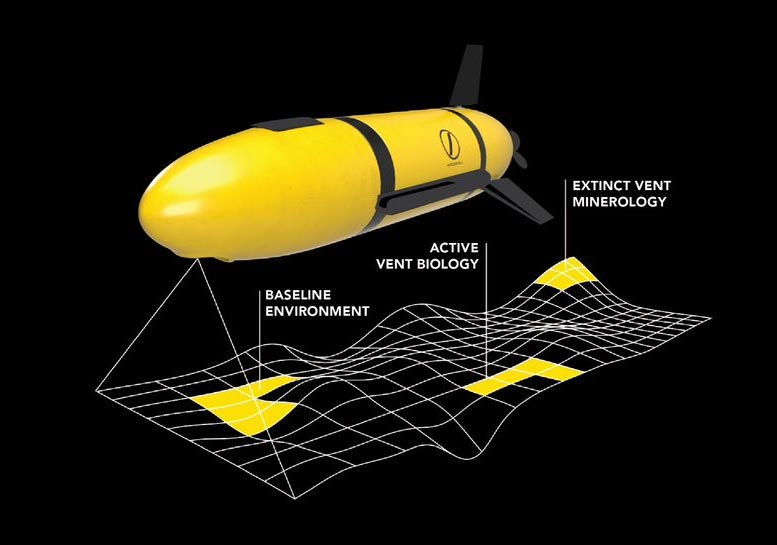
    VIPER Model
    VIPER model. Credit: Impossible Sensing

    Deep tech start-up specializing in optical sensors and edge analytics partners with BOEM to pioneer a new way to discover cleantech resources on the seafloor.

    Impossible Sensing, a St. Louis-based deep tech start-up specializing in optical sensors and edge analytics, partners with the U.S. Department of Interior’s Bureau of Ocean Energy Management (BOEM) to pioneer a new way to discover cleantech resources on the seafloor. Impossible Sensing’s breakthrough technology, VIPER, brings, for the first time, robotic laboratories to the bottom of the ocean to identify and quantify the location, size, and nature of mineral deposits and biological communities.

    VIPER utilizes Impossible Sensing’s space exploration technologies, originally developed for NASA, to fully map and discover marine minerals in the U.S. exclusive economic zone while providing important information on sensitive habitats and species. Not only will these advances mitigate strategic vulnerabilities of the U.S. and support a global shift to clean energy, but they will also document deep-sea biodiversity.

    VIPER is the first cost-effective tool that will discover and evaluate marine cleantech resources. “To fulfill its mission, BOEM needs to gather further information on the location and extent of critical minerals on the outer continental shelf,” Mark Leung, Geologist and BOEM’s Office of Strategic Resources highlights. “Impossible Sensing’s VIPER technology finally breaks the value-cost trade-off by providing us with the tools we need to map the OCS.”

    Impossible Sensing and BOEM estimate that 100 km² (39 mi²) mineral and environmental surveys can be completed in days, rather than months, without the need to take samples. “This is the type of transformative innovation that BOEM and its partnering agencies require to advance ocean exploration goals,” remarks Leung.

    VIPER will also help reduce carbon emissions, according to Impossible Sensing Founder and CEO Pablo Sobron.

    “With VIPER, we are turning our space exploration innovations into game-changing cleantech solutions that will bring seafloor mineral resources to market sustainably and at the speed that rapid decarbonization requires. Because VIPER is so scalable and transformative, it will contribute to a green recovery by aiding in the acceleration of the electrification of transportation and other industries.”

    Never miss a breakthrough: Join the SciTechDaily newsletter.
    Follow us on Google and Google News.

    Oceanography Robotics
    Share. Facebook Twitter Pinterest LinkedIn Email Reddit

    Related Articles

    Computing for Ocean Environments: Bio-Inspired Underwater Devices & Swarming Algorithms for Robotic Vehicles

    Autonomous Robotic Rover Provides New Insight Into Life on the Deep Abyssal Seafloor

    Battery-Free Ocean Exploration: MIT Underwater Navigation System Powered by Sound

    New Approach Helps Autonomous Underwater Vehicles Explore

    Babyloid Robot Aims to Combat Depression in the Elderly

    Qbo Robot Looks In The Mirror, Recognizes Itself

    Harvard Scientists Develop $5 Rubber Robot

    Korea Developing Robot Prison Guards

    Yaskawa Electric’s SmartPal VII Operated Using Kinect

    Leave A Reply Cancel Reply

    • Facebook
    • Twitter
    • Pinterest
    • YouTube

    Don't Miss a Discovery

    Subscribe for the Latest in Science & Tech!

    Trending News

    125-Million-Year-Old Crocodile Fossil Reveals Astonishing New Secrets

    Scientists Discover an “Impossible” Way Muscle Filaments Can Grow

    A Star’s Spin Could Solve a Longstanding Black Hole Mystery

    NASA Finds Earth Microbes Could Hide in the Moon’s Deep Shadows

    New Study: Intermittent Fasting Lowers Blood Sugar in Type 1 Diabetes

    Alzheimer’s Brain Changes May Begin 7 Years Earlier Than Scientists Thought

    This New Molecule Could Transform How We Recover Gold From Electronic Waste

    A Billion Years Before the Grand Canyon, a Giant Cliff May Have Stretched Across America

    Follow SciTechDaily
    • Facebook
    • Twitter
    • YouTube
    • Pinterest
    • Newsletter
    • RSS
    SciTech News
    • Biology News
    • Chemistry News
    • Earth News
    • Health News
    • Physics News
    • Science News
    • Space News
    • Technology News
    Recent Posts
    • How Insects Conquered Land Was Stranger Than Scientists Thought
    • A 250-Year-Old Heat Mystery Leads to a Surprising Discovery About Human Sweat
    • Thousands of Giant Whales Are Suddenly Flooding Into an Arctic “Feeding Frenzy”
    • AI Searched 150 Million Materials – and Found Two Promising Candidates for Future Electronics
    • A Major Quantum Computing Problem May Finally Have an Answer: Can We Trust the Results?
    Copyright © 1998 - 2026 SciTechDaily. All Rights Reserved.
    • Science News
    • About
    • Contact
    • Editorial Board
    • Privacy Policy
    • Terms of Use

    Type above and press Enter to search. Press Esc to cancel.