
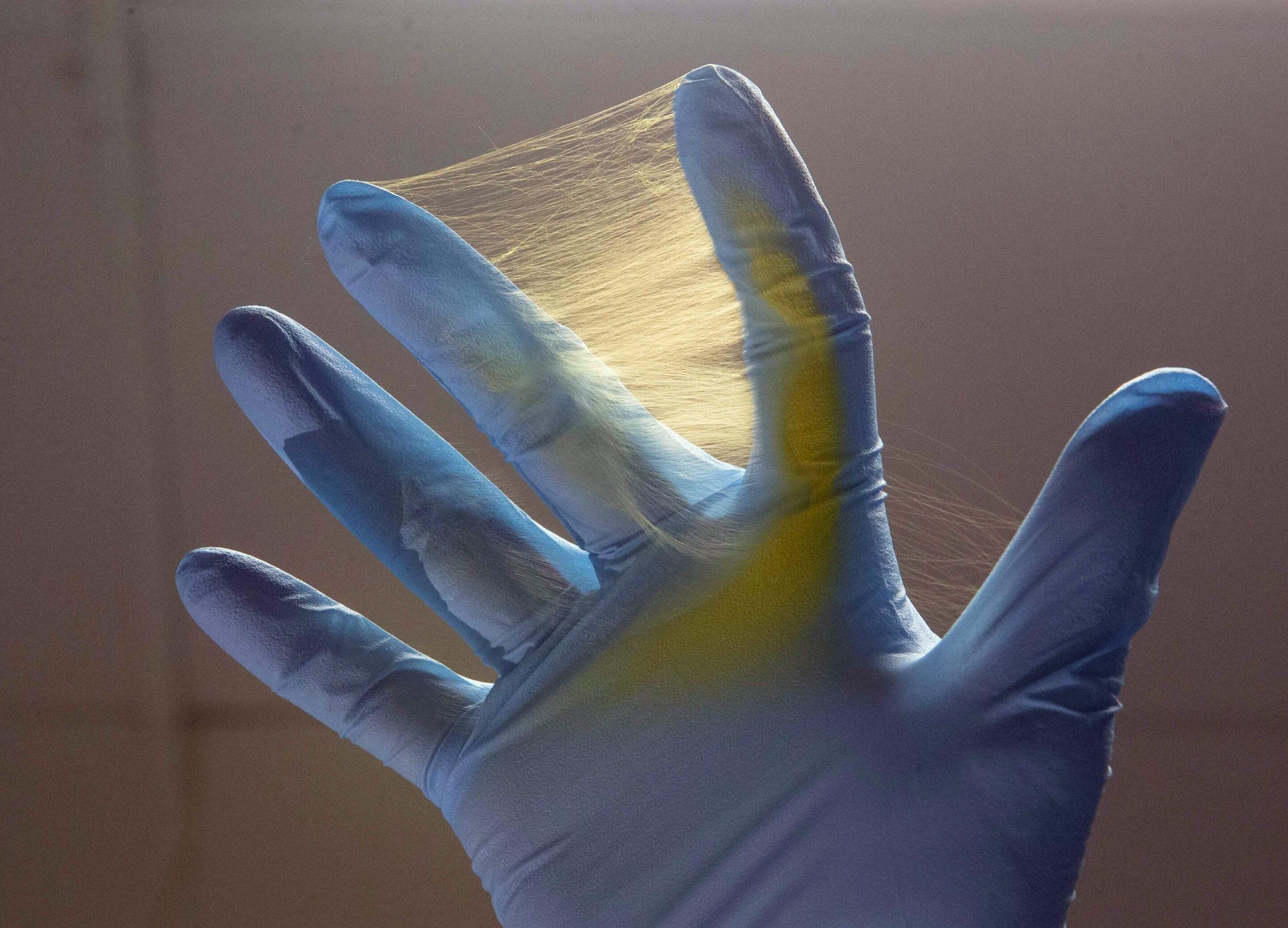
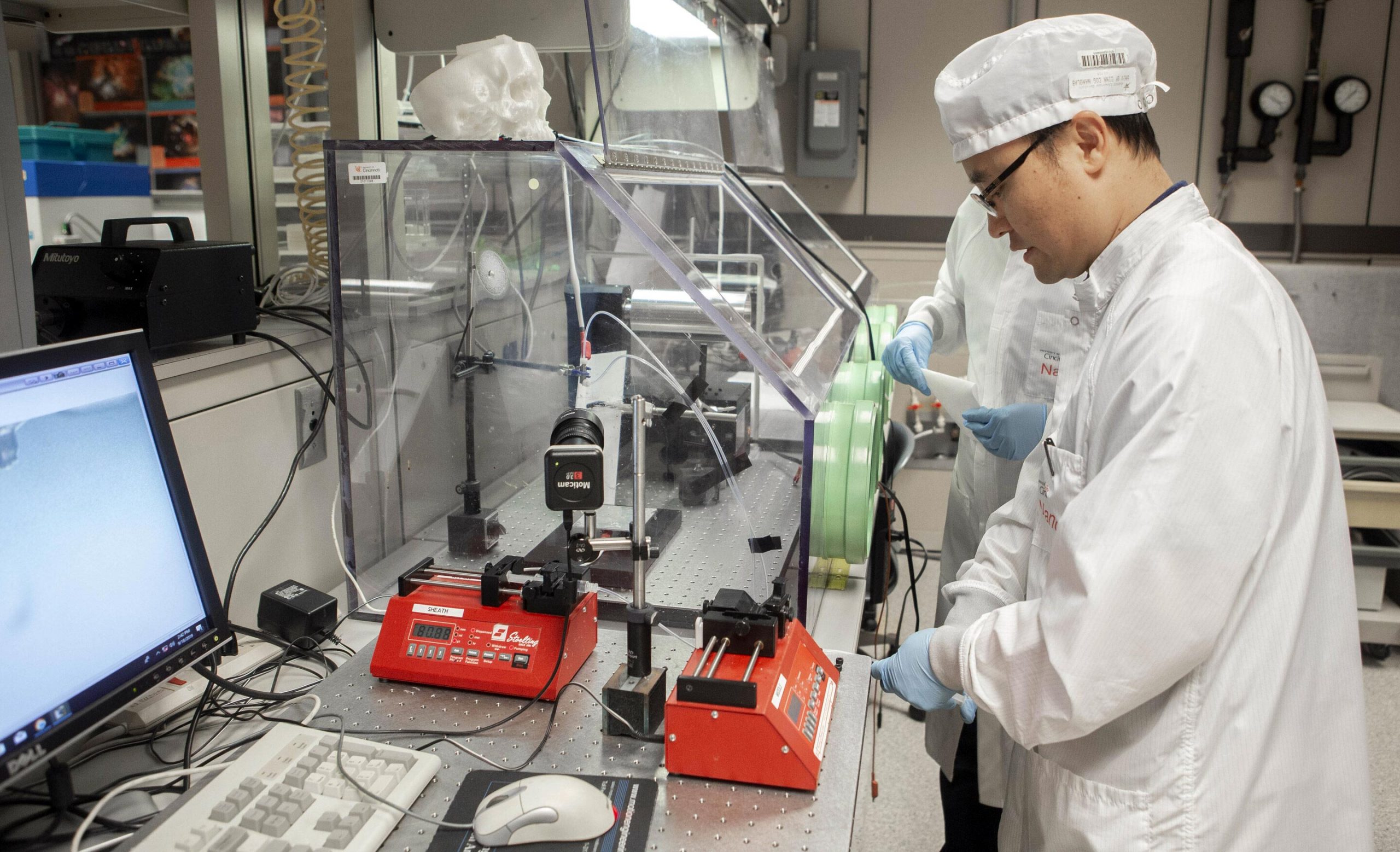
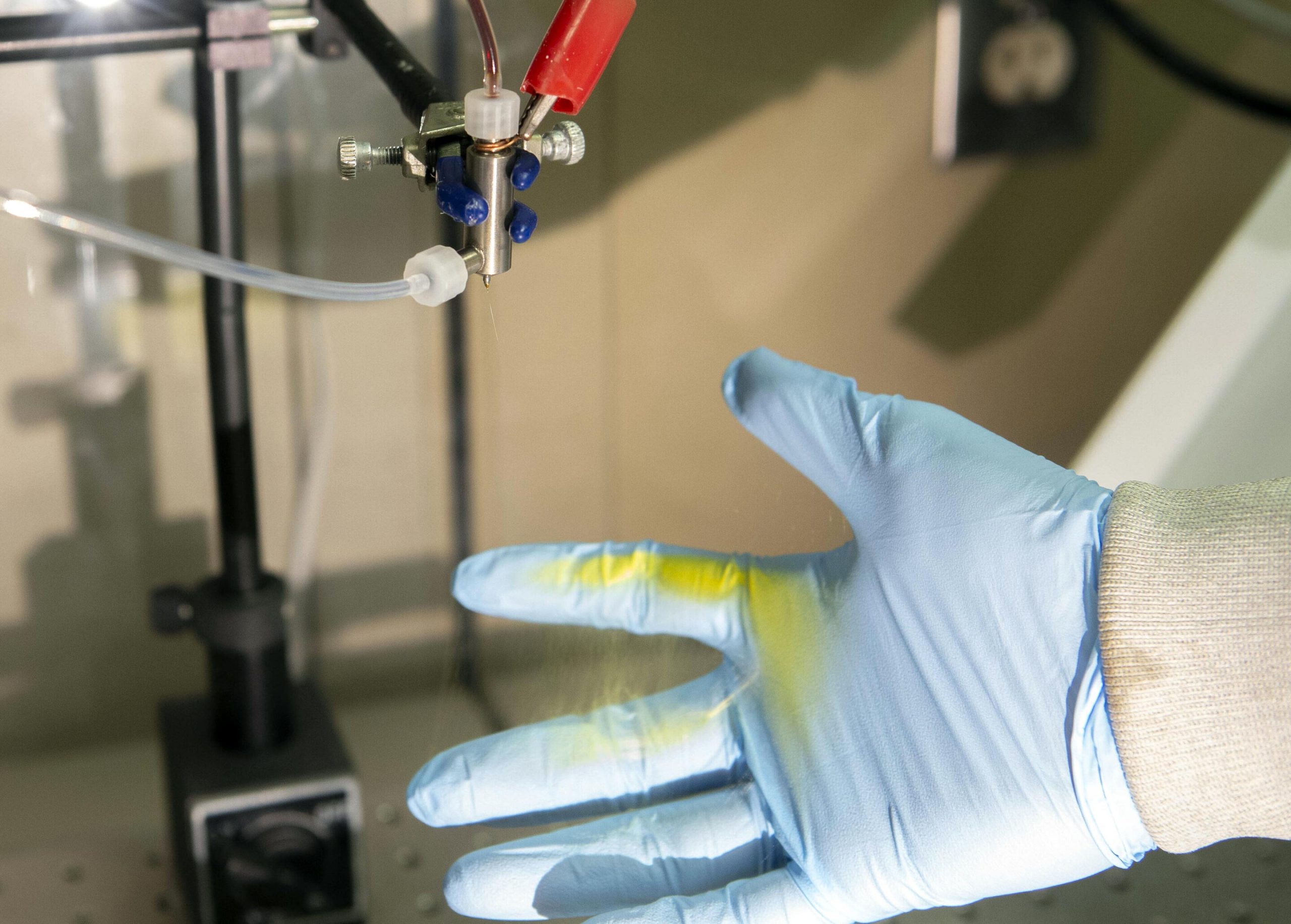
Researchers with the University of Cincinnati used coaxial electrospinning to create a treatment for glioblastoma multiforme.
A novel engineering process can deliver a safe and effective dose of medicine for brain tumors without exposing patients to toxic side effects from traditional chemotherapy.
University of Cincinnati professor Andrew Steckl, working with researchers from Johns Hopkins University, developed a new treatment for glioblastoma multiforme, or GBM, an aggressive form of brain cancer. Steckl’s Nanoelectronics Laboratory applied an industrial fabrication process called coaxial electrospinning to form drug-containing membranes.
The treatment is implanted directly into the part of the brain where the tumor is surgically removed.
The study was published in Nature Scientific Reports on November 29, 2019.
“Chemotherapy essentially is a whole-body treatment. The treatment has to get through the blood-brain barrier, which means the whole-body dose you get must be much higher,” Steckl said. “This can be dangerous and have toxic side effects.”
Steckl is an Ohio Eminent Scholar and professor of electrical engineering in UC’s College of Engineering and Applied Science.
Coaxial electrospinning combines two or more materials into a fine fiber composed of a core of one material surrounded by a sheath of another. This fabrication process allows researchers to take advantage of the unique properties of each material to deliver a potent dose of medicine immediately or over time.
“By selecting the base materials of the fiber and the thickness of the sheath, we can control the rate at which these drugs are released,” Steckl said.
The electrospun fibers can rapidly release one drug for short-term treatment such as pain relief or antibiotics while an additional drug or drugs such as chemotherapy is released over a longer period, he said.
“We can produce a very sophisticated drug-release profile,” Steckl said.
The breakthrough is a continuation of work conducted by research partners and co-authors Dr. Henry Brem and Betty Tyler at Johns Hopkins University, who in 2003 developed a locally administered wafer treatment for brain tumors called Gliadel.
Unlike previous treatments, electrospun fibers provide a more uniform dose over time, said UC research associate Daewoo Han, the study’s lead author.
“For the current treatment, most drugs release within a week, but our discs presented the release for up to 150 days,” he said.
Glioblastoma multiforme is a common and extremely aggressive brain cancer and is responsible for more than half of all primary brain tumors, according to the American Cancer Society. Each year more than 240,000 people around the world die from brain cancer.
The electrospun fiber created for the study provided a tablet-like disk that increased the amount of medicine that could be applied, lowered the initial burst release, and enhanced the sustainability of the drug release over time, the study found.
Chemotherapy using electrospun fiber improved survival rates in three separate animal trials that examined safety, toxicity, membrane degradation, and efficacy.
“This represents a promising evolution for the current treatment of GBM,” the study concluded.
While this study used a single drug, researchers noted that one advantage of electrospinning is the ability to dispense multiple drugs sequentially over a long-term release. The latest cancer treatments rely on a multiple-drug approach to prevent drug resistance and improve efficacy.
Steckl said the study holds promise for treatments of other types of cancer.
“Looking ahead, we are planning to investigate ‘cocktail’ therapy where multiple drugs for the combined treatment of difficult cancers are incorporated and released either simultaneously or sequentially from our fiber membranes,” Steckl said.
Reference: “Multi-layered core-sheath fiber membranes for controlled drug release in the local treatment of brain tumor” by Daewoo Han, Riccardo Serra, Noah Gorelick, Umailla Fatima, Charles G. Eberhart, Henry Brem, Betty Tyler and Andrew J. Steckl, 29 November 2019, Scientific Reports.
DOI: 10.1038/s41598-019-54283-y
Never miss a breakthrough: Join the SciTechDaily newsletter.
Follow us on Google and Google News.