
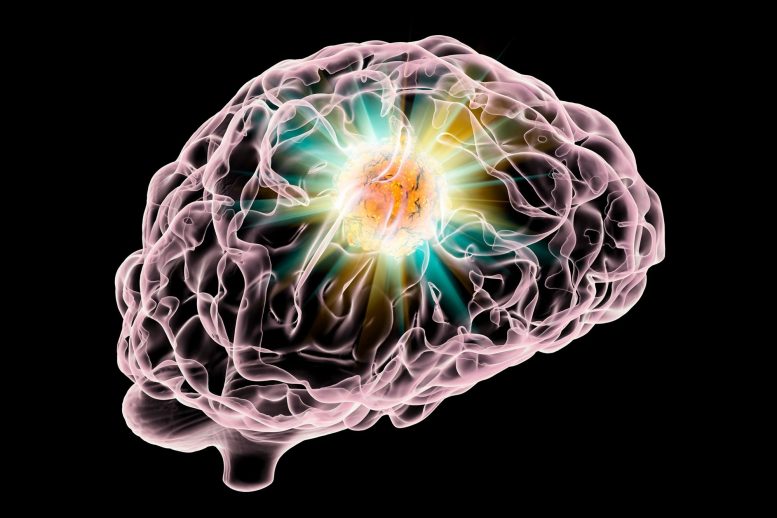
In vitro tests were performed with cultured cells of glioblastoma, an aggressive type of cancer with few treatment options. The next step is to test the effects of the substances in normal nerve cells and animals.
Glioblastoma is a malignant tumor of the central nervous system (brain or spinal cord) and one of the deadliest types of cancer. Few drugs have proved effective at combating this uncontrolled growth of glial cells, which anyway constitute a large proportion of the brain tissue in mammals. The standard treatment is surgical removal of the tumor, followed by chemotherapy with temozolomide, radiation therapy, and then nitrosoureas (such as lomustine). Patient survival has improved moderately over the years, but the prognosis remains poor. These tumors are typically resistant to existing drugs and often grow back after surgery.
Promising results have now been reported in a study involving two substances found to inhibit proliferation of glioblastoma cells. An article on the study was published in the journal Scientific Reports.
The researchers conducted in vitro tests to evaluate the biological effects of 12 compounds obtained through total synthesis of apomorphine hydrochloride against glioblastoma cells. They found that two of these compounds – an isoquinoline derivative called A5 and an aporphine derivative called C1 – reduced the viability of glioblastoma cells, suppressed the formation of new tumor stem cells, and boosted the effectiveness of temozolomide.
“More research is needed to glean a better understanding of the action of these compounds on tumor cells and normal cells, but the results so far suggest a potential therapeutic application as novel cytotoxic agents to control glioblastomas,” said Dorival Mendes Rodrigues-Junior, first author of the article and a postdoctoral researcher at the University of Uppsala’s Department of Medical Biochemistry and Microbiology in Sweden.
In designing the study, the researchers leveraged the apomorphine hydrochloride production process, in which each step in a sequence of chemical reactions creates compounds that are consumed in the next step. Previous research conducted by the group to evaluate the effectiveness of 14 of these compounds against head and neck squamous cell cancer had shown that A5 and C1 were promising, and they decided to conduct more tests. “Given the importance and urgency of identifying novel therapeutic substances that can be used to treat glioblastoma, we evaluated the same panel as in the previous study but now for this other type of tumor,” Rodrigues-Junior said.
The project on molecular markers of head and neck cancer was supported by FAPESP and also involved André Vettore, another author of the recently published article. Vettore is a professor in the Department of Biological Sciences at the Federal University of São Paulo (UNIFESP) in Diadema, Brazil.
“The findings of this study are interesting, but they’re only the first steps in a long journey. In vivo studies are still required to confirm the effects of A5 and C1 on glioblastoma cells and non-tumorigenic nerve cells,” Vettore said.
If the results of this future research are also promising, he added, it will be possible to move on to clinical trials to confirm the effectiveness of the compounds. “Once all these stages are completed, the compounds may finally be used to treat glioblastoma patients.”
Natural Bioactive Products
The study was conducted in vitro to evaluate the antitumor activity of 12 aromatic compounds obtained as intermediates in total synthesis of apomorphine, an alkaloid that interacts with the dopamine pathway and is widely used to control the motor alterations caused by Parkinson’s disease.
Alkaloids are a well-known class of natural products with multiple pharmacological properties and are studied for their anticonvulsant, antiplatelet aggregation, anti-HIV, dopaminergic, antispasmodic, and anticancer effects.
Reference: “Aporphine and isoquinoline derivatives block glioblastoma cell stemness and enhance temozolomide cytotoxicity” by Dorival Mendes Rodrigues-Junior, Cristiano Raminelli, Haifa Hassanie, Gustavo Henrique Goulart Trossini, Givago Prado Perecim, Laia Caja, Aristidis Moustakas and André Luiz Vettore, 7 December 2022, Scientific Reports.
DOI: 10.1038/s41598-022-25534-2
FAPESP fosters studies of these substances via a project on bioactive natural products led at UNIFESP’s Department of Chemistry in Diadema by Cristiano Reminelli, second author of the Scientific Reports article. The other authors are Haifa Hassanie, Gustavo Henrique Goulart Trossini, Givago Prado Perecim, Laia Caja, and Aristidis Moustakas.
Never miss a breakthrough: Join the SciTechDaily newsletter.
Follow us on Google and Google News.