
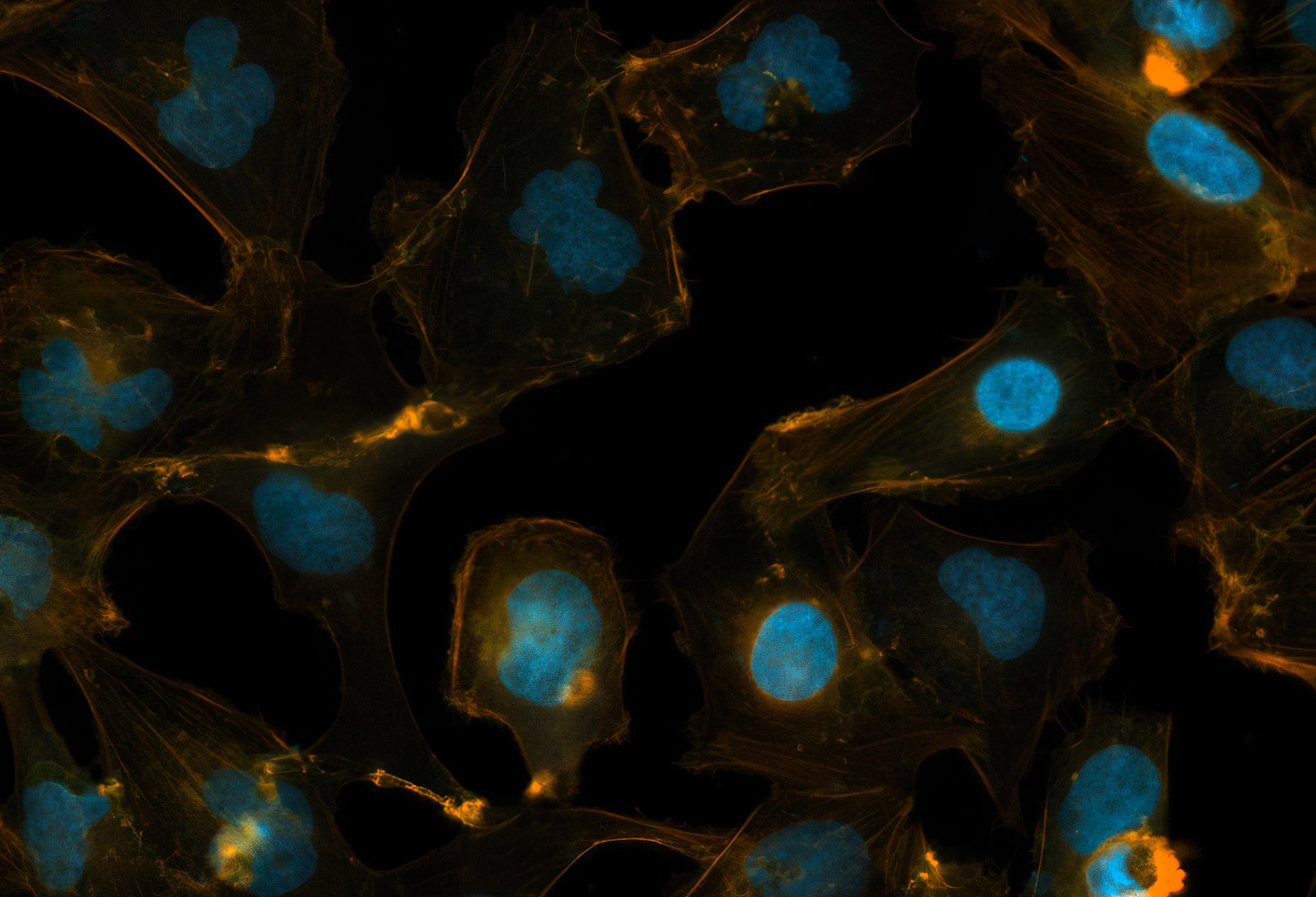
A protein, extensively researched for its connection to neurodegenerative disorders like amyotrophic lateral sclerosis (ALS), is also implicated in medulloblastoma, a form of cancer affecting the central nervous system. Medulloblastoma represents one of the most prevalent and severe brain tumors in children, originating from primitive cells in the early stages of neural development.
A study led by a group of Brazilian scientists has shown in vitro and in vivo that the gene VAPB is linked to cell proliferation in these tumors. An article on the study is published in the journal Scientific Reports.
Current Treatments and Potential Implications
The discovery points to a potential marker of severity and, after more research, a future therapeutic target. Medulloblastoma is currently treated with a combination of surgery to remove the tumor, and radiation therapy and/or chemotherapy, both of which are aggressive and can cause long-lasting brain damage.
VAPB stands for vesicle-associated membrane protein-associated protein B/C. Vesicle-associated membrane proteins (VAMPs) are a family of proteins that play a crucial role in cellular processes, especially lipid metabolism and intracellular transport. They are expressed in all types of cells but are particularly prominent in neurons.
In the study, high expression of the gene VAPB in medulloblastoma correlated with a reduction in patient survival. Tumor cell proliferation requires the protein, and an exacerbated increase can make the disease even more aggressive. On the other hand, VAPB inactivation (knockout) using CRISPR/Cas9 gene editing delayed cell cycle progression.
“These findings provide new directions for understanding the molecular basis of neurological diseases. The major novelty in the study is the link between this protein associated with neurodegeneration and the development of the tumor. Previous research showed that it was expressed in breast cancer but nothing had so far pointed to a link to central nervous system cancer,” said Oswaldo Keith Okamoto, a professor at the University of São Paulo’s Institute of Biosciences (IB-USP).
Okamoto is joint corresponding author of the article with Floris Foijer, a professor at the University of Groningen’s European Research Institute for the Biology of Aging in the Netherlands. He was also one of the thesis advisors for the first author, Amanda Faria Assoni, during her PhD research, which was supported by FAPESP.
The study was conducted at the Human Stem Cell and Genome Research Center (HUG-CELL), one of the Research, Innovation, and Dissemination Centers (RIDCs) funded by FAPESP. HUG-CELL is led by Mayana Zatz, a professor at IB-USP and also a co-author of the article.
“Expression of this protein is reduced in ALS, and the reduction causes degeneration. On the other hand, we found that high expression of VAPB in medulloblastoma correlated with a reduction in patient survival, and when we removed the expression of the protein in tumor cells, the cellular cycle slowed but the cells did not die. We took the first steps toward identifying some of the pathways that are altered by lack of VAPB, but now we need to understand better which pathways are most important,” Assoni told Agência FAPESP.
Statistics on medulloblastoma in Brazil are scant, but experts estimate that a cure is not achieved in about a third of all cases. Central nervous system tumors account for 20% of childhood cancers, affecting mainly children aged 5 or less, according to the National Cancer Institute (INCA). In the overall Brazilian population, new cases of central nervous system cancer are projected to average 11,490 per year in the period 2023-25, according to INCA’s report “Estimativa 2023: incidência de câncer no Brasil”: 6,110 in men and 5,380 in women, corresponding to incidence rates of 5.8 per 100,000 men and 4.85 per 100,000 women. Worldwide, the number of central nervous system cancer cases amounts to some 310,000 per year (1.6% of all cancer cases).
Advanced techniques
In the study, the researchers used tumor spheroids, three-dimensional cancer cell culture models designed to mimic the in vivo environment. The spheroids used in the study were derived from medulloblastoma cell lines, including a lineage they recently developed from a sample of a patient’s tumor. The controls were neural progenitor cells derived from a line of human induced pluripotent stem cells (hiPSCs).
The researchers used RNA sequencing and CRISPR genome engineering to generate cell lines without VAPB. In vivo tests were performed on mice, but the study also involved analysis of clinical data for 632 medulloblastoma patients, especially relating to gene expression and survival rates, available from a scientific database.
“Although VAPB is not generally linked to cancer, we detected alterations to several pathways classically studied in tumors in the VAPB-knockout cells. The cellular mechanisms in question are well-tested and widely used as markers of aggressiveness. In my view, this finding will stimulate research on other proteins as they pertain to types of cancer for which ideal treatments don’t yet exist,” Assoni said.
An earlier study using laboratory-cultured cell lines, led by Okamoto and published in the journal Brain Research in 2020, identified molecules, including the protein OCT4, with the potential to serve as medulloblastoma biomarkers.
“Many researchers study cancer worldwide, but central nervous system tumors are less well studied because they’re rarer than other cancers. Yet they’re associated with high mortality, have no novel treatments, and are important from a clinical standpoint. Any advance in knowledge of CNS tumors will be very valuable to patients and their families,” Okamoto said.
Patients’ families set up the Medulloblastoma Initiative in 2021 to raise funds for 13 research laboratories in the United States, Canada, and Germany, known as the Cure Group 4 Consortium. An article co-authored by Consortium members was published in the journal Nature describing a groundbreaking discovery that traces the origins of medulloblastoma in the development of a specific type of cell.
Reference: “Neurodegeneration-associated protein VAPB regulates proliferation in medulloblastoma” by Amanda Faria Assoni, Thiago Giove Mitsugi, René Wardenaar, Raiane Oliveira Ferreira, Elisa Helena Farias Jandrey, Gabriela Machado Novaes, Isabela Fonseca de Oliveira Granha, Petra Bakker, Carolini Kaid, Mayana Zatz, Floris Foijer and Oswaldo Keith Okamoto, 9 November 2023, Scientific Reports.
DOI: 10.1038/s41598-023-45319-5
Never miss a breakthrough: Join the SciTechDaily newsletter.
Follow us on Google and Google News.