
Close Menu
    Facebook X (Twitter) Instagram
    SciTechDaily
    • Biology
    • Chemistry
    • Earth
    • Health
    • Physics
    • Science
    • Space
    • Technology
    Facebook X (Twitter) Pinterest YouTube RSS
    SciTechDaily
    Home»Earth»Exploring Earth From Space: The Stunningly Beautiful Kangerlussuaq Glacier
    Earth

    Exploring Earth From Space: The Stunningly Beautiful Kangerlussuaq Glacier

    By European Space Agency (ESA)January 15, 2022No Comments3 Mins Read
    Facebook Twitter Pinterest Telegram LinkedIn WhatsApp Email Reddit
    Share
    Facebook Twitter LinkedIn Pinterest Telegram Email Reddit


    Kangerlussuaq Glacier, Greenland
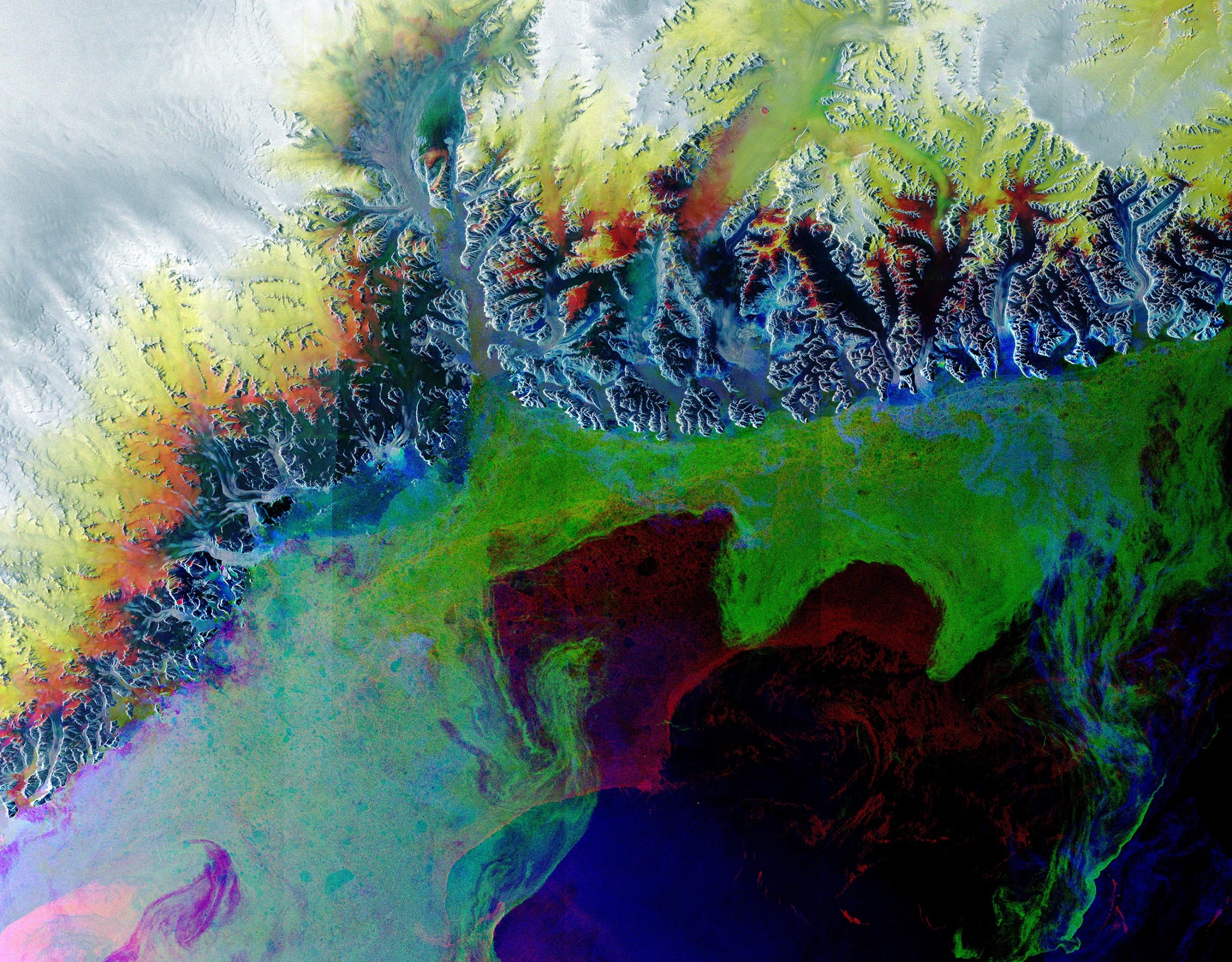
    Copernicus Sentinel-1 satellite image of Kangerlussuaq Glacier, Greenland This false-color image shows visible changes on the ground and sea surface between three different acquisition dates. Credit: Contains modified Copernicus Sentinel data (2021), processed by ESA, CC BY-SA 3.0 IGO

    The Kangerlussuaq Glacier is rapidly retreating, as depicted in Sentinel-1 radar images.

    Accelerated melting, intensified by global warming, contributes to rising sea levels and increased flooding risks. Satellite data, including from ESA’s CryoSat, reveal a stark increase in extreme melting events, underscoring the critical role of remote sensing in tracking these changes and predicting future impacts.

    The Kangerlussuaq Glacier, one of Greenland’s largest tidewater outlet glaciers, is pictured in this false-color image captured by the Copernicus Sentinel-1 mission. Meaning ‘large fjord’ in Greenlandic, the Kangerlussuaq Glacier flows into the head of the Kangerlussuaq Fjord, the second largest fjord in east Greenland.

    Remote Sensing and Ice Monitoring

    Each Sentinel-1 satellite carries an advanced radar instrument giving us a day-and-night supply of images of Earth’s surface. Remote sensing allows us to monitor ice sheets across the globe and keep track of all calving stages – from rift detection to iceberg breakaway – as well as measure ice cover and drifting icebergs.

    This Sentinel-1 radar image combines three separate acquisitions during the summer of 2021 and shows visible changes on the ground and sea surface between three acquisition dates: June 4, June 16, and June 28. The array of colors represents the seasonal retreat of ice during this time.

    At the top of the image, stable ice can be seen in white and is present in all three radar acquisitions. Ice and snow visible only in the early-summer acquisitions can be seen in bright yellow and are not present in the last acquisition as they have melted by this time. The different shades of red highlights ice and snow detected only in the first acquisition captured on June 4. Colors on the sea surface vary owing to surface currents and sea ice dynamics.

    Impact of Melting Ice

    Research using satellite imagery suggests that since 2017, Kangerlussuaq has entered a new phase of rapid retreat and acceleration, and its ice front is now at its most retreated position since the early 20th century.

    As global temperatures increase, the melting of the massive ice sheets that blanket Greenland has significantly accelerated, contributing to sea-level rise. Over the past decade alone, findings have revealed that 3.5 trillion tonnes of ice have melted from the Greenland ice sheet and spilled into the ocean – enough to cover the UK with meltwater 15 m (49 ft) deep.

    Using data from ESA’s CryoSat mission, the research shows that extreme ice melting events in Greenland have become more frequent and more intense over the past 40 years, raising sea levels and the risk of flooding worldwide.

    Implications for Coastal and Marine Ecosystems

    Raised sea levels heighten the risk of flooding for coastal communities worldwide and disrupt Arctic Ocean marine ecosystems, as well as altering patterns of ocean and atmospheric circulation – which affect weather conditions around the planet.

    Observations of Greenland runoff from space can be used to verify how climate models simulate ice sheet melting which will allow improved predictions of how much Greenland will raise the global sea level in the future.

    Never miss a breakthrough: Join the SciTechDaily newsletter.
    Follow us on Google and Google News.

    European Space Agency Geography Glacier Greenland
    Share. Facebook Twitter Pinterest LinkedIn Email Reddit

    Related Articles

    Greenland’s Ice Giants Captured in Breathtaking Satellite Images

    Meltdown of Alaska’s Columbia Glacier Captured From Orbit

    Exploring Earth From Space: Liverpool Land, Greenland

    Exploring Earth From Space: Batura Glacier and the “Karakoram Anomaly”

    Greenland – Exploring the World’s Largest Island From Space

    New NASA Research Identifies Pathway for Greenland Meltwater to Reach Ocean

    Jakobshavn Glacier Sheds a Massive Chunk of Ice

    Scientists Discover Mega-Canyon under Greenland Ice Sheet

    1930s Photos Reveal History of Greenland Glaciers

    Leave A Reply Cancel Reply

    • Facebook
    • Twitter
    • Pinterest
    • YouTube

    Don't Miss a Discovery

    Subscribe for the Latest in Science & Tech!

    Trending News

    The Universe Is Expanding Too Fast and Scientists Can’t Explain Why

    “Like Liquid Metal”: Scientists Create Strange Shape-Shifting Material

    Early Warning Signals of Esophageal Cancer May Be Hiding in Plain Sight

    Common Blood Pressure Drug Shows Surprising Power Against Deadly Antibiotic-Resistant Superbug

    Scientists Uncover Dangerous Connection Between Serotonin and Heart Valve Disease

    Scientists Discover a “Protector” Protein That Could Help Reverse Hair Loss

    Bone-Strengthening Discovery Could Reverse Osteoporosis

    Scientists Uncover Hidden Trigger Behind Stem Cell Aging

    Follow SciTechDaily
    • Facebook
    • Twitter
    • YouTube
    • Pinterest
    • Newsletter
    • RSS
    SciTech News
    • Biology News
    • Chemistry News
    • Earth News
    • Health News
    • Physics News
    • Science News
    • Space News
    • Technology News
    Recent Posts
    • Scientists Overcome Major Quantum Bottleneck, Potentially Transforming Teleportation and Computing
    • Quantum Physics’ Strangest Problem May Hold the Key to Time Itself
    • Scientists Create “Liquid Gears” That Spin Without Touching
    • The Simple Habit That Could Help Prevent Cancer
    • Forgotten Medicinal Plant Shows Promise in Fighting Dangerous Superbugs
    Copyright © 1998 - 2026 SciTechDaily. All Rights Reserved.
    • Science News
    • About
    • Contact
    • Editorial Board
    • Privacy Policy
    • Terms of Use

    Type above and press Enter to search. Press Esc to cancel.