
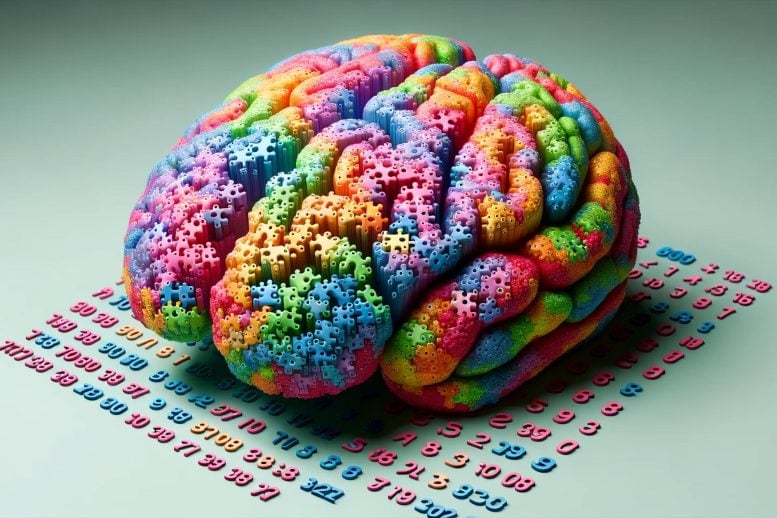
More than 4 million cells profiled to make largest atlas to date to help explore the evolution of the human brain and new targets for disease and treatments.
A longstanding mystery in science is how the over 100 million individual neurons work together to form a network that forms the basis of who we are – every human thought, emotion, and behavior.
A Global Brain Mapping Initiative
Mapping these constellations of cells and discovering their function have been long-standing goals of scores of 21st century molecular cartographers working worldwide as part of the National Institutes of Health’s “Brain Initiative Cell Census Network” project. The overarching purpose of the atlas is to aid in the development of neuroscience research. The hope of the project is that it will allow scientists to gain a better understanding of brain diseases and hard-to-solve medical mysteries behind disorders such as autism and depression.
Groundbreaking Discoveries
Now, a series of new studies has revealed the widespread profiles of the inner molecular workings of the brain at an unprecedented level and scale.
As part of the effort to better understand the evolution of the brains in people and animals, a research team led by scientists at Arizona State University, University of Pennsylvania, the University of Washington, and the Brotman Baty Institute generated the world’s largest primate brain-wide atlas.
“Mapping what cells are where and what they do in the adult primate brain is crucial both for understanding the evolution of human cognition and behavior as well as for identifying what happens when things go wrong and lead to neurological disorders,” said senior co-author Noah Snyder-Mackler, an associate professor at Arizona State University’s School of Life Sciences and Center for Evolution and Medicine.
Their goal was to identify and examine many of the brain cells (neurons and non-neurons) and perform a complete molecular analysis using state-of-the-art single-cell technologies.
To do so, they used samples from 30 different brain regions to draw out and build up, cell by cell, a new atlas. Altogether, the final map was composed of a 4.2 million cellular atlas of the adult primate brain.
“Our data, which we have made open and available to the scientific community and broader public, represent the largest and most comprehensive multimodal molecular atlas in a primate to date, and are crucial for exploring how the many cells of the brain come together to give rise to the behavioral complexity of primates including humans,” said senior co-author Jay Shendure, a professor of Genome Sciences at the University of Washington and Director of the Brotman Baty Institute.
“These data will also provide a critical and much-needed map of complex human-relevant social behavior and disease, as well as the substrate for identifying similarities and differences in these cells and networks across species,” said senior co-author Michael Platt, a professor in the Departments of Neuroscience, Psychology, and Marketing at the University of Pennsylvania.
Delving Deeper: Multi-Omic Analysis
For every cell nucleus, the scientists profiled gene expression (2.58 million transcriptomes) and a suite of complementary DNA gene regulatory regions (1.59 million epigenomes). Taken together, this type of “multi-omic” analysis allowed the authors to study the molecular blueprints that make up distinct brain cell types, thus providing an opportunity to study, and even manipulate, key cells in more detail.
From the gene expression profiles, they were able to identify hundreds of molecularly distinct brain cell types. They also found that cell composition differed extensively across the brain, revealing cellular signatures of region-specific functions, from the neurotransmitters involved in brain cell communication to support cells that help feed and protect the brain from diseases like Alzheimer’s.
They used their data to investigate a total of 53 phenotypes relevant to risk of neurological diseases, disorders, syndromes, behaviors, or other traits. Their results captured known roles of cell classes implicated in neurological diseases, including cells linked to cardioembolic stroke or ischemic stroke, the leading cause of neurological death in people.
They also found that genes linked to Alzheimer’s disease tended to fall within DNA regulatory regions that are only accessible in microglia—the brain’s primary immune cell that protects neurons—consistent with the prominent role of microglia proliferation and activation in Alzheimer’s disease found from genome-wide association studies (GWAS).
Many of the regulatory regions they identified were new, which allowed the team to explore the genetic architecture of neurological disease risk at the cellular level. “We identified numerous associations between genetic risk for neurological disorders and the epigenomic states of specific cell types–some of which had yet to be connected,” said co-lead author Kenneth Chiou, postdoc in the Center for Evolution and Medicine and School of Life Sciences at ASU.
Another type of cell class, basket cells, were enriched for the greatest number of GWAS phenotypes, including disorders such as schizophrenia, bipolar disorder, major depressive disorder and, most strongly, epilepsy. They also found enrichment of Parkinson’s disease-associated sites among open regions in the glial OPC, oligodendrocyte, and astrocyte cell classes.
Finally, they found that heritable sites associated with attention deficit/hyperactivity disorder (ADHD) in their analysis were enriched only among open regions of medium spiny neurons. Medium spiny neurons have been linked to behavioral hyperactivity and disrupted attention via activation of astrocyte-mediated synaptogenesis. Their results suggest that medium spiny neurons may be a promising new target for future ADHD-related study.
Together, “multi-omic” atlas now provides an open resource to the worldwide research community for further investigations into the evolution of the human brain and identifying novel targets for disease interventions.
Reference: “A single-cell multi-omic atlas spanning the adult rhesus macaque brain” by Kenneth L. Chiou, Xingfan Huang, Martin O. Bohlen, Sébastien Tremblay, Alex R. DeCasien, Diana R. O’Day, Cailyn H. Spurrell, Aishwarya A. Gogate, Trisha M. Zintel, Cayo Biobank Research Unit, Madeline G. Andrews, Melween I. Martínez, Lea M. Starita, Michael J. Montague, Michael L. Platt, Jay Shendure and Noah Snyder-Mackler, 12 October 2023, Science Advances.
DOI: 10.1126/sciadv.adh1914
Never miss a breakthrough: Join the SciTechDaily newsletter.
Follow us on Google and Google News.