
Close Menu
    Facebook X (Twitter) Instagram
    SciTechDaily
    • Biology
    • Chemistry
    • Earth
    • Health
    • Physics
    • Science
    • Space
    • Technology
    Facebook X (Twitter) Pinterest YouTube RSS
    SciTechDaily
    Home»Space»Global Solar Wind Structure Instrument for the Interstellar Mapping and Acceleration Probe Will Help Chart Earth’s Astronomical Neighborhood
    Space

    Global Solar Wind Structure Instrument for the Interstellar Mapping and Acceleration Probe Will Help Chart Earth’s Astronomical Neighborhood

    By Karen C. Fox, NASA's Goddard Space Flight CenterJanuary 21, 2021No Comments4 Mins Read
    Facebook Twitter Pinterest Telegram LinkedIn WhatsApp Email Reddit
    Share
    Facebook Twitter LinkedIn Pinterest Telegram Email Reddit
    NASA Interstellar Mapping and Acceleration Probe IMAP
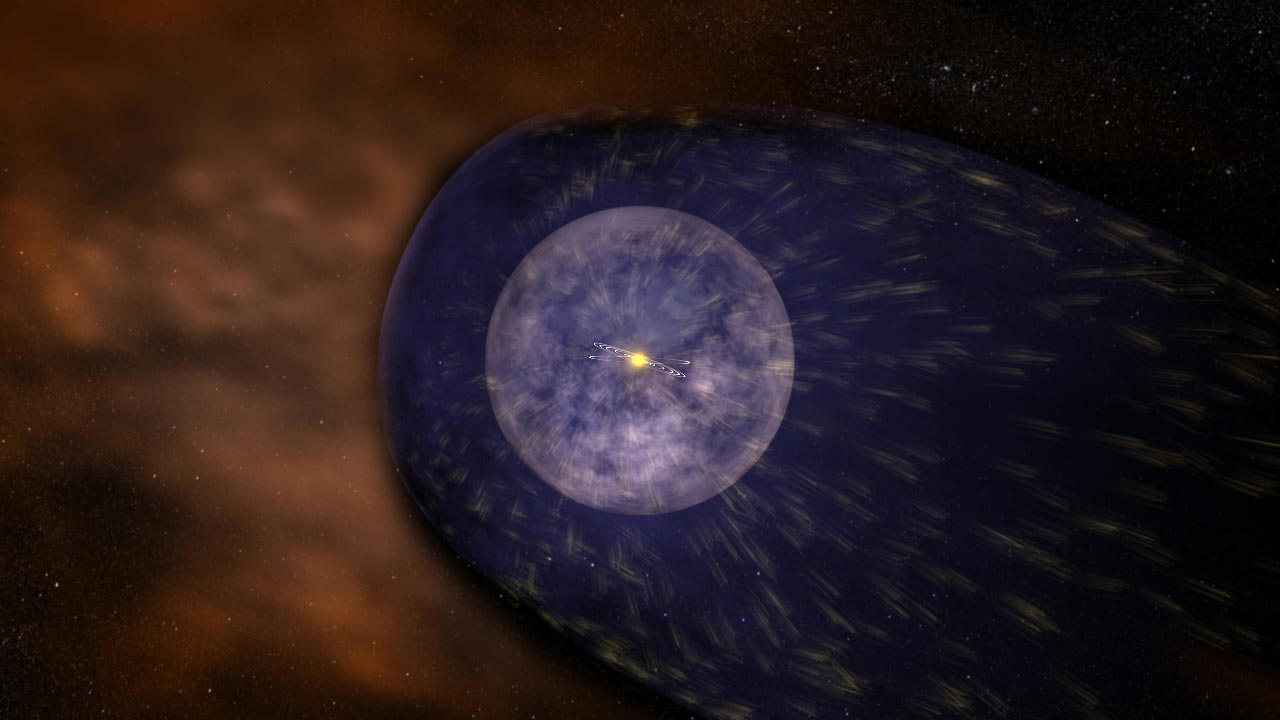
    NASA’s Interstellar Mapping and Acceleration Probe, or IMAP, will help us better understand the nature of interplanetary space, which is dominated by a constant flow of particles from the Sun called the solar wind. On December 30, 2020, Poland signed an agreement with NASA to build the GLOWS instrument for IMAP. Credit: NASA/Goddard Space Flight Center Conceptual Image Lab

    NASA and Poland partner on IMAP to explore the heliosphere; Poland will build the GLOWS instrument.

    NASA and the Ministry of Science and Higher Education of the Republic of Poland have agreed to cooperate on a NASA heliophysics mission, the Interstellar Mapping and Acceleration Probe (IMAP). The agreement, signed on December 30, 2020, will allow the Space Research Center of the Polish Academy of Sciences (CBK PAN) to design and build one of IMAP’s 10 instruments — the Global Solar Wind Structure (GLOWS) instrument — as well as provide ground support and personnel necessary to support the instrument and the IMAP science team.

    Scheduled to launch no earlier than February 2025, IMAP will observe and map the Sun’s heliosphere — the volume of space filled with particles streaming out from the Sun, known as the solar wind — and study how it interacts with the local galactic neighborhood beyond. The boundary zone at the edge of the heliosphere offers protection from the harsher radiation of interstellar space; it may have played a role in creating a habitable solar system and is critical in NASA’s plans for safe human exploration of the Moon and Mars.

    GLOWS will help chart Earth’s astronomical neighborhood by observing light bouncing off hydrogen within interplanetary space. Detecting this glow reveals information about variations in the hydrogen-rich solar wind pouring off of the Sun and helps identify hydrogen that has arrived from interstellar space.

    This is the first time Poland will build an entire instrument for NASA, continuing a long previous history of working together.

    “This agreement builds on a history of cooperation with Poland that dates back to 1962,” said NASA Associate Administrator Steve Jurczyk. “We appreciate Poland’s support for IMAP, and together we’ll work to explore and understand our space environment better than ever before.”

    The agreement expands NASA’s cooperation with Poland from its two ongoing Earth science activities to heliophysics, the study of the Sun and how it drives a dynamic space environment that can affect astronauts and technology in space. In addition to studying the fundamental nature of our solar system, IMAP will enable and mature new ways of forecasting space weather by streaming real-time observations of Earth’s space environment to operators on the ground.

    Poland’s Growing Role in Space Research

    “The Space Research Center of the Polish Academy of Sciences has been conducting research into the heliosphere for many years now,” said Jerzy Duszyński, the president of the Polish Academy of Science. “The invitation it has received to cooperate with NASA confirms the highest standard of space research at the Polish Academy of Sciences.”

    “I have worked closely for almost two decades with our colleagues in Poland,” said David J. McComas, the principal investigator for IMAP and a professor at Princeton University in New Jersey. “I am delighted that they will be building this instrument as a part of the IMAP mission. Their contributions to the team are invaluable and I welcome this formal recognition of the relationship between us.”

    McComas leads the IMAP mission and an international team of 24 partner institutions. The Johns Hopkins Applied Physics Laboratory in Laurel, Maryland, will build the IMAP spacecraft and operate the mission for NASA. IMAP is the fifth mission in NASA’s Solar Terrestrial Probes (STP) Program portfolio. The Heliophysics Program Office at NASA’s Goddard Space Flight Center in Greenbelt, Maryland, manages the STP Program for the Heliophysics Division of NASA’s Science Mission Directorate.

    Never miss a breakthrough: Join the SciTechDaily newsletter.
    Follow us on Google and Google News.

    NASA NASA Goddard Space Flight Center NASA IMAP Solar System
    Share. Facebook Twitter Pinterest LinkedIn Email Reddit

    Related Articles

    Exploring the Sun’s Invisible Shield: NASA’s IMAP Mission To Map the Heliosphere

    Hubble Detects Mysterious Ghostly Glow Surrounding Our Solar System 

    Hubble’s Stunning Grand Tour of the Outer Solar System

    The Solar Wind Across Our Solar System [Infographic]

    “Deflated Croissant” – Uncovering the True Shape of Our Solar System

    NASA’s Interstellar Boundary Explorer Provides New Details on Solar System Boundary

    Goddard’s Space Weather Laboratory to Use ‘Ensemble Forecasting’

    Scientists Believe Water Ice May Exist on the Giant Asteroid Vesta

    Solar Flare Causes Powerful Solar Radiation Storm

    Leave A Reply Cancel Reply

    • Facebook
    • Twitter
    • Pinterest
    • YouTube

    Don't Miss a Discovery

    Subscribe for the Latest in Science & Tech!

    Trending News

    Scientists Break 50-Year-Old Bottleneck To Supercharge Cancer Drug Production

    Popular Weight-Loss Drug Wegovy Linked to Sudden Vision Loss

    Extraordinary Fossil Reveals Fatal Duel Between Ocean Titans 80 Million Years Ago

    “Super Bizarre” – Neuroscientists Discover That Adult Brain Is Filled With Millions of “Silent Synapses”

    Simple Brain Training Cuts Dementia Risk Decades Later, Study Finds

    A Simple Injection Could Help the Heart Heal Itself After a Heart Attack

    Scientists Just Discovered a Hidden Freshwater World Beneath the Great Salt Lake

    Why Your Daily Shower Could Be Worsening the Water Crisis

    Follow SciTechDaily
    • Facebook
    • Twitter
    • YouTube
    • Pinterest
    • Newsletter
    • RSS
    SciTech News
    • Biology News
    • Chemistry News
    • Earth News
    • Health News
    • Physics News
    • Science News
    • Space News
    • Technology News
    Recent Posts
    • This Spice Combo Could Slash Inflammation Hundreds of Times More Effectively
    • This Surprising Daily Habit Could Cut Dementia Risk by 35%
    • Just 10 Minutes a Day: Scientists Say This Ancient Chinese Practice Shows Powerful Blood Pressure Benefits
    • This Alga Rewrites the Rules of Photosynthesis To Survive in the Dark
    • Are Humans Naturally Violent? Scientists Challenge Long-Held Assumptions
    Copyright © 1998 - 2026 SciTechDaily. All Rights Reserved.
    • Science News
    • About
    • Contact
    • Editorial Board
    • Privacy Policy
    • Terms of Use

    Type above and press Enter to search. Press Esc to cancel.