
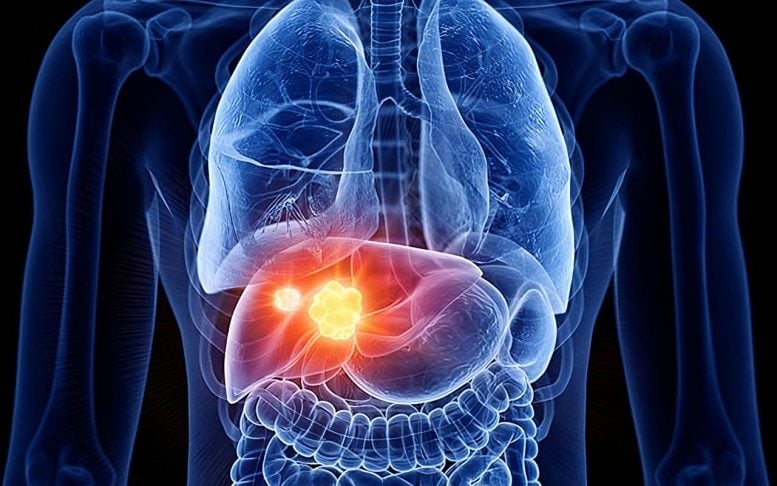
Scientists at UC San Diego have discovered that a protein previously linked to liver cancer may, in fact, be the key to protecting against the disease.
Liver cancer is the sixth most prevalent form of cancer and the third leading contributor to cancer fatalities across the globe. It primarily arises from an interplay of environmental factors and metabolic stressors, like obesity, viral hepatitis, and steatohepatitis, which is characterized by a fatty and inflamed liver.
These stressors exert harmful effects on the liver by causing the death of hepatocytes, the liver’s primary cell type. This cell death then instigates an inflammatory response, signaling the liver to regenerate hepatocytes. However, this abrupt drive for cell proliferation also escalates the chances of tumor growth.
In a new study, scientists at the University of California San Diego School of Medicine investigated the role of activating transcription factor 4 (ATF4), a key mediator of the liver stress response. Despite being previously associated with advanced liver cancer, the researchers found that ATF4 actually protected the liver against hepatocyte death and subsequent tumor formation. The unexpected results could now inspire new clinical strategies for preventing liver disease and cancer.
The study, recently published in the Journal of Hepatology, was led by senior authors Michael Karin, Ph.D., Distinguished Professor of Pharmacology and Pathology at UC San Diego School of Medicine and Benjamin C. Yaden, Ph.D., associate vice president of Diabetes Novel Therapies and External Innovation at Eli Lilly.
ATF4 levels are typically low in healthy cells, but are elevated when the cell experiences stress. To study its role in the progression of liver cancer, researchers developed a mouse model with ATF4-deficient hepatocytes. The mice were then exposed to various stressors to promote liver damage and tumor formation.
The researchers were surprised to find that ATF4-deficient mice showed more hepatocyte cell death, inflammation, compensatory cellular proliferation, and accelerated liver cancer development. This suggested that ATF4 protected against liver cancer in some way.
ATF4 and the Regulation of Ferroptosis
Further experiments led by postdoctoral fellow Feng He, Ph.D., confirmed that ATF4 promoted the expression of SLC7A11, a protein that helps maintain hepatocyte homeostasis. SLC7A11 then helped suppress a specific type of cell death, called ferroptosis. By reducing the amount of ferroptosis, the ATF4-SLC7A11 axis protected hepatocytes and slowed the progression from liver damage to liver cancer.
“Our study suggests that ferroptosis may be the most relevant form of hepatocyte death that leads to inflammation, compensatory proliferation, and cancer in the liver,” said Karin. The researchers believe ferroptosis inhibitors or ATF4 activators may be clinically useful in preventing steatohepatitis and its progression to cancer.
Reference: “ATF4 suppresses hepatocarcinogenesis by inducing SLC7A11 (xCT) to block stress-related ferroptosis” by Feng He, Peng Zhang, Junlai Liu, Ruolei Wang, Randal J Kaufman, Benjamin C Yaden and Michael Karin, 28 March 2023, Journal of Hepatology.
DOI: 10.1016/j.jhep.2023.03.016
The study was funded by the Superfund Basic Research Program, the National Institutes of Health, a C3 Pedal the Cause grant, the National Natural Science Foundation of China, and the Eli Lilly LIFA program.
Co-authors of this study include: Peng Zhang and Junlai Liu at UC San Diego, Ruolei Wang at Shanghai University of Traditional Chinese Medicine, and Randal J. Kaufman at Sanford Burnham Prebys Medical Discovery Institute.
B.C.Y. is a full-time employee of Eli Lilly and Company. F.H. was partly supported by the Eli Lilly LIFA program.
Never miss a breakthrough: Join the SciTechDaily newsletter.
Follow us on Google and Google News.