
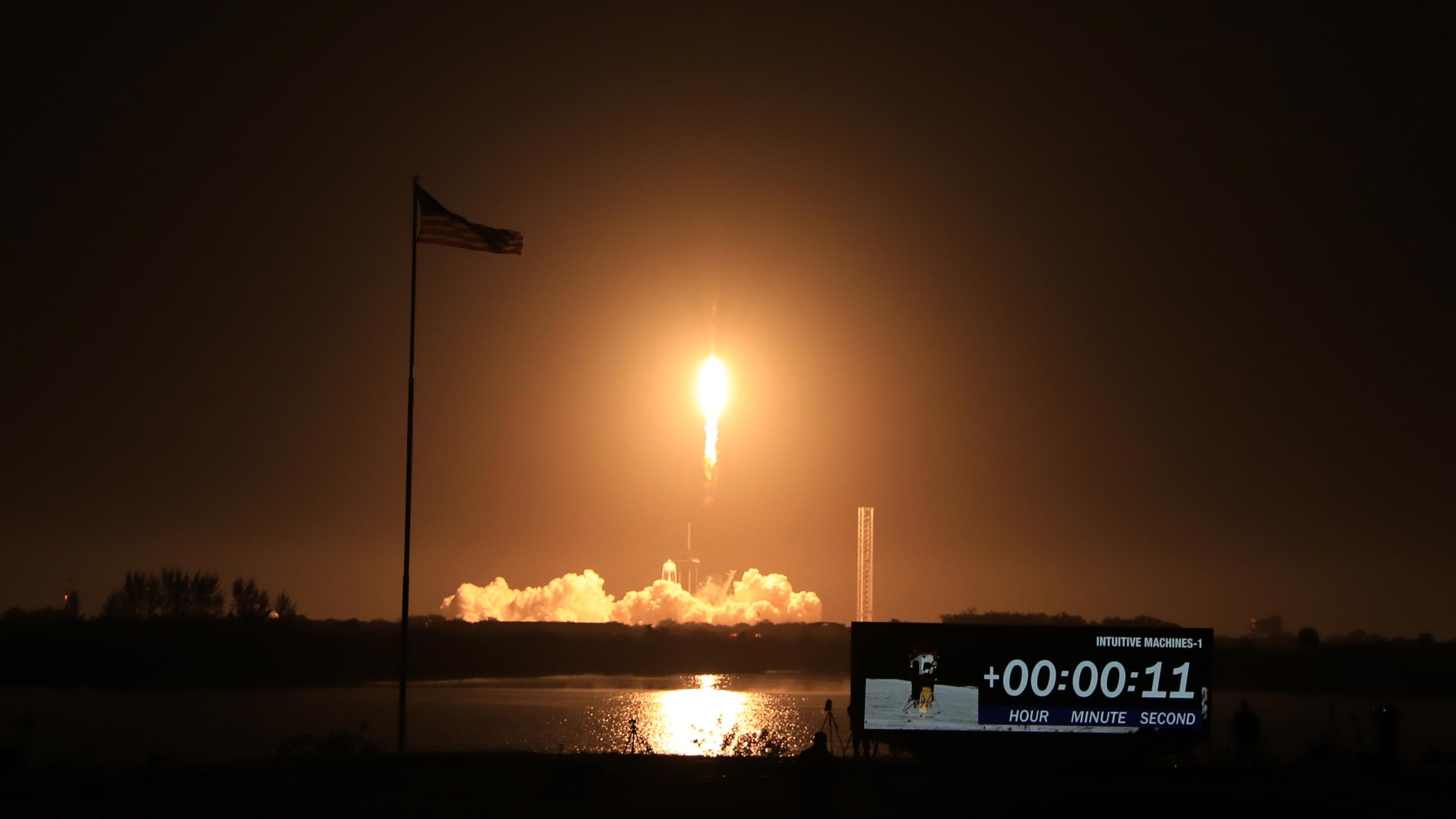
SpaceX’s Falcon 9 launched the Intuitive Machines Nova-C lander at 1:05 a.m. EST on February 15 from Launch Complex 39A at NASA’s Kennedy Space Center in Florida.
Onboard the lander is a suite of NASA scientific instruments and technology demonstrations, as well as commercial payloads, heading to the surface of the Moon. The NASA payloads onboard the lander aim to help the agency develop capabilities needed to explore the Moon under Artemis and in advance of human missions on the lunar surface. Intuitive Machines was selected for this delivery as part of the agency’s CLPS (Commercial Lunar Payload Services) initiative and Artemis campaign
The next major milestone will be when Nova-C separates from the rocket’s second stage, which is expected to occur in approximately 48 minutes or around 1:53 a.m. EST.
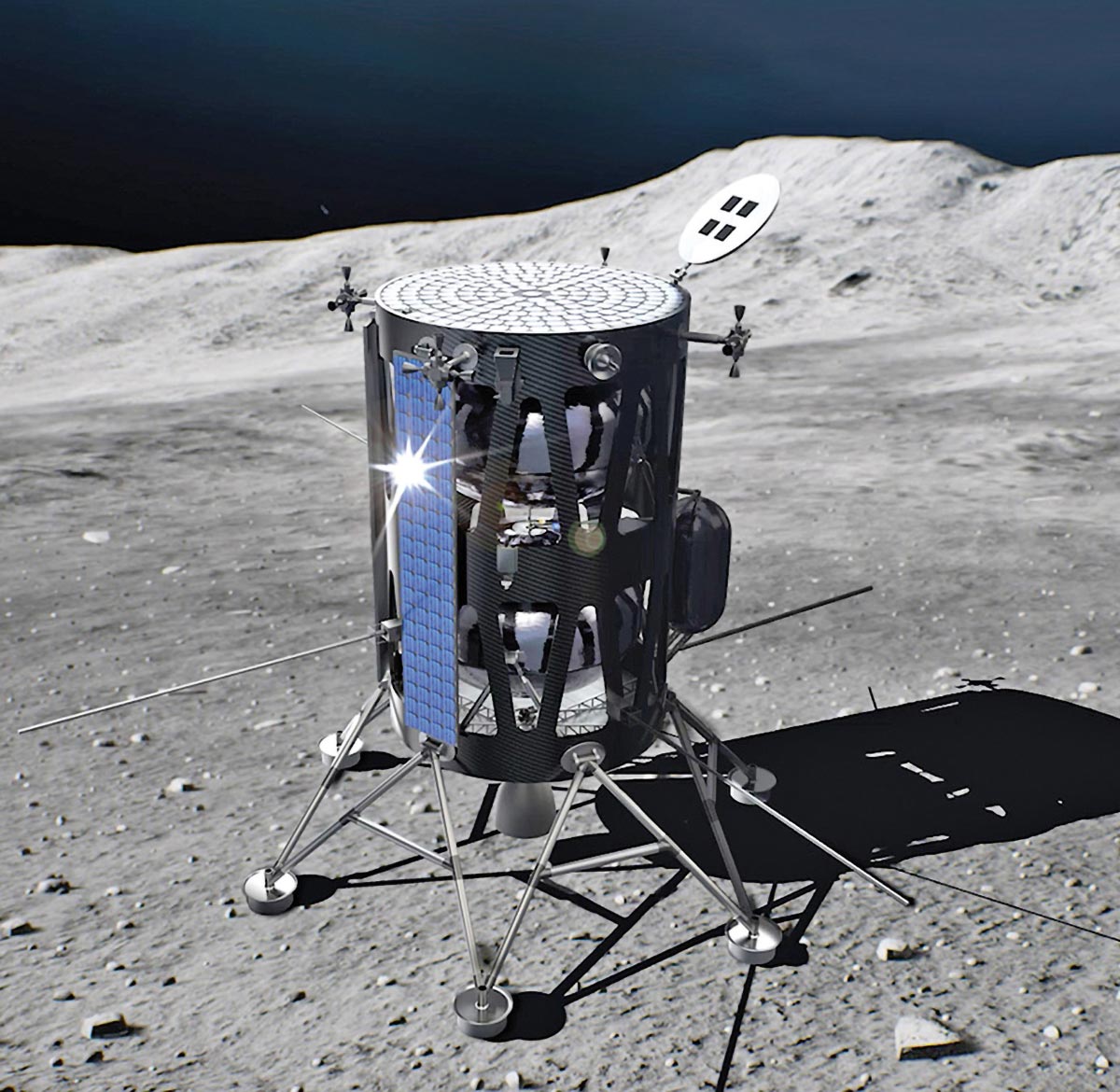
Six NASA Instruments Flying to Moon on Intuitive Machines Lander
The group of NASA instruments aboard IM-1 will conduct scientific research and demonstrate technologies to help us better understand the Moon’s environment and improve landing precision and safety in the challenging conditions of the lunar south polar region, paving the way for future Artemis astronaut missions.
The payloads will collect data on how the plume of engine gasses interacts with the Moon’s surface and kicks up lunar dust, investigate radio astronomy and space weather interactions with the lunar surface, test precision landing technologies, and measure the quantity of liquid propellant in Nova-C propellant tanks in the zero gravity of space.
The Nova-C lander will also carry a retroreflector array that will contribute to a network of location markers on the Moon that will be used as a position marker for decades to come
The Nova-C lander is targeted to land Thursday, February 22, in a relatively flat and safe area near the Malapert A crater, in the south polar region of the Moon.
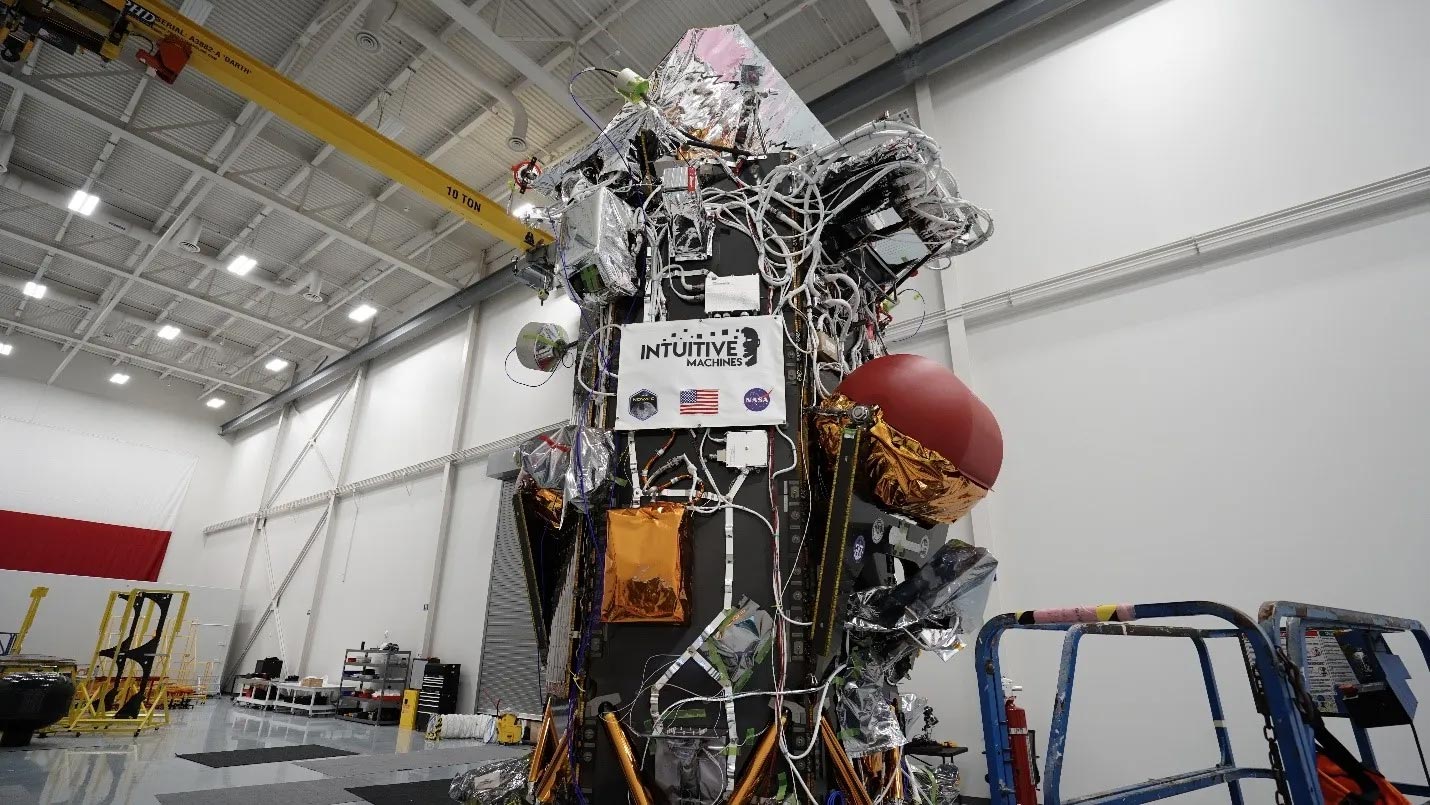
The six NASA payloads aboard Intuitive Machines’ IM-1 mission include:
- LN-1 (Lunar Node 1 Navigation Demonstrator)
A small, CubeSat-sized flight hardware experiment that integrates navigation and communication functionality for autonomous navigation to support future surface and orbital operations. Principal investigator: Dr. Evan Anzalone, NASA’s Marshall Space Flight Center
- LRA (Laser Retroreflector Array)
A collection of eight retroreflectors that enable precision laser ranging, which is a measurement of the distance between an orbiting or landing spacecraft to the reflector on the lander. LRA is a passive optical instrument and will function as a permanent location marker on the Moon for decades to come.
Principal investigator: Dr. Xiaoli Sun, NASA’s Goddard Space Flight Center
- NDL (Navigation Doppler Lidar for Precise Velocity and Range Sensing)
A Lidar-based (Light Detection and Ranging) descent and landing sensor. This instrument operates on the same principles of radar but uses pulses from a laser emitted through three optical telescopes. NDL will measure vehicle velocity (speed and direction) and altitude (distance to surface) with high precision during descent to touchdown. Principal investigator: Dr. Farzin Amzajerdian, NASA’s Langley Research Center
- RFMG (Radio Frequency Mass Gauge)
A rocket propellant gauge used to measure the amount of spacecraft propellant in a low-gravity space environment. Using sensor technology, RFMG will measure the amount, or mass, of cryogenic propellants in Nova-C’s tanks, providing data that can help predict propellant usage on future missions. Principal investigator: Dr. Greg Zimmerli, NASA’s Glenn Research Center
- ROLSES (Radio-wave Observations at the Lunar Surface of the Photoelectron Sheath)
Four antennas and a low-frequency radio receiver system designed to study the dynamic radio energy environment near the lunar surface and determine how natural and human-generated activity near the surface interacts with science investigations. It will also detect radio emissions from the Sun, Jupiter, and Earth, as well as dust impacting the surface of the Moon. Principal investigator: Dr. Nat Gopalswamy, NASA Goddard
- SCALPSS (Stereo Cameras for Lunar Plume-Surface Studies)
A suite of four cameras to capture stereo and still images of the dust plume created by the lander’s engine as it begins its descent to the lunar surface until after the engine shuts off. Principal investigator: Michelle Munk, NASA Langley
Intuitive Machines is one of 14 vendors eligible to carry NASA payloads to the Moon through the agency’s CLPS initiative, which began in 2018. CLPS is an innovative approach connecting NASA with commercial solutions from American companies to deliver scientific, exploration, and technology payloads to the Moon’s surface and into lunar orbit. Through CLPS, NASA aims to gain new insights into the lunar environment and expand the lunar economy to support future crewed missions under the Artemis campaign.
Never miss a breakthrough: Join the SciTechDaily newsletter.
Follow us on Google and Google News.