
Close Menu
    Facebook X (Twitter) Instagram
    SciTechDaily
    • Biology
    • Chemistry
    • Earth
    • Health
    • Physics
    • Science
    • Space
    • Technology
    Facebook X (Twitter) Pinterest YouTube RSS
    SciTechDaily
    Home»Space»Hubble Image of the Week – GOODS-South Deep UV Legacy Field View
    Space

    Hubble Image of the Week – GOODS-South Deep UV Legacy Field View

    By MATHIAS JÄGER, HUBBLE SPACE TELESCOPEAugust 27, 2018No Comments2 Mins Read
    Facebook Twitter Pinterest Telegram LinkedIn WhatsApp Email Reddit
    Share
    Facebook Twitter LinkedIn Pinterest Telegram Email Reddit
    Hubble GOODS South View
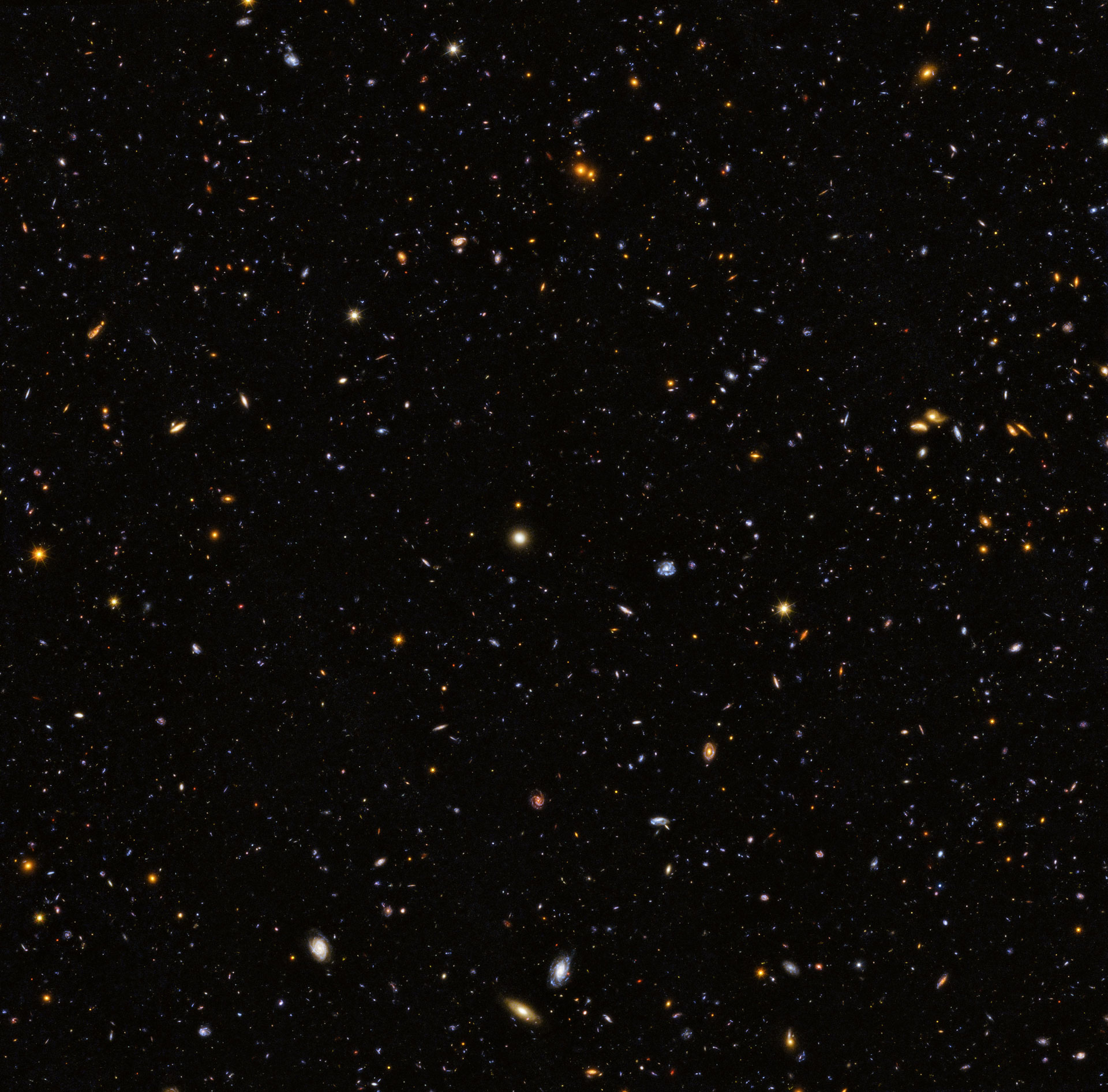
    This image from the Hubble Deep UV (HDUV) Legacy Survey encompasses 12,000 star-forming galaxies in a part of the constellation Fornax known as the GOODS-South field. Credit: ESA/Hubble & NASA

    Following on from last week’s Picture of the Week, this week we showcase the second part of the Hubble Deep UV (HDUV) Legacy Field, the GOODS-South view. With the addition of new ultraviolet light imagery, astronomers using the NASA/ESA Hubble Space Telescope have captured the largest panoramic view of the fire and fury of star birth in the distant Universe, encompassing 12,000 star-forming galaxies.

    Hubble’s ultraviolet vision opens up a new window on the evolving Universe, tracking the birth of stars over the last 11 billion years up to the cosmos’s busiest star-forming period, which happened about three billion years after the Big Bang.

    So far, ultraviolet light has been the missing piece of the cosmic puzzle. Now, combined with data in infrared, and visible light from Hubble and other space- and ground-based telescopes, astronomers have assembled the most comprehensive portrait yet of the Universe’s evolutionary history. The image straddles the gap between the very distant galaxies, which can only be viewed in infrared light, and closer galaxies, which can be seen across different wavelengths. The light from distant star-forming regions in remote galaxies started out as ultraviolet, but the expansion of the Universe has shifted the light into infrared wavelengths. By comparing images of star formation in the distant and nearby Universe, astronomers can get a better understanding of how nearby galaxies grew from small clumps of hot, young stars long ago.

    The observation program harnessed the ultraviolet vision of Hubble’s Wide Field Camera 3. This study extends and builds on the previous Hubble multi-wavelength data in the CANDELS-Deep (Cosmic Assembly Near-infrared Deep Extragalactic Legacy Survey) fields within the central part of the GOODS (The Great Observatories Origins Deep Survey) fields. This mosaic is 14 times the area of the Hubble Ultraviolet Ultra Deep Field released in 2014.

    Never miss a breakthrough: Join the SciTechDaily newsletter.
    Follow us on Google and Google News.

    Astronomy Hubble Space Telescope
    Share. Facebook Twitter Pinterest LinkedIn Email Reddit

    Related Articles

    A Morphing Spiral Galaxy Amongst Friends

    Hubble Views Magnificent Lopsided Galaxy NGC 2276

    Hubble Captures Fantastic Detail of Eponymous Spiral Galaxy NGC 691

    Spectacular Image Captured by Hubble Shows a Strangely Contorted Spiral Galaxy

    A Distant Spiral in Virgo: Extraordinary Detail Seen in a Galaxy 150 Million Light-Years Away From Earth

    Magnetic Monsters: Hubble Tracks Down Location of Mysterious Radio Signals From Intergalactic Space

    A Menagerie of Galaxies: Hubble Captures a Cluster With Galaxies of All Shapes and Sizes

    How Habitable Are Planets That Orbit Red Dwarfs – The Most Common Type of Stars in the Galaxy?

    Cosmic Silver Lining: Hubble Spots V565 Surrounded by Four Prominent Diffraction Spikes

    Leave A Reply Cancel Reply

    • Facebook
    • Twitter
    • Pinterest
    • YouTube

    Don't Miss a Discovery

    Subscribe for the Latest in Science & Tech!

    Trending News

    Popular Sugar-Free Sweetener Linked to Liver Disease, Study Warns

    What Is Hantavirus? The Deadly Disease Raising Alarm Worldwide

    Scientists Just Discovered How the Universe Builds Monster Black Holes

    Scientists Unveil New Treatment Strategy That Could Outsmart Cancer

    A Simple Vitamin May Hold the Key to Treating Rare Genetic Diseases

    Scientists Think the Real Fountain of Youth May Be Hiding in Your Gut

    Ravens Don’t Follow Wolves, They Predict Them

    This Common Knee Surgery May Be Doing More Harm Than Good

    Follow SciTechDaily
    • Facebook
    • Twitter
    • YouTube
    • Pinterest
    • Newsletter
    • RSS
    SciTech News
    • Biology News
    • Chemistry News
    • Earth News
    • Health News
    • Physics News
    • Science News
    • Space News
    • Technology News
    Recent Posts
    • Why Are So Many New Fathers Dying? Scientists Say the U.S. Has a Dangerous Blind Spot
    • Scientists Identify Simple Supplement That Greatly Reduces Alzheimer’s Damage
    • You May Have a Dangerous Type of Cholesterol Even if Your Tests Look Normal
    • Study Reveals Dangerous Flaw in AI Symptom Checkers
    • New MRI Breakthrough Captures Stunningly Clear Images of the Eye and Brain
    Copyright © 1998 - 2026 SciTechDaily. All Rights Reserved.
    • Science News
    • About
    • Contact
    • Editorial Board
    • Privacy Policy
    • Terms of Use

    Type above and press Enter to search. Press Esc to cancel.