
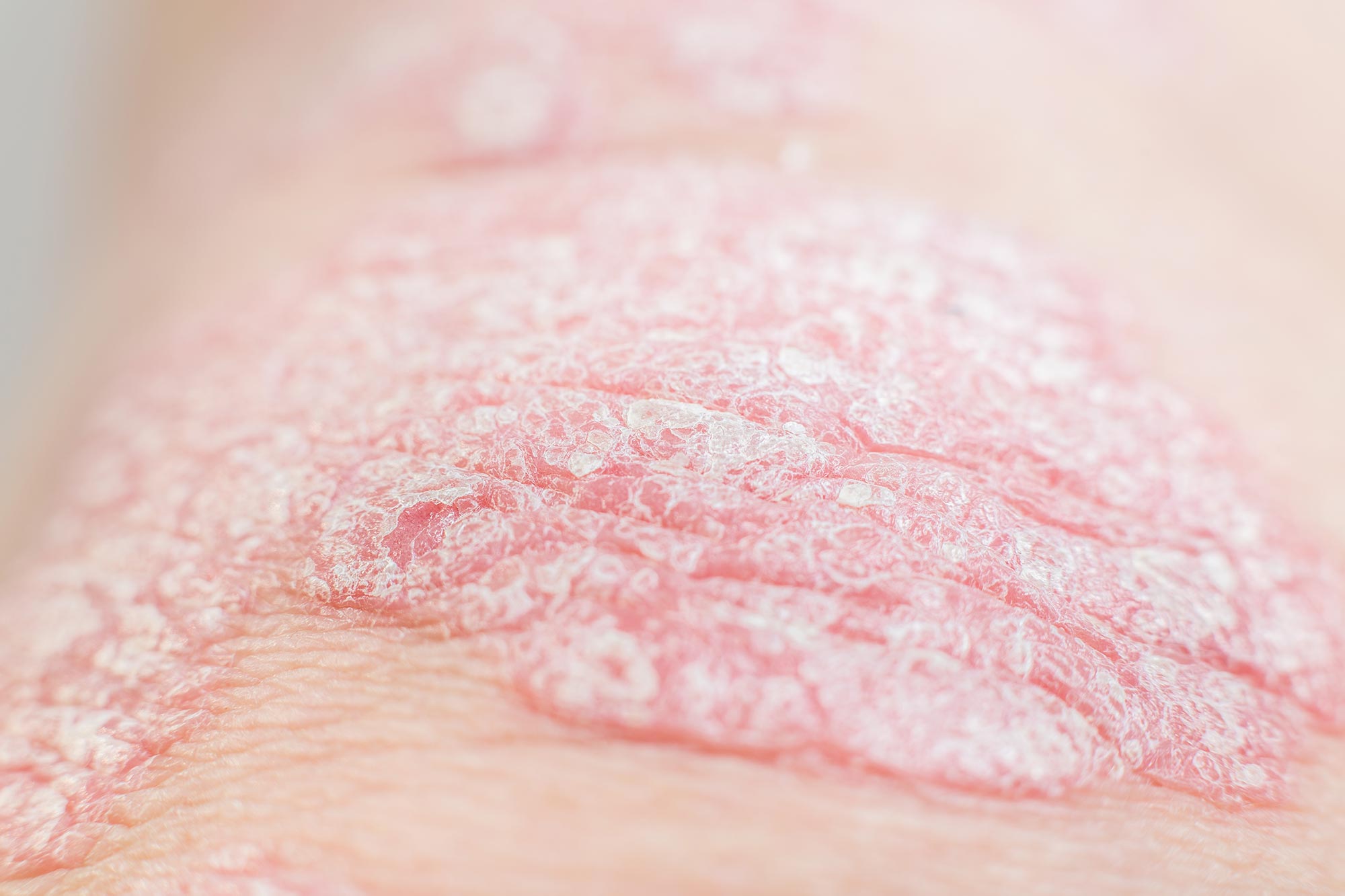
A common nutritional supplement has shown unexpected promise in treating psoriasis.
A widely available nutritional supplement may help reduce the immune system activity responsible for psoriasis, according to new research from China. Scientists found that pantethine, a derivative of vitamin B5 commonly used to lower cholesterol, can interfere with metabolic processes that drive inflammation. The findings were supported by experiments in mice and a small clinical trial involving people with psoriasis.
In the 12-week trial, 24 patients received standard treatment with topical calcipotriene/betamethasone ointment. Half also took pantethine tablets. Participants receiving the supplement showed improvements in their symptoms, particularly those who started with elevated blood cholesterol levels. Although encouraging, the results are preliminary and do not establish pantethine as an effective standalone treatment.
How Cholesterol Metabolism Affects Immune Cells
The research focused on dendritic cells, immune cells that help organize the body’s defenses. These cells detect and present foreign substances to specialized T cells and release chemical signals that recruit other immune cells. When dendritic cells become excessively active, they can sustain the inflammation associated with psoriasis and other autoimmune diseases.
The scientists discovered unusually high levels of enzymes called Vanins in dendritic cells from patients with psoriasis and several other autoimmune conditions. Vanins convert pantethine into vitamin B5, an essential nutrient involved in cellular energy production. The researchers found that increased Vanin activity depleted pantethine, promoting cholesterol production within dendritic cells and triggering excessive immune activation.
“Emerging evidence highlights that metabolic pathways and their associated metabolites play vital roles in regulating immune cell function and autoimmune progression,” says Wei-Na Zhang, a researcher at the State Key Laboratory of Biomedical Analysis in Beijing. “But therapeutic strategies targeting metabolism in inflammatory diseases remain underexplored.”
Blocking the Enzymes That Drive Inflammation
To investigate this connection, the researchers reduced Vanin levels in dendritic cells. Without these enzymes, the cells became less active and were less capable of stimulating T cells. A drug that inhibited Vanins also prevented the development of psoriasis in mice.
Further experiments showed that replenishing pantethine reduced cholesterol accumulation inside dendritic cells and suppressed their activation. Pantethine treatment also alleviated psoriasis symptoms in mice, providing additional evidence that the metabolic pathway contributes to inflammatory disease.
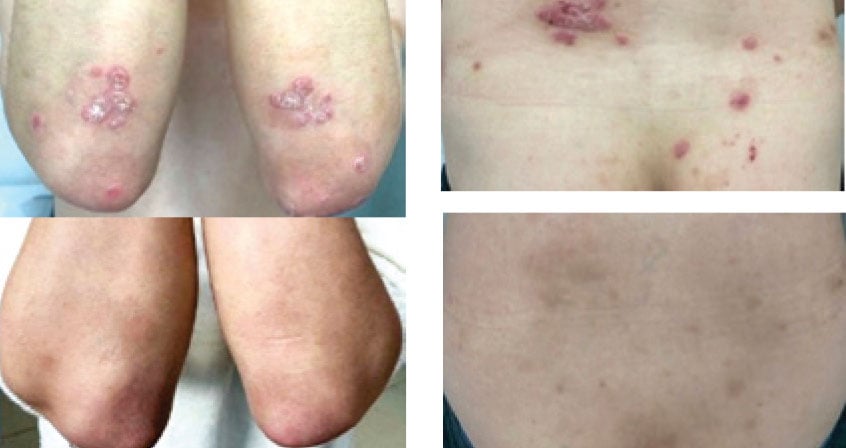
“We found that pantethine administration effectively alleviated psoriasis in mice, suggesting that insufficient pantethine levels may be the crucial contributor to hyperactivation of dendritic cells and autoimmune inflammation following the up-regulation of Vanins,” Zhang says.
Early Clinical Results Point to a Potential Treatment
Pantethine has long been available as a nutritional supplement because it can inhibit cholesterol synthesis. The new findings suggest that its effects on cholesterol metabolism may also influence immune responses. However, the small human trial cannot establish whether the improvements resulted from the same cellular mechanism demonstrated in laboratory experiments.
“Our investigator-initiated clinical trial demonstrated encouraging therapeutic efficacy of pantethine as an adjunctive therapy in psoriasis, but these findings should be interpreted as proof-of-concept for clinical feasibility rather than direct mechanistic validation,” Zhang says. “Overall, our study uncovers the Vanin-pantethine-cholestrol axis as a key metabolic pathway governing dendritic cell activation and provides a foundation for therapeutic strategies targeting several dendritic cell–mediated autoimmune diseases.”
Reference: “Vanin-pantethine metabolic axis shapes dendritic cell function and affects inflammatory disorder progression” by Ai-Ping Cao, Jun-Cheng Li, Rui Wang, Yun-Ying Wang, Nan Wu, Yan-Hong Liu, Zhi Jin, Jia-Yu Liu, Yan-Yan Shen, Yue Guo, Qi Qi, Yao Wang, Rui-Bo Wang, Bo-Yang Xie, Chun-Yan Yan, Qiu-Ying Han, Shao-Yi Huang, Sheng-Ming Wu, Na Wang, Xin Pan, Cheng-Xin Li, Tao Zhou, Ai-Ling Li, Qing Xia and Wei-Na Zhang, 27 October 2026, Journal of Experimental Medicine.
DOI: 10.1084/jem.20252558
Never miss a breakthrough: Join the SciTechDaily newsletter.
Follow us on Google and Google News.