
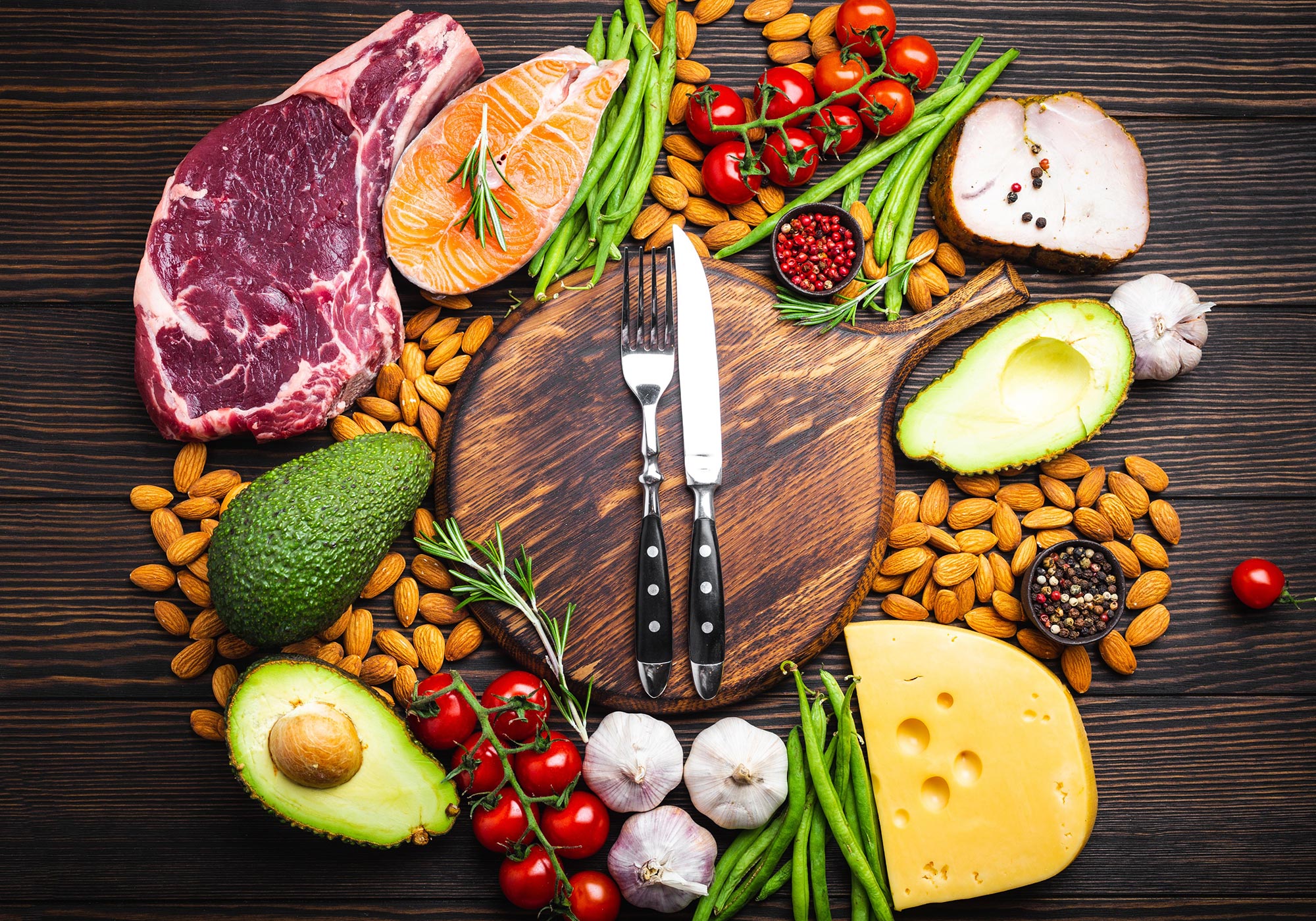
A new study from UCSF conducted on mice reveals that the diet boosts levels of anti-inflammatory compounds.
Scientists have long theorized that the keto diet could help soothe an overactive immune system, potentially benefiting individuals with conditions such as multiple sclerosis.
Now, they have reason to believe it could be true.
Scientists at UC San Francisco have discovered that the diet makes the gut and its microbes produce two factors that attenuated symptoms of MS in mice.
If the study translates to humans, it points toward a new way of treating MS and other autoimmune disorders with supplements. The keto diet severely restricts carbohydrate-rich foods like bread, pasta, fruit, and sugar, but allows unlimited fat consumption.
Without carbohydrates to use as fuel, the body breaks down fat instead, producing compounds called ketone bodies. Ketone bodies provide energy for cells to burn and can also change the immune system. Working with a mouse model of MS, the researchers found that mice who produced more of a particular ketone body, called β-hydroxybutyrate (βHB), had less severe disease.
The Role of Gut Bacteria in Immune Regulation
The additional βHB also prompted the gut bacterium Lactobacillus murinus to produce a metabolite called indole lactic acid (ILA). This blocked the activation of T helper 17 immune cells, which are involved in MS and other autoimmune disorders.
“What was really exciting was finding that we could protect these mice from inflammatory disease just by putting them on a diet that we supplemented with these compounds,” said Peter Turnbaugh, PhD, of the Benioff Center for Microbiome Medicine.
Earlier, Turnbaugh had shown that when secreted by the gut, βHB counteracts immune activation. This prompted a postdoctoral scholar who was then working in his lab, Margaret Alexander, PhD, to see if the compound could ease the symptoms of MS in mice.
In the new study, which was recently published in Cell Reports, the team looked at how the ketone body-rich diet affected mice that were unable to produce βHB in their intestines, and found that their inflammation was more severe.
But when the researchers supplemented their diets with βHB, the mice got better.
Identifying Key Microbes and Metabolites
To find out how βHB affects the gut microbiome, the team isolated bacteria from the guts of three groups of mice that were fed either the keto diet, a high-fat diet, or the βHB supplemented high-fat diet.
Then, they screened the metabolic products of each group’s distinct microbes in an immune assay and determined that the positive effects of the diet were coming from a member of the Lactobacillus genus: L. murinus.
Two other techniques, genome sequencing, and mass spectrometry, confirmed that the L. murinus they found produced indole lactic acid, which is known to affect the immune system.
Finally, the researchers treated the MS mice with either ILA or L. murinus, and their symptoms improved.
Turnbaugh cautioned that the supplement approach still needs to be tested in people with autoimmune disorders.
“The big question now is how much of this will translate into actual patients,” he said. “But I think these results provide hope for the development of a more tolerable alternative to helping those people than asking them stick to a challenging restrictive diet.”
Reference: “A diet-dependent host metabolite shapes the gut microbiota to protect from autoimmunity” by Margaret Alexander, Vaibhav Upadhyay, Rachel Rock, Lorenzo Ramirez, Kai Trepka, Patrycja Puchalska, Diego Orellana, Qi Yan Ang, Caroline Whitty, Jessie A. Turnbaugh, Yuan Tian, Darren Dumlao, Renuka Nayak, Andrew Patterson, John C. Newman, Peter A. Crawford and Peter J. Turnbaugh, 4 November 2024, Cell Reports.
DOI: 10.1016/j.celrep.2024.114891
This work was funded by the NIH (grants P30 DK063720, R01DK114034, R01HL122593, R01AR074500, R01AT011117, F32AI14745601, K99AI159227, R00AI159227-03, K08HL165106, K08AR073930, R01AG067333, R01DK091538, R01AG069781) and the Damon Runyon Cancer Research Foundation (DRR4216). Turnbaugh is a Chan Zuckerberg Biohub-San Francisco Investigator.
Never miss a breakthrough: Join the SciTechDaily newsletter.
Follow us on Google and Google News.