
Close Menu
    Facebook X (Twitter) Instagram
    SciTechDaily
    • Biology
    • Chemistry
    • Earth
    • Health
    • Physics
    • Science
    • Space
    • Technology
    Facebook X (Twitter) Pinterest YouTube RSS
    SciTechDaily
    Home»Health»Study Suggests Whole Fruit May Prompt Kids to Make Healthier Choices
    Health

    Study Suggests Whole Fruit May Prompt Kids to Make Healthier Choices

    By Stacey Shackford, Cornell UniversityJuly 25, 2012No Comments3 Mins Read
    Facebook Twitter Pinterest Telegram LinkedIn WhatsApp Email Reddit
    Share
    Facebook Twitter LinkedIn Pinterest Telegram Email Reddit
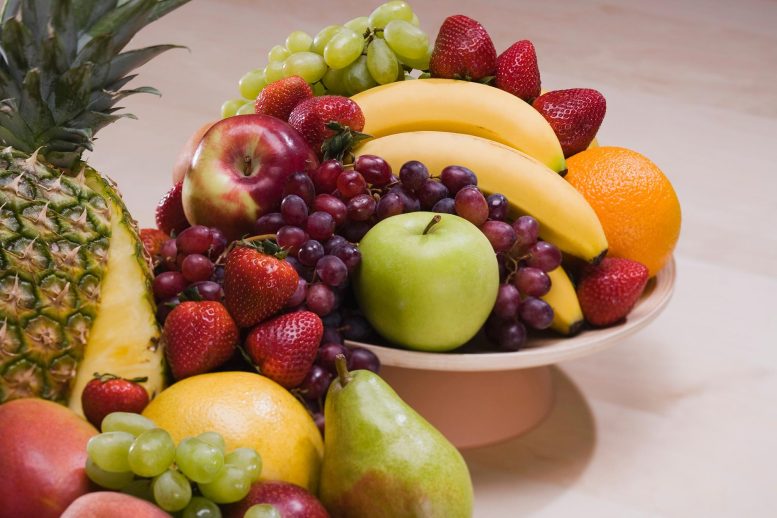
    Whole Fruit Assortment
    A study suggests the mere presence of nutritious options like whole fruit may prompt kids to make healthier choices, even if they don’t actually select the fruit.

    A study by scientists at Cornell’s Center for Behavioral Economics in Child Nutrition Programs suggests that the presence of certain foods in school cafeterias may prompt kids to make healthier lunch choices.

    Just because healthful foods are available in school cafeterias doesn’t mean children are going to eat them, but in some cases, the very presence of such foods as whole fruit may actually prompt kids to make healthier choices, even if fruit is never selected.

    A study by researchers at Cornell’s Center for Behavioral Economics in Child Nutrition Programs (BEN Center) found that the mere presence of applesauce and fruit cocktail on the school lunch line sent students to seek out sugary snacks, increasing the number of cookies, ice cream bars and Little Debbie snack cakes they purchased, while green beans and bananas inspired them to make more healthful choices.

    “The impacts of offering a single vegetable or fruit may have significant implications for the whole meal,” said study co-author Andrew Hanks, a postdoctoral researcher for the BEN Center.

    “Even though these students did not take a fruit or vegetable, either in a meal or as a separate item, their choices of the less healthy a la carte items were still affected by the presence of fruits and vegetables,” said BEN Center co-director and study co-author David Just. Brian Wansink, the other co-director, is also a co-author.

    The study, published in the April edition of the Agricultural and Resource Economics Review, analyzed school lunch purchase data from two schools in upstate New York.

    The authors hypothesized that the children’s choices could be the result of the “priming effect.” The sweet nature of applesauce and fruit cocktail might have led the children to be drawn to other items with greater sugar content, while the green beans and bananas could cause the student to think about healthful foods.

    Although the exact foods that trigger behavior may differ from cafeteria to cafeteria, the principle is that relatively more healthful items trigger healthier choices and vice versa.

    The findings build upon previous studies by Just and Wansink that have found that environmental cues such as visibility, convenience and accessibility can affect behavior in systematic ways.

    “Trigger foods may fly under the radar, influencing choice without overtly drawing the attention of the decision maker, but they can have substantial effects on the nutritional content of the food selected,” Wansink said.

    Just added that the behavioral anomaly could be exploited to lead children to eat better. “This information can be most useful for food service directors as they strive to identify which options will help students make the most healthful choices,” he said.

    Reference: “Trigger Foods: The Influence of “Irrelevant” Alternatives in School Lunchrooms” by Andrew S. Hanks, David R. Just and Brian Wansink, April 2012, Agricultural and Resource Economics Review.
    DOI: 10.22004/ag.econ.123318

    The research was supported by the U.S. Department of Agriculture’s Economic Research Service and Food and Nutrition Services.

    Never miss a breakthrough: Join the SciTechDaily newsletter.
    Follow us on Google and Google News.

    Behavioral Science Cornell University Diet Food Science Nutrition
    Share. Facebook Twitter Pinterest LinkedIn Email Reddit

    Related Articles

    Superfoods: Can They Actually Pose a Health Risk?

    Addicted to Food? It Could Be Your Parent’s Fault

    A Healthy Plant-Based Diet Can Reduce Cancer Risk for Middle Aged Women

    Humans Absorb Less Protein From Plant-Based Meat Than Normal Meat

    Happiness Is a Salad: Strong Correlations Between What We Eat and How We Feel

    Color-Coded Nutrition Labels and Warnings Linked to Healthier Food Purchases

    Shoppers Choose Healthier Groceries When Supermarkets Place Fruit and Vegetables Near Store Entrances

    Many Consumers Misinterpret Food (Best By / Use By) Expiration Date Labels

    Yale Researchers Show Parents Underestimate Their Children’s Weight

    Leave A Reply Cancel Reply

    • Facebook
    • Twitter
    • Pinterest
    • YouTube

    Don't Miss a Discovery

    Subscribe for the Latest in Science & Tech!

    Trending News

    Scientists May Have Found the Key to Jupiter and Saturn’s Moon Mystery

    Scientists Uncover Brain Changes That Link Pain to Depression

    Saunas May Do More Than Raise Body Temperature – They Activate Your Immune System

    Exercise in a Pill? Metformin Shows Surprising Effects in Cancer Patients

    Hidden Oceans of Magma Could Be Protecting Alien Life

    New Study Challenges Alzheimer’s Theories: It’s Not Just About Plaques

    Artificial Sweeteners May Harm Future Generations, Study Suggests

    Splashdown! NASA Artemis II Returns From Record-Breaking Moon Mission

    Follow SciTechDaily
    • Facebook
    • Twitter
    • YouTube
    • Pinterest
    • Newsletter
    • RSS
    SciTech News
    • Biology News
    • Chemistry News
    • Earth News
    • Health News
    • Physics News
    • Science News
    • Space News
    • Technology News
    Recent Posts
    • Hidden “Trade Winds” Inside Cells Could Explain Cancer Spread
    • Humans Owe Their Eyes to a Tiny One-Eyed “Cyclops”
    • Researchers Capture Quantum Interference in One of Nature’s Rarest Atoms
    • Ancient DNA Reveals Irish Goats Have a 3,000-Year-Old Lineage Still Alive Today
    • Historians Reveal Secrets of the Strange Hat Wars That Shook Early Modern England
    Copyright © 1998 - 2026 SciTechDaily. All Rights Reserved.
    • Science News
    • About
    • Contact
    • Editorial Board
    • Privacy Policy
    • Terms of Use

    Type above and press Enter to search. Press Esc to cancel.