

Major discovery marks culmination of 40 years of work by Arlen and Diane Chase.
Archaeologists from the University of Houston have discovered the tomb of Te K’ab Chaak at Caracol, an ancient Maya city located in present-day Belize, Central America. Te K’ab Chaak was the founding ruler of Caracol’s royal dynasty. Though now in ruins, Caracol once held significant political influence, dominating the southern Yucatan Peninsula between 560 and 680 AD before being abandoned around 900 AD.
This marks the first time in over 40 years of excavation at Caracol that an identifiable ruler’s tomb has been uncovered. The site is the largest known Maya archaeological area in both Belize and the broader lowland Maya region.
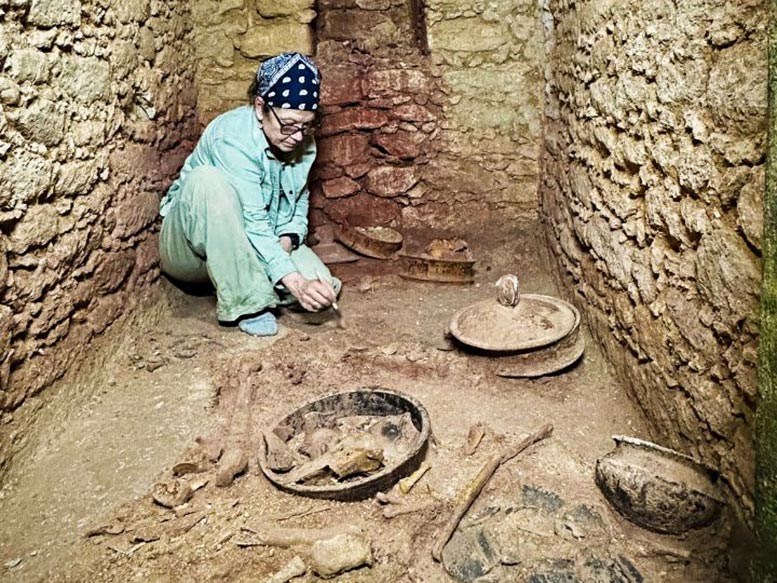
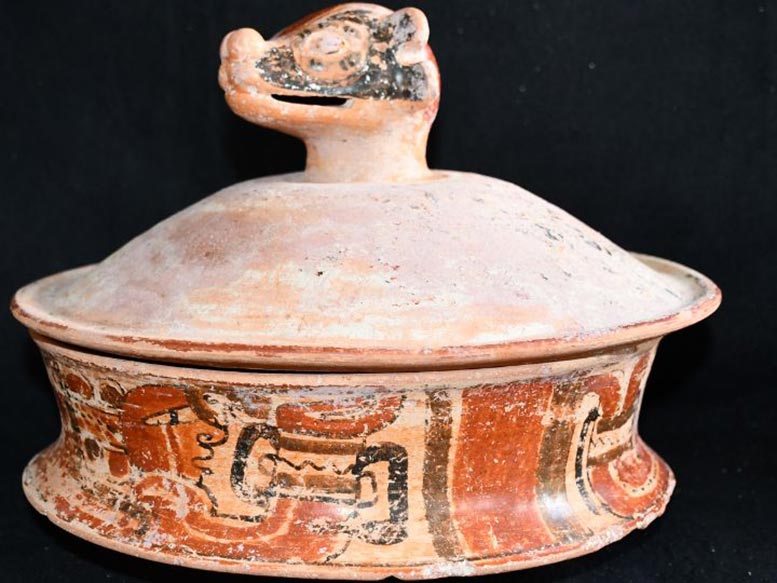
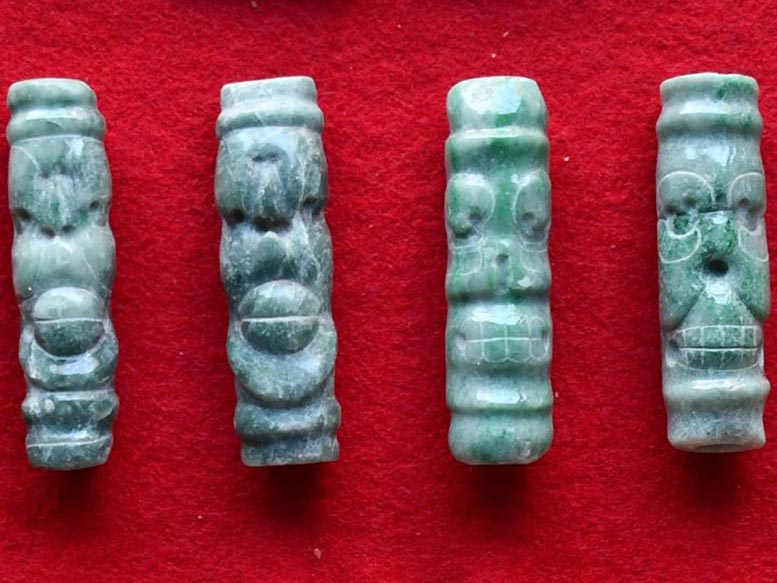
Te K’ab Chaak, who ascended to power in 331 AD, was buried at the base of a shrine dedicated to the royal family. The tomb included a rich array of offerings: eleven ceramic vessels, carved bone tubes, jadeite ornaments, a mosaic jadeite mask, Pacific spondylus shells, and other organic items that have not survived. Among the pottery, one vessel depicts a ruler holding a spear while receiving gifts from deities.
Another shows Ek Chuah, the Maya god associated with traders, surrounded by offerings. Four vessels feature images of bound captives (a motif also found in two other burials), while two others have lids topped with modeled coatimundi (pisote) heads. This animal, known as tz’uutz’ in Maya, was later adopted into the names of Caracol’s subsequent rulers.
Long-term research and burial context
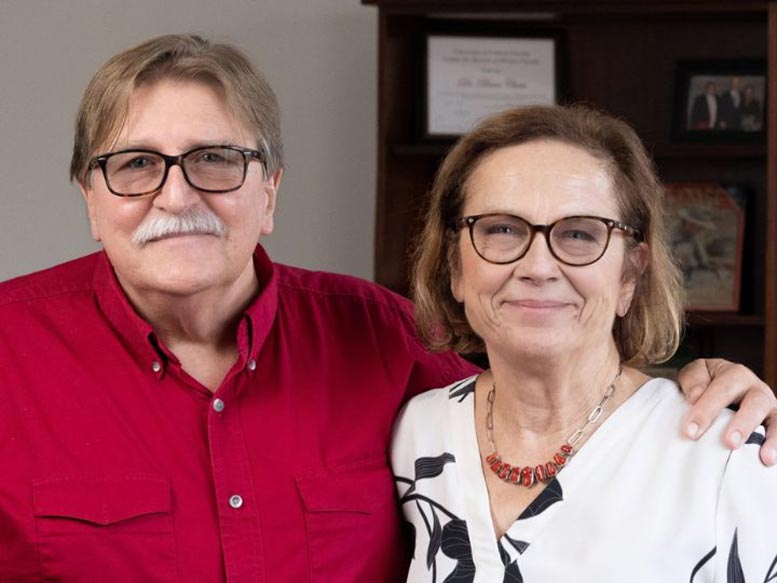
A research team led by Arlen F. Chase and Diane Z. Chase, both affiliated with the University of Houston, has been conducting archaeological work at Caracol for over four decades. The most recent field season was carried out in collaboration with Belize’s Institute of Archaeology and received support from the Alphawood Foundation, the University of Houston, the Geraldine and Emory Ford Foundation, and the KHR Family Fund.
According to the Chases, Te K’ab Chaak was of advanced age at the time of his burial and stood approximately 5 feet 7 inches tall. Notably, none of his teeth had been preserved.
Excavations in the Northeast Acropolis at Caracol revealed that his tomb was the earliest of three major interments, all dating to around 350 AD. This period coincides with early contact between the Maya and the central Mexican metropolis of Teotihuacan, located roughly 1200 kilometers away. By 300 AD, Teotihuacan had grown into a vast urban center with extensive trade networks across Central America.
“One question that has perplexed Maya archaeologists since the 1960s is whether a new political order was introduced to the Maya area by Mexicans from Teotihuacan,” said Diane Z. Chase, archaeologist and senior vice president for academic affairs and Provost at the University of Houston. “Maya carved stone monuments, hieroglyphic dates, iconography, and archaeological data all suggest that widespread pan-Mesoamerican connections occurred after an event in 378 AD referred to as the ‘entrada.’ Whether this event represented actual Teotihuacanos in the Maya area or Maya using central Mexican symbols is still debated. The Caracol archaeological data suggests that the situation was far more complicated.”
One key discovery supporting these connections is a cremation recovered in 2010 from the center of Caracol’s Northeast Acropolis plaza. Radiocarbon dating places the cremation shortly after Te K’ab Chaak’s burial, around AD 350.
The context included the remains of three individuals alongside artifacts from central Mexico: two large knives, six atlatl points, and fifteen flawless green obsidian blades sourced from Pachuca, Mexico (north of Teotihuacan). Several ceramic vessels also appear to have originated from central Mexico. Among the items was a carved atlatl projectile point, a type commonly associated with Teotihuacan warriors but unusual for Maya contexts.
Ritual practices and cross-cultural identities
The cremation itself and its placement in the center of a residential plaza are also more typical practices for a high-status Teotihuacano and do not accord with standard Maya burial practices. Based on other ceramics in this cremation, the main individual was likely a Caracol royal family member that had adopted central Mexican ritual practices. This individual may even have served as a royal Maya envoy who had lived at Teotihuacan and returned to Caracol.
A third burial – the tomb of a woman, also covered with hematite and containing four pottery vessels, a spondylus bead necklace, mirror fragments, and two Pacific spondylus shells – was recovered in the northern building of the same residential group in 2009 and is similarly dated.
The three burials interred in the Caracol Northeast Acropolis all cluster at AD 350, at least a generation before the previously recognized Teotihuacan presence in the Maya area. They demonstrate that early Maya rulers were fully enmeshed in Mesoamerican-wide contacts prior to the Teotihuacan entrada recorded on Maya monument[s].
Diplomatic and ritual exchange
“Both central Mexico and the Maya area were clearly aware of each other’s ritual practices, as reflected in the Caracol cremation, said Arlen F. Chase, professor and chair of Comparative Cultural Studies at the University of Houston. “The connections between the two regions were undertaken by the highest levels of society, suggesting that initial kings at various Maya cities – such as Te K’ab Chaak at Caracol – were engaged in formal diplomatic relationships with Teotihuacan.” The royal dynasty established by Te K’ab Chaak continued at Caracol for over 460 years.
The Chase’s findings also indicate that ancient peoples in the new world were travelers. A trip between Teotihuacan and Caracol today by car would take over 23 hours. The one-way walking time may be estimated to be approximately 153 days.
Research continues on the contents of the chamber with the reconstruction of the jadeite death mask and with ancient DNA and stable isotope analysis of the skeletal material. The Chases will present results of the 2025 Caracol field season at a conference on Maya–Teotihuacan interaction hosted by the Maya Working Group at the Santa Fe Institute (New Mexico) in August 2025.
Never miss a breakthrough: Join the SciTechDaily newsletter.
Follow us on Google and Google News.