

The discovery of Typhlichthys styx shows that cave-adapted species can continue evolving and splitting into new species, with underground aquifers playing a crucial role in that process.
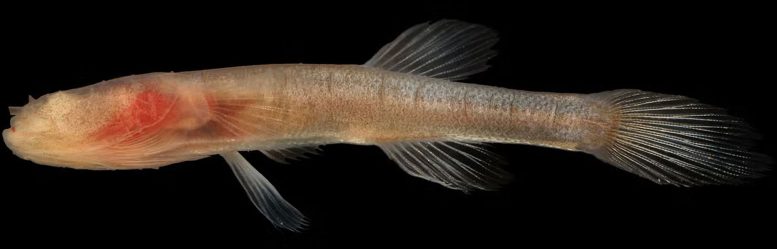
Researchers at Yale have identified a previously unknown species of eyeless cavefish, a finding that challenges the long-standing view that caves and other underground habitats are evolutionary dead ends.
The study found that three species of Southern cavefish, including the newly described Typhlichthys styx, descended from a common ancestor that had already adapted to life underground. The fish spread through aquifers within soluble rock formations across the southeastern United States.
The findings provide some of the strongest evidence yet that speciation, the process by which one species splits into two or more distinct species, can occur in organisms restricted to subterranean environments.
“We show that, in terms of evolution, what’s happening underground matters,” said Chase Brownstein, a graduate student in ecology and evolutionary biology in Yale’s Graduate School of Arts and Sciences, and the study’s lead author. “In this case, our analysis found that three species diverged from each other after their ancestor had invaded caves. It also found that underground geology was key to facilitating this speciation.”
The results were published in the journal Integrative Organismal Biology. The study’s senior author is Thomas Near, a professor of ecology and evolutionary biology in Yale’s Faculty of Arts and Sciences (FAS).
Darwin’s ‘Evolutionary Dead End’ Hypothesis Revisited
Researchers noted that the mechanisms driving speciation in underground ecosystems remain poorly understood.
In his landmark 1859 book, On the Origin of Species, Charles Darwin referred to cave-dwelling organisms as “wrecks of ancient life,” describing them as survivors of older lineages that persisted in isolated habitats while related species disappeared. Over time, this idea contributed to the widely accepted hypothesis that underground ecosystems are “evolutionary dead ends” because species adapted to these environments appear to stop generating new species.
The new research focused on three Southern cavefish species that diverged after their ancestors moved into subterranean habitats: the previously recognized Typhlichthys subterraneus and Typhlichthys eigenmanni, along with the newly identified Typhlichthys styx.
Genetic Evidence Reveals Typhlichthys styx
To investigate their evolutionary history, the team analyzed genetic data and constructed a time-calibrated evolutionary tree for Southern cavefish populations found in cave systems stretching from the Appalachians to the Ozarks.
The analysis uncovered a geographically distinct third lineage, represented by populations in Tennessee, Alabama, and Georgia, in addition to the two known species. It also showed that the three lineages shared a common ancestor about 8 million years ago.
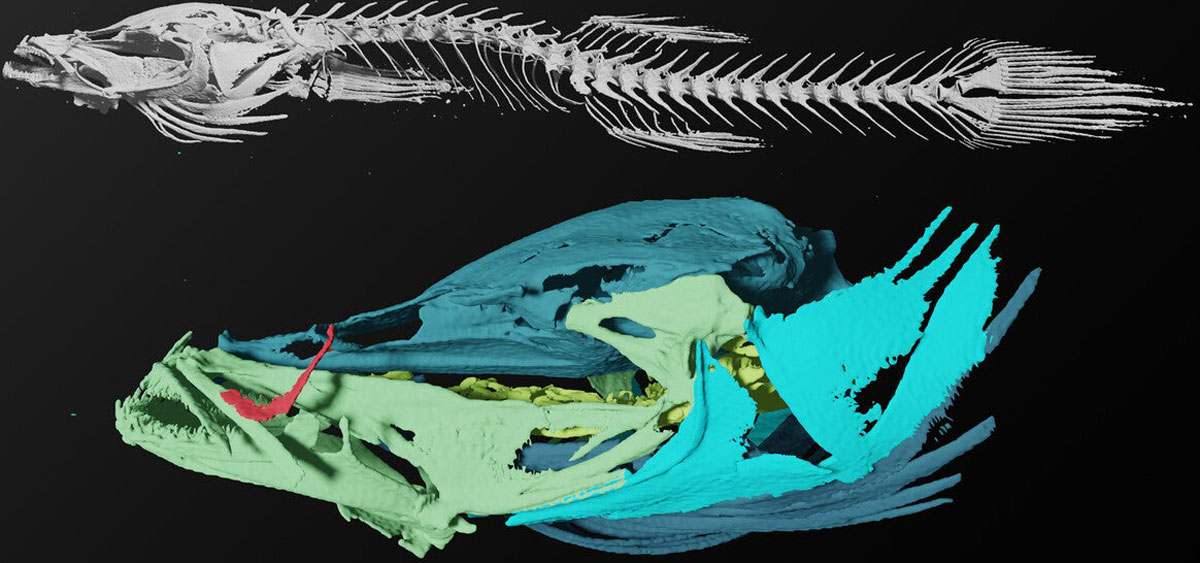
Researchers also used CT scans to compare specimens from the different lineages. The scans revealed skeletal differences that distinguished the newly identified lineage from the other two species. Although all Southern cavefish lost their eyes after adapting to permanent darkness, the new species retains remnants of interorbital bones that once formed part of the eye socket. Those bones are absent in the other two species.
“The combination of genetic and anatomical data makes it clear that this is a distinct species,” Brownstein said.
Underground Aquifers Drove Cavefish Speciation
According to the researchers, the distribution of Southern cavefish populations does not align with the region’s surface rivers and streams, making it difficult to determine how the species spread across their range.
To solve that mystery, the team examined underground geological features. They found that major evolutionary splits among populations and species corresponded closely with the boundaries of regional aquifers, underground formations that store groundwater. These aquifers created networks of openings and channels within karst landscapes, terrain formed when water dissolves limestone and other soluble rocks, allowing cavefish to disperse over large distances.
“The aquifers act as underground rivers of dispersal, which allowed the cavefishes to speciate within the cave systems,” Brownstein said.
Conservation Threats and Biodiversity Significance
Researchers warned that many populations of Typhlichthys styx and other Southern cavefish species face threats from human activities that deplete or contaminate groundwater. These include dam construction, excessive water use, and pollution from industrial and agricultural waste.
Near said the study highlights the kind of cutting-edge biodiversity research taking place at Yale. He also serves as the Bingham Oceanographic Curator of Ichthyology at the Yale Peabody Museum.
“Species discovery is an important to addressing the biodiversity crisis that is rapidly reducing the variety of life on our planet,” he said. “For one thing, you can’t protect a species if you don’t know that it exists. Our work on cavefish joins a wide range of research happening on campus to better understanding our biodiversity and develop ways to protect it.”
Reference: “Aquifer-Mediated Speciation in Cave-Adapted Fishes” by C D Brownstein, G J Watkins-Colwell, M Policarpo, R C Harrington, E A Hoffman, D Casane and T J Near, 18 May 2026, Integrative Organismal Biology.
DOI: 10.1093/iob/obag021
Never miss a breakthrough: Join the SciTechDaily newsletter.
Follow us on Google and Google News.
2 Comments
Let’s just say that evolution is controlled by viruses, so how will being in a cave under ground stop viruses? It won’t!
There are hella structural mistakes in the sentences in the second part of this article it’s kind of appalling