
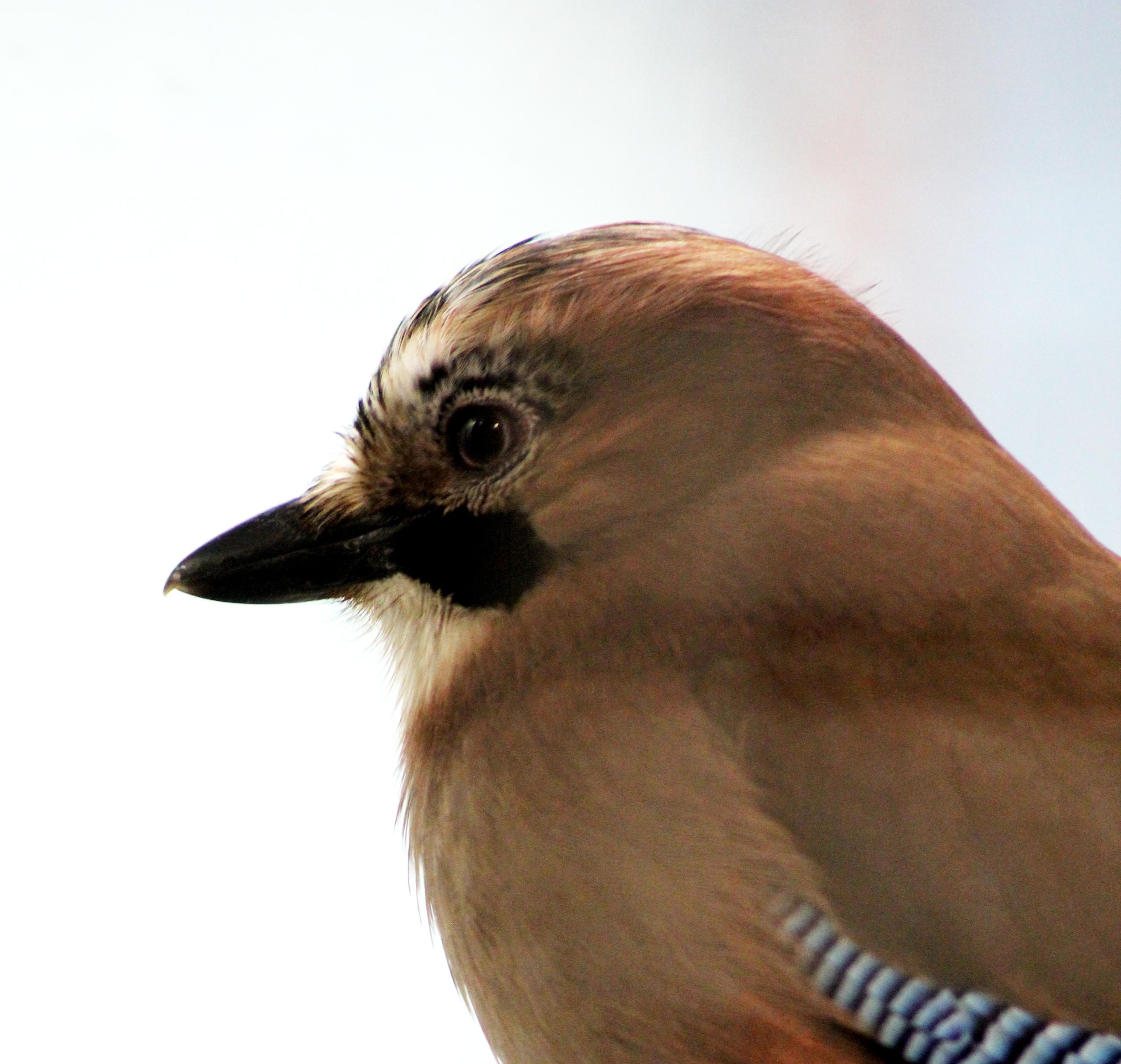
Similar to Humans, More Intelligent Jays Display More Self-Control
According to recent research, Eurasian jays may pass a variation of the “marshmallow test,” and those with the best self-control also do the best on intelligence tests. This is the first proof of a connection between self-control and intellect in birds.
Self-control, or the ability to resist temptation in favor of a higher but delayed reward, is a crucial ability that promotes wise judgment and long-term planning. Jays belong to the corvid family, which is often known as the “feathered apes” because they rival non-human primates in their cognitive abilities. Corvids conceal their food, or ‘cache’ it, to save it for later. In other words, individuals must postpone immediate gratification in order to plan for future meals. The researchers hypothesize that this may have influenced how self-control in these birds evolved.
Self-control has previously been associated with intelligence in humans, chimps, and, in a previous study by these researchers, cuttlefish. The more the intellect, the stronger the self-control. The most recent findings reveal a connection between intelligence and self-control across a variety of distantly related animal groups, indicating that this relationship has independently evolved several times.
JayLo is taking part in a version of the famous ‘marshmallow test’ to test self-control. Instead of marshmallows, it’s cheese and worms. She has to choose between cheese, available immediately on the right, or mealworm, which she prefers and can see on the left – but can only get to after a delay. She looks away from the cheese, as if to distract herself. This is what children do in the marshmallow test. Her patience is rewarded – after an incredible display of self-control, JayLo gets the worm. Credit: University of Cambridge
Jays, more than any other corvid, are vulnerable to having their caches taken by other birds. Self-control also allows them to conceal their food without being seen or heard. The findings were recently published in the journal Philosophical Transactions of the Royal Society B.
To test the self-control of ten Eurasian jays, Garrulus glandarius, researchers designed an experiment inspired by the 1972 Stanford Marshmallow test – in which children were offered a choice between one marshmallow immediately, or two if they waited for a period of time.
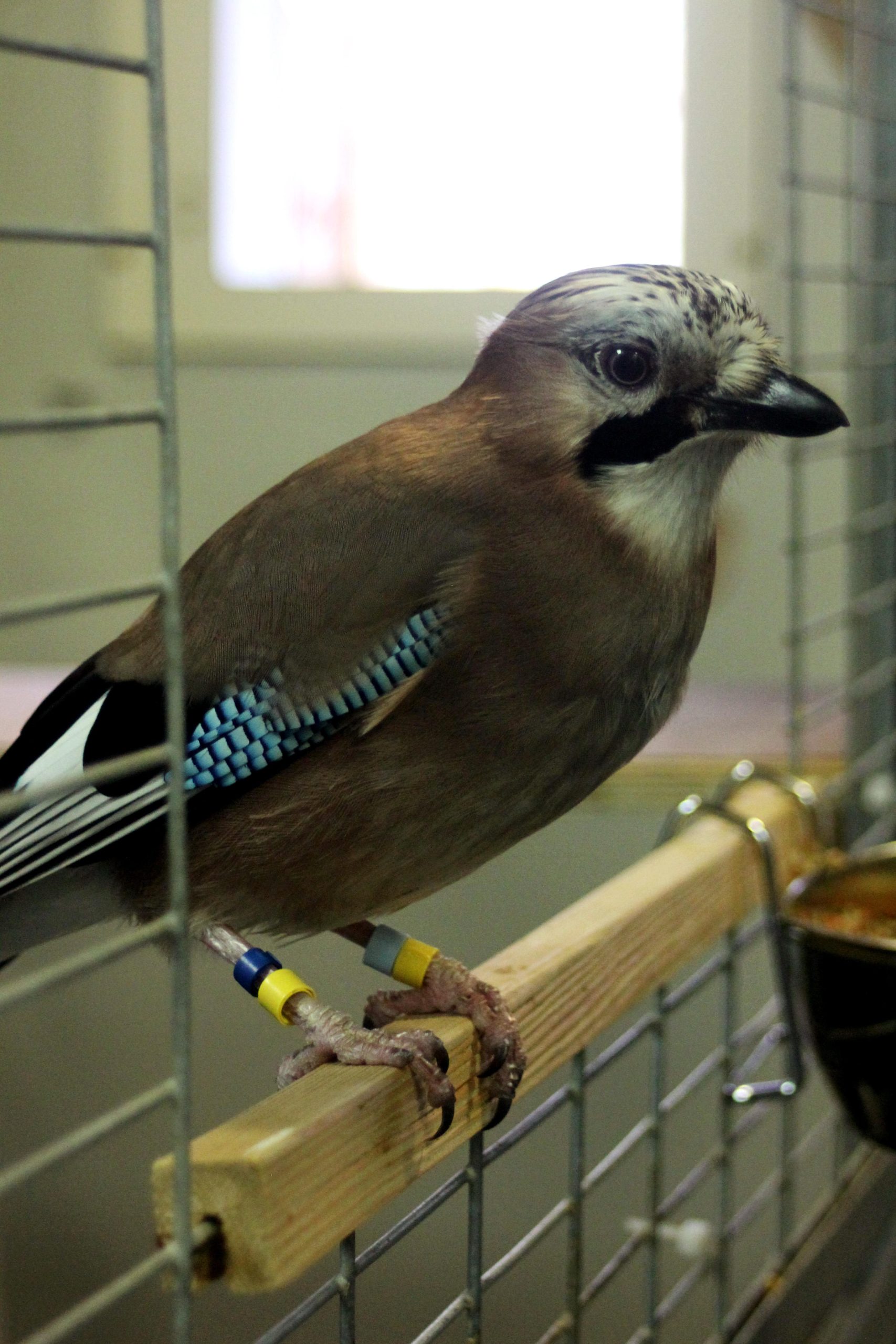
Instead of marshmallows, the jays were presented with mealworms, bread, and cheese. Mealworms are a common favorite; bread and cheese come second but individuals vary in their preference for one over the other.
The birds had to choose between bread or cheese – available immediately, and mealworm that they could see but could only get to after a delay when a Perspex screen was raised. Could they delay immediate gratification and wait for their favorite food?
A range of delay times was tested, from five seconds to five and a half minutes, before the mealworm was made available if the bird had resisted the temptation to eat the bread or cheese.
All the birds in the experiment managed to wait for the worm, but some could wait much longer than others. Top of the class was ‘JayLo’, who ignored a piece of cheese and waited five and a half minutes for a mealworm. The worst performers, ‘Dolci’ and ‘Homer’, could only wait a maximum of 20 seconds.
“It’s just mind-boggling that some jays can wait so long for their favorite food. In multiple trials, I sat there watching JayLo ignore a piece of cheese for over five minutes – I was getting bored, but she was just patiently waiting for the worm,” said Dr. Alex Schnell at the University of Cambridge’s Department of Psychology, first author of the report.
The jays looked away from the bread or cheese when it was presented to them as if to distract themselves from temptation. Similar behavior has been seen in chimpanzees and children.
Intelligence Linked to Patience and Self-Control
The researchers also presented the jays with five cognitive tasks that are commonly used to measure general intelligence. The birds that performed better in these tasks also managed to wait longer for the mealworm reward. This suggests that self-control is linked with intelligence in jays.
“The birds’ performance varied across individuals – some did really well in all the tasks and others were mediocre. What was most interesting was that if a bird was good at one of the tasks, it was good at all of them – which suggests that a general intelligence factor underlies their performance,” said Schnell.
The jays also adjusted their self-control behavior according to the circumstances: in another experiment where the worm was visible but always out of reach, the jays always ate the immediately available bread or cheese. And the length of time they were willing to wait for the worm fell if it was pitted against their second most preferred food as the immediate treat, compared to their third. This flexibility shows that jays only delay gratification when it is warranted.
Research by other scientists has found that children taking the Stanford marshmallow test vary greatly in their self-control, and this ability is linked to their general intelligence. Children that can resist temptation for longer also get higher scores in a range of academic tasks.
Reference: “Waiting for a better possibility: delay of gratification in corvids and its relationship to other cognitive capacities” by Alexandra K. Schnell, Markus Boeckle and Nicola S. Clayton, 31 October 2022, Philosophical Transactions of the Royal Society B.
DOI: 10.1098/rstb.2021.0348
The study was funded by the Royal Society, the Fyssen Foundation, and the European Research Council.
This research was approved by the University of Cambridge Animal Ethics Review Committee and performed in accordance with the Home Office Regulations and the ASAB Guidelines for the Treatment of Animals in Behavioural Research and Teaching.
Never miss a breakthrough: Join the SciTechDaily newsletter.
Follow us on Google and Google News.