
Close Menu
    Facebook X (Twitter) Instagram
    SciTechDaily
    • Biology
    • Chemistry
    • Earth
    • Health
    • Physics
    • Science
    • Space
    • Technology
    Facebook X (Twitter) Pinterest YouTube RSS
    SciTechDaily
    Home»Biology»Killer of Critically Endangered Christmas Island Reptile Identified
    Biology

    Killer of Critically Endangered Christmas Island Reptile Identified

    By University of SydneyMarch 20, 2021No Comments4 Mins Read
    Facebook Twitter Pinterest Telegram LinkedIn WhatsApp Email Reddit
    Share
    Facebook Twitter LinkedIn Pinterest Telegram Email Reddit
    Lister's Gecko
    One of the Australian-native, critically endangered lizard species: Lister’s gecko. Credit: Parks Australia

    Bacterium Responsible for Deaths of Critically Endangered Species

    With wild populations decimated, Lister’s gecko and the blue-tailed skink only exist in captivity. University of Sydney researchers have discovered a bacterium, which could cause their potential extinction.

    Native reptile populations on Christmas Island have been in severe decline with two species, Lister’s gecko and the blue-tailed skink, entirely disappearing from the wild. While previously the main driver for this decline is likely predation by invasive species and habitat destruction, a silent killer is now threatening to wipe the species out entirely.

    Those bred in captivity on the Australian Territory in the Indian Ocean have also been mysteriously dying, leaving the two species – which number only around 1000 each – in danger of extinction. Veterinary scientists from the University of Sydney, the Australian Registry of Wildlife Health and the Taronga Conservation Society Australia have now discovered the cause of these deaths: a bacterium, Enterococcus lacertideformus (E. lacertideformus).
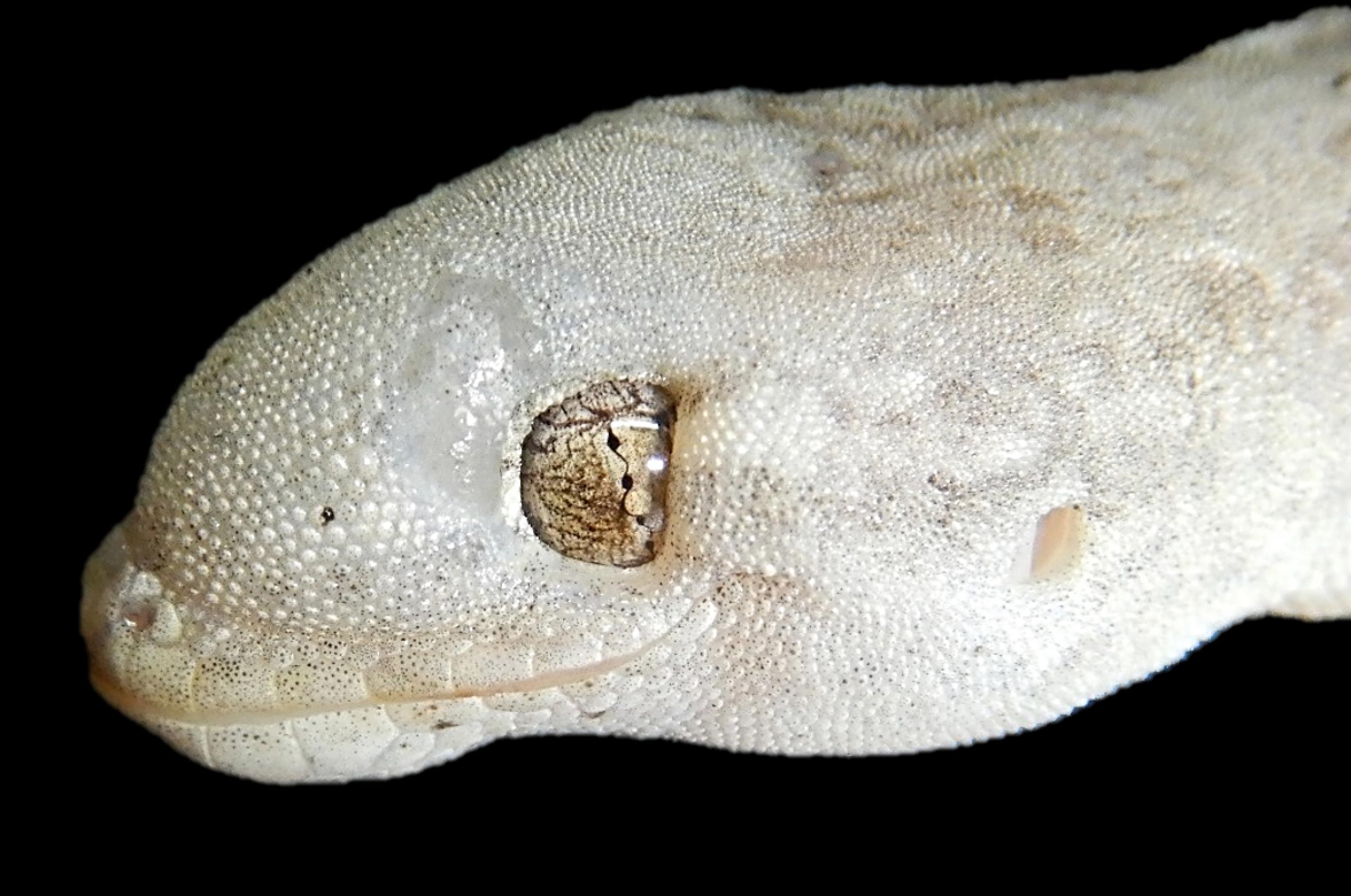
    Infected Gecko
    Infected gecko displaying severe head and facial swelling associated with Enterococcus lacertideformus infection. Credit: Jessica Agius

    The bacterium was discovered in 2014 after captive reptiles presented with facial deformities and lethargy, and some even died. Samples were collected and analyzed using microscopy and genetic testing. The researchers’ findings, published in Frontiers in Microbiology, will inform antibiotic trials on the reptiles to see if the infection can be treated.

    How the Infection Spreads Among Reptiles

    The bacterium grows in the animal’s head, then in its internal organs, before eventually causing death. It can be spread by direct contact – including through reptiles’ mouths, or via reptiles biting one another – often during breeding season fights. 

    “This means that healthy captive animals need to be kept apart from infected ones and should also be kept away from areas where infected animals have been,” said Jessica Agius, co-lead researcher and PhD candidate in the Sydney School of Veterinary Science.

    Jessica Agius
    PhD researcher Jessica Agius spotlighting critically endangered lizards in the field on Christmas Island to find out if they are infected with Enterococcus lacertideformus. Credit: Jessica Agius

    Ms. Agius and the research team not only identified the bacterium, they decoded its genetic structure using whole genome sequencing.

    Specific genes were identified that are likely to be associated with the bacterium’s ability to infect its host, invade its tissues, and avoid the immune system.

    Biofilm Formation Adds to the Threat

    “We also found that the bacterium can surround itself with a biofilm – a ‘community of bacteria’ that can help it survive,” Ms. Agius said.

    “Understanding how E. lacertideformus produces and maintains the biofilm may provide insights on how to treat other species of biofilm-forming bacteria.”

    The search of the genetic code suggested that the killer bacterium was susceptible to most antibiotics.

    Professor David Phalen, research co-lead and Ms. Agius’ PhD supervisor, said: “This suggests that infected animals might be successfully treated. That’s what we need to determine now.”

    In another effort to protect the endangered reptiles on Christmas Island, a population of blue-tailed skinks has been established on the Cocos Islands. Ms. Agius played a critical role in the translocation, testing reptiles on the Cocos Islands to make sure that they were free of E. lacertideformus.  

    “It’s critical we act now to ensure these native reptiles survive,” Ms. Agius said.

    Reference: “Genomic Insights Into the Pathogenicity of a Novel Biofilm-Forming Enterococcus sp. Bacteria (Enterococcus lacertideformus) Identified in Reptiles” by Jessica Esther Agius, David Norton Phalen, Karrie Rose and John-Sebastian Eden, 2 March 2021, Frontiers in Microbiology.
    DOI: 10.3389/fmicb.2021.635208

    Declaration: The authors thank the Westmead Institute for Medical Research, Sydney School of Veterinary Science – University of Sydney, Australian Registry of Wildlife Health – Taronga Conservation Society Australia, and Christmas Island National Park – Parks Australia for their logistical and financial support.

    Never miss a breakthrough: Join the SciTechDaily newsletter.
    Follow us on Google and Google News.

    Bacteria Extinction Genetics Microbiology Popular Reptiles University of Sydney
    Share. Facebook Twitter Pinterest LinkedIn Email Reddit

    Related Articles

    Surprising Discovery Proves That Deadly Gene Has Jumped From a Harmless Organism to a Deadly Pathogen

    Bacteria Evolved a Multitude of Defense Systems That Offer Strong Immunity for Protection Against Viruses

    MIT Researchers Devised a Way To Program Memories Into Bacterial Cells by Rewriting Their DNA

    Artificial Life Forged in a Lab? Scientists Create Synthetic Cell That Grows and Divides Normally

    Nature’s Hidden Arsenal: Viruses that Infect Bacteria

    Evolution of a Killer: How African Salmonella Made the Leap From Gut to Bloodstream Infections in Humans

    Genome of Alexander Fleming’s Original Penicillin Mold Sequenced for the First Time

    The Toughest Organisms on Earth: Evolution of Radio-Resistance Is More Complicated Than Previously Thought

    Mysterious Magnetic “Sixth Sense” Some Animals Have May Come From Bacteria

    Leave A Reply Cancel Reply

    • Facebook
    • Twitter
    • Pinterest
    • YouTube

    Don't Miss a Discovery

    Subscribe for the Latest in Science & Tech!

    Trending News

    “I Couldn’t Do It Anymore” – Antarctic Guides Quit Their Dream Jobs After Witnessing Tourism’s Damage

    Scientists Say Eating Less Protein May Help You Live Longer

    Scientists Solve a Long-Standing Mystery About Bird and Dinosaur Eggs

    Belly Fat and Low Vitamin D May More Than Double the Risk of Early Death

    Lost in Space: Rare Cosmic Flare Exposes a Wandering Black Hole Far From Its Galaxy’s Center

    Dark Matter May Be Leaving a Signal in Earth’s Atmosphere

    Scientists Discover a 300-Million-Year-Old Geological Time Capsule Inside Fossilized Wood

    Oral Weight Loss Pill Helps Patients Lose up to 12% of Body Weight

    Follow SciTechDaily
    • Facebook
    • Twitter
    • YouTube
    • Pinterest
    • Newsletter
    • RSS
    SciTech News
    • Biology News
    • Chemistry News
    • Earth News
    • Health News
    • Physics News
    • Science News
    • Space News
    • Technology News
    Recent Posts
    • Industrial Chicken Farming Is Supercharging the Spread of a Dangerous Foodborne Bacterium
    • Honeybee Queens May Pass Toxic Chemicals to the Next Generation
    • This Common Amino Acid May Help the Body Fight Cancer and Viruses
    • Schizophrenia’s Brain Damage May Start in One Key Region
    • A Simple Treatment Could Save Extremely Premature Babies From Blindness
    Copyright © 1998 - 2026 SciTechDaily. All Rights Reserved.
    • Science News
    • About
    • Contact
    • Editorial Board
    • Privacy Policy
    • Terms of Use

    Type above and press Enter to search. Press Esc to cancel.