
Close Menu
    Facebook X (Twitter) Instagram
    SciTechDaily
    • Biology
    • Chemistry
    • Earth
    • Health
    • Physics
    • Science
    • Space
    • Technology
    Facebook X (Twitter) Pinterest YouTube RSS
    SciTechDaily
    Home»Biology»Surprising Discovery Proves That Deadly Gene Has Jumped From a Harmless Organism to a Deadly Pathogen
    Biology

    Surprising Discovery Proves That Deadly Gene Has Jumped From a Harmless Organism to a Deadly Pathogen

    By University of South AustraliaFebruary 11, 2022No Comments3 Mins Read
    Facebook Twitter Pinterest Telegram LinkedIn WhatsApp Email Reddit
    Share
    Facebook Twitter LinkedIn Pinterest Telegram Email Reddit
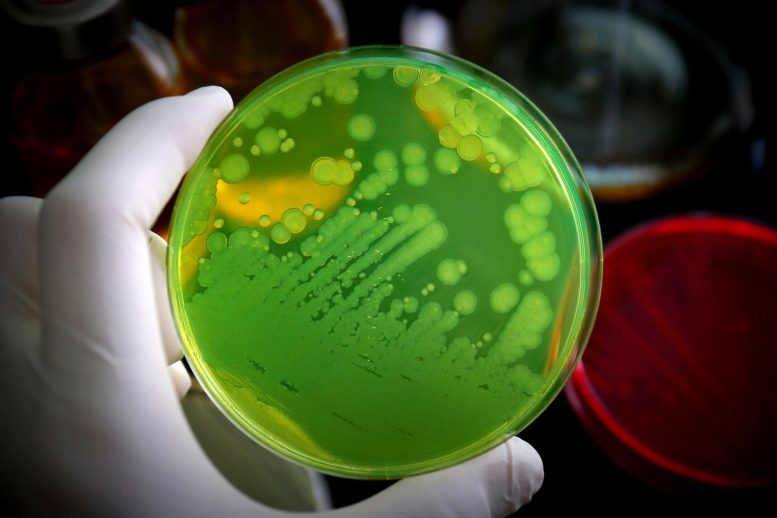
    Pseudomonas aeruginosa
    Pseudomonas aeruginosa, an organism responsible for thousands of deaths.

    University of South Australia scientists have made a surprising discovery in the origins of an antibiotic-resistant gene previously thought to have been confined to Adelaide.

    The gene, first detected in Adelaide in 2006, is carried by the nasty bacterium Pseudomonas aeruginosa, an organism responsible for thousands of deaths among immunocompromised, surgical, and burns patients due to its resistance to last resort antibiotics.

    This gene makes infections resistant to the most potent antibiotics used in medicine – imipenem and meropenem. Antibiotic resistant P. aeruginosa is now listed by the World Health Organization as a “critical priority pathogen,” one of 12 families of bacteria that pose the greatest threat to human health.

    Until now, it was believed that the Adelaide Imipenemase (AIM-1) gene was only found in the South Australian capital city after being detected in clinical samples and healthcare-associated wastewater.

    But a group of scientists led by UniSA microbiologist Associate Professor Rietie Venter has shown evidence of it worldwide, pinpointing its source in a harmless environmental organism present in soil, groundwater, wastewater, and even in plants.

    Tracking AIM-1 in the Environment

    The findings have been published in the journal Microbial Genomics.

    The discovery suggests that the gene has mobilized at some stage and jumped from a harmless organism to a nasty pathogen.

    “It’s an opportunistic pathogen which is ubiquitous and very resilient,” says Assoc Prof Venter.

    The team used innovative ways to track and characterize antimicrobial resistance, making their discovery through wastewater analysis. Their research revealed the AIM-1 gene was prevalent at many sites throughout Adelaide and South Australia, including in every wastewater sample and river water, hinting at a wider spread of the gene than originally thought.

    “We then investigated the possibility of a global distribution of the AIM-1 gene. Through extensive nucleotide and protein database searching, we discovered the gene was also present in Asia, North America, and Europe.”

    However, AIM-1 was predominantly found in harmless environmental organisms and has only made the jump to the pathogen P. aeruginosa in two other locations so far (Iran and Iraq).

    Future Research and Prevention Strategies

    “Genes that are ‘mobile’ jump around all the time, but the scenario described in this study is much rarer,” says Assoc Prof Venter.

    “However, as microbes are a great source of antibiotics and very competitive, it is highly likely that many bacterial resistant genes evolve in unknown organisms before making their way to dangerous pathogens, especially P. aeruginosa, which shares a habitat with harmless environmental organisms.”   

    Assoc Prof Venter says the AIM-1 gene requires careful monitoring.

    “If we can better understand why genes jump from environmental into human pathogens, we might be able to prevent it from happening more often,” she says.

    Reference: “Worldwide distribution and environmental origin of the Adelaide imipenemase (AIM-1), a potent carbapenemase in Pseudomonas aeruginosa” by Anteneh Amsalu​, Sylvia A. Sapula, Jonathan J. Whittall, Bradley J. Hart, Jan M. Bell, John Turnidge and Henrietta Venter, 17 December 2021, Microbial Genomics.
    DOI: 10.1099/mgen.0.000715

    P. aeruginosa that are resistant to carbapenems – the best available antibiotics used for treating multi-drug resistant bacteria – poses a particular threat in hospitals, nursing homes, and among patients whose care requires devices such as ventilators and blood catheters.

    Never miss a breakthrough: Join the SciTechDaily newsletter.
    Follow us on Google and Google News.

    Antibiotics Bacteria Genetics Microbiology Pathogens Popular University of South Australia
    Share. Facebook Twitter Pinterest LinkedIn Email Reddit

    Related Articles

    MIT Researchers Devised a Way To Program Memories Into Bacterial Cells by Rewriting Their DNA

    Researchers Shocked to Discover Bacterial Parasites Behind Rise of “Superbugs”

    Artificial Life Forged in a Lab? Scientists Create Synthetic Cell That Grows and Divides Normally

    Killer of Critically Endangered Christmas Island Reptile Identified

    Nature’s Hidden Arsenal: Viruses that Infect Bacteria

    Evolution of a Killer: How African Salmonella Made the Leap From Gut to Bloodstream Infections in Humans

    Genome of Alexander Fleming’s Original Penicillin Mold Sequenced for the First Time

    The Toughest Organisms on Earth: Evolution of Radio-Resistance Is More Complicated Than Previously Thought

    Mysterious Magnetic “Sixth Sense” Some Animals Have May Come From Bacteria

    Leave A Reply Cancel Reply

    • Facebook
    • Twitter
    • Pinterest
    • YouTube

    Don't Miss a Discovery

    Subscribe for the Latest in Science & Tech!

    Trending News

    Scientists Uncover Potential Brain Risks of Popular Fish Oil Supplements

    Scientists Discover a Surprising Way To Make Bread Healthier and More Nutritious

    After 60 Years, Scientists Uncover Unexpected Brain Effects of Popular Diabetes Drug Metformin

    New Research Uncovers Hidden Side Effects of Popular Weight-Loss Drugs

    Scientists Rethink Extreme Warming After Surprising Ocean Discovery

    Landmark Study Links Never Marrying to Significantly Higher Cancer Risk

    Researchers Discover Unknown Beetle Species Just Steps From Their Lab

    Largest-Ever Study Finds Medicinal Cannabis Ineffective for Anxiety, Depression, PTSD

    Follow SciTechDaily
    • Facebook
    • Twitter
    • YouTube
    • Pinterest
    • Newsletter
    • RSS
    SciTech News
    • Biology News
    • Chemistry News
    • Earth News
    • Health News
    • Physics News
    • Science News
    • Space News
    • Technology News
    Recent Posts
    • Scientists Discover Hidden Pathway Inside Catalysts That Defies Decades of Assumptions
    • Scientists Finally Crack Decades-Old Mystery of “Breathing” Lasers
    • “Like Liquid Metal”: Scientists Create Strange Shape-Shifting Material
    • Early Warning Signals of Esophageal Cancer May Be Hiding in Plain Sight
    • Researchers Have Discovered a THC-Free Cannabis Compound That May Replace Opioids
    Copyright © 1998 - 2026 SciTechDaily. All Rights Reserved.
    • Science News
    • About
    • Contact
    • Editorial Board
    • Privacy Policy
    • Terms of Use

    Type above and press Enter to search. Press Esc to cancel.