
Close Menu
    Facebook X (Twitter) Instagram
    SciTechDaily
    • Biology
    • Chemistry
    • Earth
    • Health
    • Physics
    • Science
    • Space
    • Technology
    Facebook X (Twitter) Pinterest YouTube RSS
    SciTechDaily
    Home»Biology»Laminin Alpha 5 is Crucial to Adolescent Brain Maturation
    Biology

    Laminin Alpha 5 is Crucial to Adolescent Brain Maturation

    By Bill Hathaway, Yale UniversityOctober 31, 2017No Comments2 Mins Read
    Facebook Twitter Pinterest Telegram LinkedIn WhatsApp Email Reddit
    Share
    Facebook Twitter LinkedIn Pinterest Telegram Email Reddit
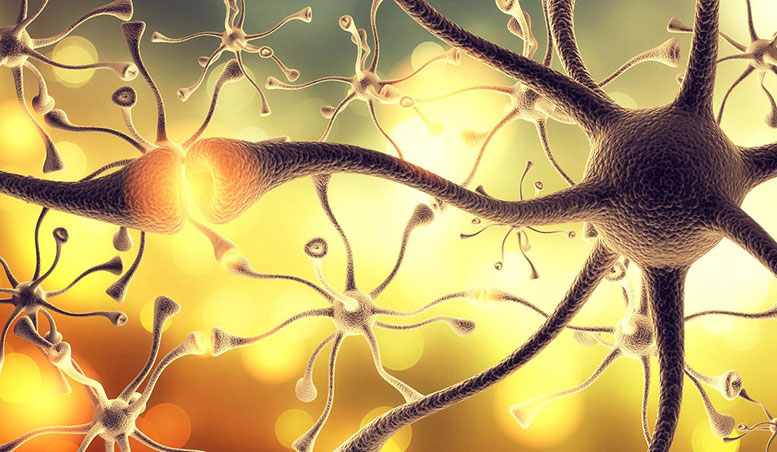
    Laminin Alpha 5 Crucial to the Maturing of the Adolescent Brain
    Laminin alpha 5 is crucial to the maturing of the adolescent brain.

    New research from Yale University reveals that the laminin alpha 5 molecule is crucial to the maturing of the adolescent brain.

    For a decade, the Yale team had sought answers to a fundamental question: How does the brain, marked by frantic growth of synaptic connections between cells, grow up and mature?

    “Up until early adulthood, synapses between cells are wild, more plastic; they shrink and grow and even destabilize sister synapses,” said senior author Anthony Koleske, professor of molecular biophysics and biochemistry and of neuroscience. “In mature brains, synapses become much more restrained, they are smaller and more well-behaved.”

    The new research identifies the crucial signal in the taming of the adolescent mind as fragments of a family of proteins called laminins, which are crucial to neuromuscular functioning among other biological functions.

    The researchers found that mice lacking the laminin alpha 5 genes suffered defects in synapse maturation, leading to fewer synapses by early adulthood.

    Laminins had been overlooked by synapse researchers because their relatively large size made them unlikely to function within the tight space of synapses in the brain. The new findings suggest that fragments of the protein bind to receptors of the synapse in adolescent brain, triggering the maturation process, Koleske said.

    “Our synapses change when we learn new things, but in order to retain what is learned, synapses must stabilize,” said Mitchell H. Omar, a graduate student in Koleske’s lab and lead author of the study.

    Partial failure of this key signaling pathway may play a role in the onset of neuropsychiatric disorders such as schizophrenia, which typically appear during late adolescence, Koleske said.

    The research was primarily funded by the National Institutes of Health.

    Reference: “CNS Neurons Deposit Laminin α5 to Stabilize Synapses” by Mitchell H. Omar, Meghan Kerrisk Campbell, Xiao Xiao, Qiaonan Zhong, William J. Brunken, Jeffrey H. Miner, Charles A. Greer and Anthony J. Koleske, 31 October 2017, Cell Reports.
    DOI: 10.1016/j.celrep.2017.10.028

    Never miss a breakthrough: Join the SciTechDaily newsletter.
    Follow us on Google and Google News.

    Biochemistry Biophysics Brain Activity Cell Biology Neurology Neuroscience Yale University
    Share. Facebook Twitter Pinterest LinkedIn Email Reddit

    Related Articles

    Yale Researchers Track How the Brain Routes Visual Signals

    New Research Shows Individual Brain Activity Is As Unique As Fingerprints

    Yale Maps Evolutionary Changes of the Human Brain

    Yale Neurobiologists Discover Surprising Trigger of New Brain Cell Growth

    Key Process in Brain Development Identified

    Neurobiologists Block the Effects of Stress

    Study Shows Human Brain Development is Divided into Three Major Phases

    Mechanism for Controlling Calcium Influx in Cells Identified

    GATA1 Plays a Role in the Loss of Connections Between Neurons and in Symptoms of Depression

    Leave A Reply Cancel Reply

    • Facebook
    • Twitter
    • Pinterest
    • YouTube

    Don't Miss a Discovery

    Subscribe for the Latest in Science & Tech!

    Trending News

    Breakthrough Parkinson’s Drug Targets Disease at Its Genetic Roots

    Just 4 Weeks of Simple Diet Changes Reversed Signs of Aging in Older Adults

    Scientists May Have Finally Solved Why Humans Are Right-Handed

    NASA’s Hubble Accidentally Witnesses a Comet Shattering in Space

    Researchers Discover the Body’s Hidden “Off Switch” for Inflammation

    Scientists Discover Metformin Doesn’t Work the Way We Thought

    Tea or Coffee? Your Daily Choice Could Affect Osteoporosis Risk

    Vitamin C May Fight Cancer in a Surprising Way

    Follow SciTechDaily
    • Facebook
    • Twitter
    • YouTube
    • Pinterest
    • Newsletter
    • RSS
    SciTech News
    • Biology News
    • Chemistry News
    • Earth News
    • Health News
    • Physics News
    • Science News
    • Space News
    • Technology News
    Recent Posts
    • New Research Uncovers Lithium’s Surprising Effect on Alzheimer’s
    • New Anti-Clotting Medication Prevents Strokes Without the Usual Bleeding Risk
    • Simple Fiber Supplement Cuts Knee Arthritis Pain in Just 6 Weeks, Study Finds
    • Scientists Discover the Secret Bacteria Behind Artisan Cheeses – and They May Be Good for Your Health
    • Banned Antibiotic Discovered in Fish Raises Food Safety Concerns
    Copyright © 1998 - 2026 SciTechDaily. All Rights Reserved.
    • Science News
    • About
    • Contact
    • Editorial Board
    • Privacy Policy
    • Terms of Use

    Type above and press Enter to search. Press Esc to cancel.