
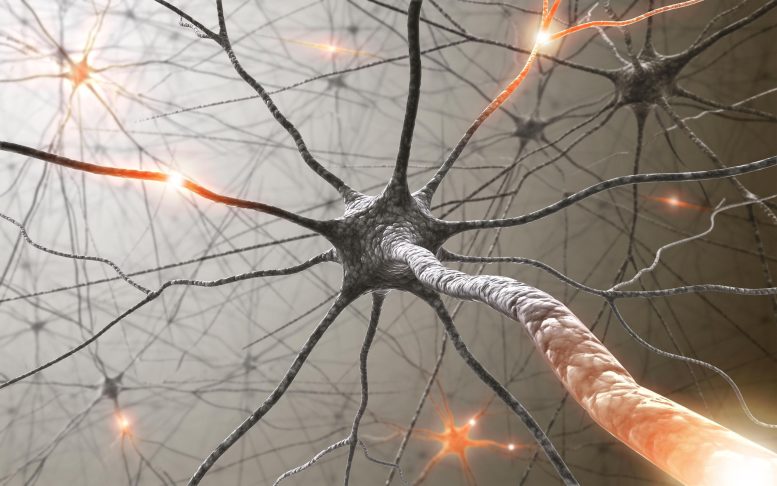
The synaptic pruning of newborn neurons by microglia depends on phosphatidylserine in the adult brain. This mechanism is essential for the maturation of newborn neurons.
A research group led by Kazunobu Sawamoto, a professor at Institute of Brain Science, Nagoya City University Graduate School of Medical Sciences and National Institute for Physiological Sciences, and Chihiro Kurematsu, a fourth-year student at Nagoya City University School of Medicine, has elucidated the mechanism that controls synaptic pruning of new neurons in the adult brain.
In the mammalian brain, neural stem cells exist even after birth, and new neurons are produced. As these new neurons mature, they form connections called synapses with existing neurons to create functional neural circuits. For the brain to develop and function normally, it is important to maintain an appropriate number of synapses, but the mechanism to regulate the number of synapses has not been fully understood. Cells called microglia, which exist near nerve cells, play an important role in this process. Microglia can “eat” (phagocytose) dead cells and are also known to digest extra synapses during development. However, it was unknown how new neurons in the adult brain eliminate extra synapses during maturation.
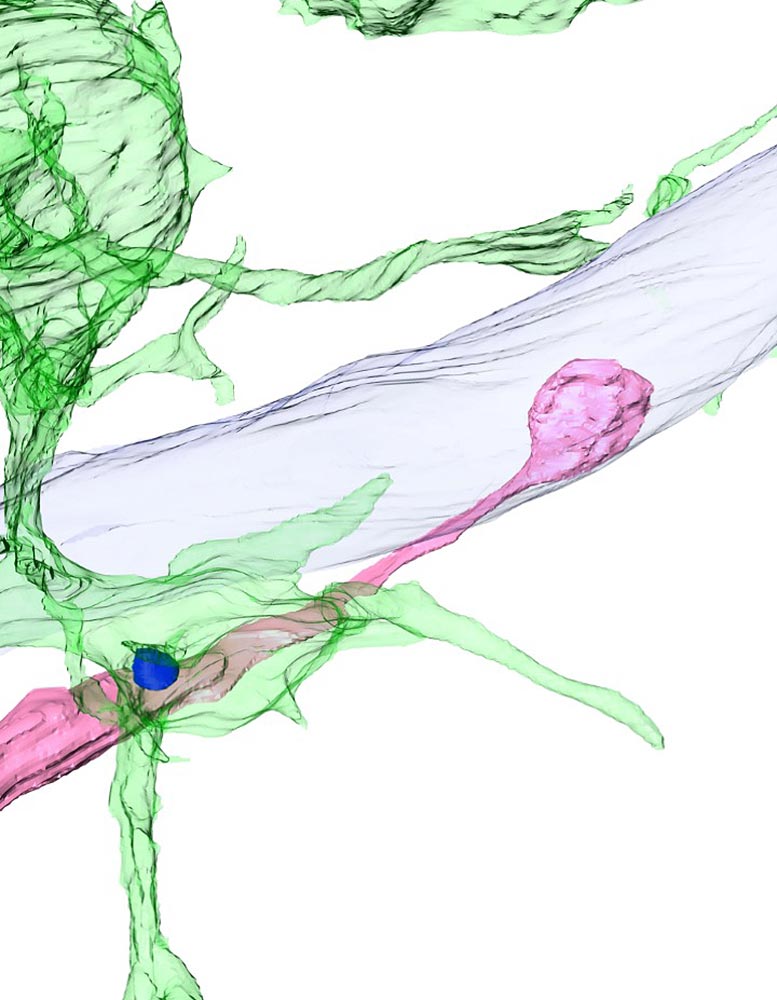
Phosphatidylserine’s Role in Synaptic Pruning
Sawamoto’s group focused on phosphatidylserine (PS), a molecule that usually resides inside the cell membrane, but is found on the external surface of dead cells or developing synapses, where it is recognized by microglia. First, the researchers used an electron microscope to examine the microglia in detail and observed that microglia actually engulf synapses. Next, they examined the localization of PS and found that PS is exposed outside the cell membrane at synapses in the adult mouse brain, especially at less active synapses.
“To study whether microglial PS detection is important for synaptic pruning and normal neuron maturation in the adult brain, we needed to see what happens when PS is masked in living adult mice,” Sawamoto said.
Finally, they generated genetically modified mice in which PS outside the cell membrane was masked by a protein, and observed microglia and synapses. As a result, they found that in these mice, microglia could not eat synapses properly, resulting in extra synapses left behind. Furthermore, neurons in these mice showed electrophysiological abnormalities. These results indicate that the synaptic pruning of newborn neurons by microglia is PS-dependent in the adult brain, and that this mechanism is important for the correct maturation of newborn neurons.
Implications for Brain Development and Disease
Recent studies have shown that new neurons are also produced in the human brain during the neonatal period, and microglial synaptic pruning is believed to be important for postnatal brain development.
“We hope that investigating PS-dependent synaptic elimination in mouse models of brain diseases will lead to the development of new therapeutic strategies for human pathological conditions such as autism, where abnormalities in microglia and synaptic density have been observed,” said Kurematsu.
The full findings of the study are published in the Journal of Experimental Medicine.
Reference: “Phosphatidylserine-dependent synaptic pruning by microglia in the maturation of adult-born neurons” by Chihiro Kurematsu, Masato Sawada, Masaki Ohmuraya, Motoki Tanaka, Kazuya Kuboyama, Takashi Ogino, Mami Matsumoto, Hisashi Oishi, Hiroyuki Inada, Yuri Ishido, Yukina Sakakibara, Huy Bang Nguyen, Truc Quynh Thai, Shinichi Kohsaka, Nobuhiko Ohno, Maki K. Yamada, Masato Asai, Masahiro Sokabe, Junichi Nabekura, Kenichi Asano, Masato Tanaka and Kazunobu Sawamoto, 17 March 2022, Journal of Experimental Medicine.
DOI: 10.1084/jem.20202304
In addition to Kazunobu Sawamoto and Chihiro Kurematsu, co-authors of this research article include researchers from Nagoya City University, National Institute for Physiological Sciences, Hyogo College of Medicine, Aichi Developmental Disability Center, University of Medicine and Pharmacy of Ho Chi Minh City, Pham Ngoc Thach University of Medicine, National Institute of Neuroscience, Jichi Medical University, Tokushima Bunri University, Nagoya University, and Tokyo University of Pharmacy and Life Sciences.
Never miss a breakthrough: Join the SciTechDaily newsletter.
Follow us on Google and Google News.