

A new study combining satellite imagery with genetic analysis reveals that climate and land use changes are driving increased vegetation growth in Europe’s mountain regions, ultimately leading to a decline in the genetic diversity of medicinal plants such as Greek mountain tea.
Mountain regions are among the most biodiverse areas on Earth, hosting some of the richest and most varied ecosystems. However, these habitats are undergoing rapid and profound changes due to global environmental pressures.
Over the last 50 years, increasing temperatures and shifts in land use at high elevations have promoted the expansion of vigorous, competitive vegetation such as shrubs and trees, a phenomenon known as “mountain greening.” This encroachment is displacing the specialized, low-growing plant species that characterize open montane grasslands.
One such plant affected by this trend is Sideritis, a key component of Mediterranean montane grassland flora. Commonly known as Greek mountain tea, Sideritis includes several closely related species and is valued both by local communities and the pharmaceutical industry for its medicinal properties, particularly in treating respiratory and gastrointestinal ailments.
At the same time, the popular medicinal plant is an indicator of the health of open mountain habitats.
Genetic Diversity in Decline
As part of the recently published study, the research team investigated the effects of increasing greening on the genetic diversity of Sideritis, using an innovative methodological approach.
“We examined populations in eleven Greek mountain ranges and combined satellite data from several decades with genetic analyses of herbarium specimens from the 1970s and present-day plant samples,” explains study leader Spyros Theodoridis, a former research associate at the Senckenberg Biodiversity and Climate Research Center in Frankfurt, who now works at the National Observatory of Athens.
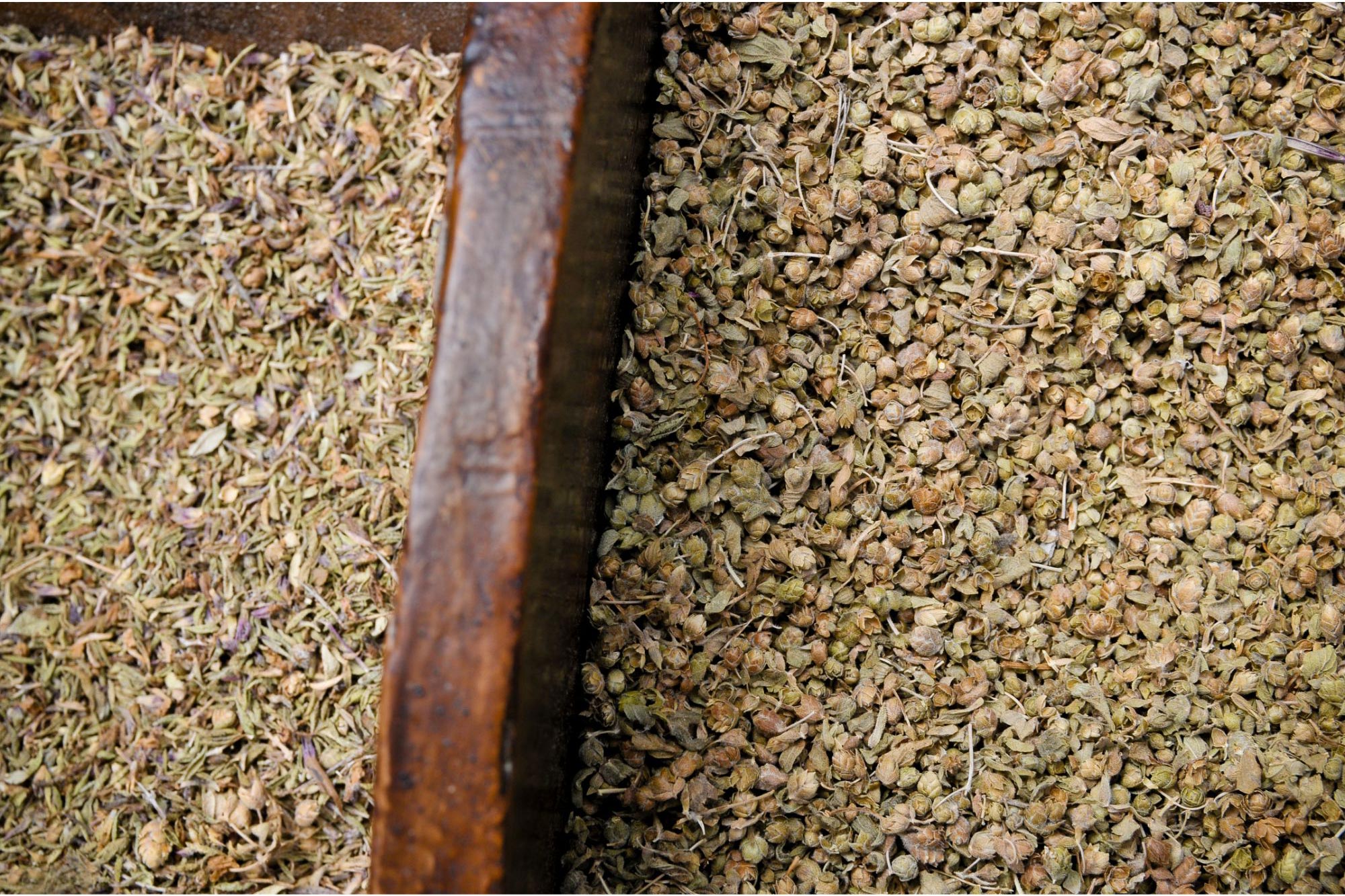
“The results show that in eight of the eleven mountain regions we studied, genetic diversity declined significantly during this period. In particularly affected regions, up to 20 percent of the genome of individual plants is now subject to inbreeding – an indication of declining population sizes.”
“The speed at which shrubs and trees are spreading in previously open grasslands can be directly linked to the decline in genetic diversity in Sideritis populations,” adds co-author David Nogués-Bravo, Professor at the University of Copenhagen, and continues:
“The genetic diversity of a species is crucial for its ability to adapt to environmental changes. If this diversity dwindles, resistance to disease, drought, or other stress factors decreases, which can lead to extinction in the long term.”
Satellite data reveals consequences of global warming
A special aspect of the study is that it combines two entirely different data sources – remote sensing by satellite and genomic analyses – thus allowing conclusions to be drawn about the development of plant populations over several decades: “This combination opens up new possibilities for biodiversity monitoring,” emphasizes Spyros Theodoridis and continues: “It allows us to use satellite images to identify indications of genetic changes in mountain ecosystems without having to genetically examine each individual population on site.”
Monitoring the loss of genetic diversity from space was previously considered impossible.
“However, our results show that the extent of genetic erosion can be predicted with surprisingly high accuracy based solely on the increase in vegetation density,” adds co-author Thomas Hickler, Professor at the Senckenberg Biodiversity and Climate Research Center.
“This renders our method particularly attractive for use in mountainous regions that are difficult to access or in areas where genetic monitoring has hardly been possible to date.”
The study also underlines the importance of natural history collections, explains Marco Thines, co-author and Professor at Senckenberg Biodiversity and Climate Research Center.
“Without the historical plant specimens in herbaria, the direct comparison over a period of 50 years would not have been possible. These archives of nature are invaluable for biodiversity research.”
The increasing greening of mountain regions due to global warming and the abandonment of traditional forms of cultivation is widespread around the world and is clearly evident from satellite images.
The researchers therefore recommend that conservation measures should be prioritized in areas that are most severely affected by mountain greening.
“There is an urgent need for comparable studies with other species and in other regions,” concludes Theodoridis.
“This will allow us to gain a comprehensive picture of how environmental changes are affecting the genetic basis of biodiversity – and how we can effectively counter this development.”
Reference: “Satellite-observed mountain greening predicts genomic erosion in a grassland medicinal herb over half a century” by Spyros Theodoridis, Thomas Hickler, David Nogues-Bravo, Sebastian Ploch, Bagdevi Mishra and Marco Thines, 30 April 2025, Current Biology.
DOI: 10.1016/j.cub.2025.04.007
Never miss a breakthrough: Join the SciTechDaily newsletter.
Follow us on Google and Google News.
1 Comment
“Over the last 50 years, increasing temperatures and shifts in land use at high elevations have promoted the expansion of vigorous, competitive vegetation such as shrubs and trees, a phenomenon known as “mountain greening.”
Taken at face value, the above claim seems unlikely. The commonly accepted average rate of terrestrial warming is a little more than 1 deg C per century, or about 0.5 deg C in the last 50 years. That average is heavily weighted by an Arctic increase of 2-4X the global average. Most of the global warming takes place in the Winter, when plants are relatively dormant, certainly not actively competing with annuals and perennials.
Land use changes are another story. Until fairly recently, lumber and stone were the dominant building materials for farms and towns in the mountains. As a consequence, the original forests were cut back to supply timber, thus creating grazing land. Today, there isn’t much new construction (farm houses and barns are often a couple-hundred years old), and there are alternative materials such as steel and glass for building ski resorts. Thus, there is reduced pressure on the forests, allowing them to grow back.
I suspect that the authors have their focus reversed from what it should be. However, they might find it difficult to get published unless they mention “global warming.” It is instructive to walk the woodlands of New England (USA). One finds stone walls in the middle of dense forests, places that used to be open farmland, that have been abandoned for at least a century.