
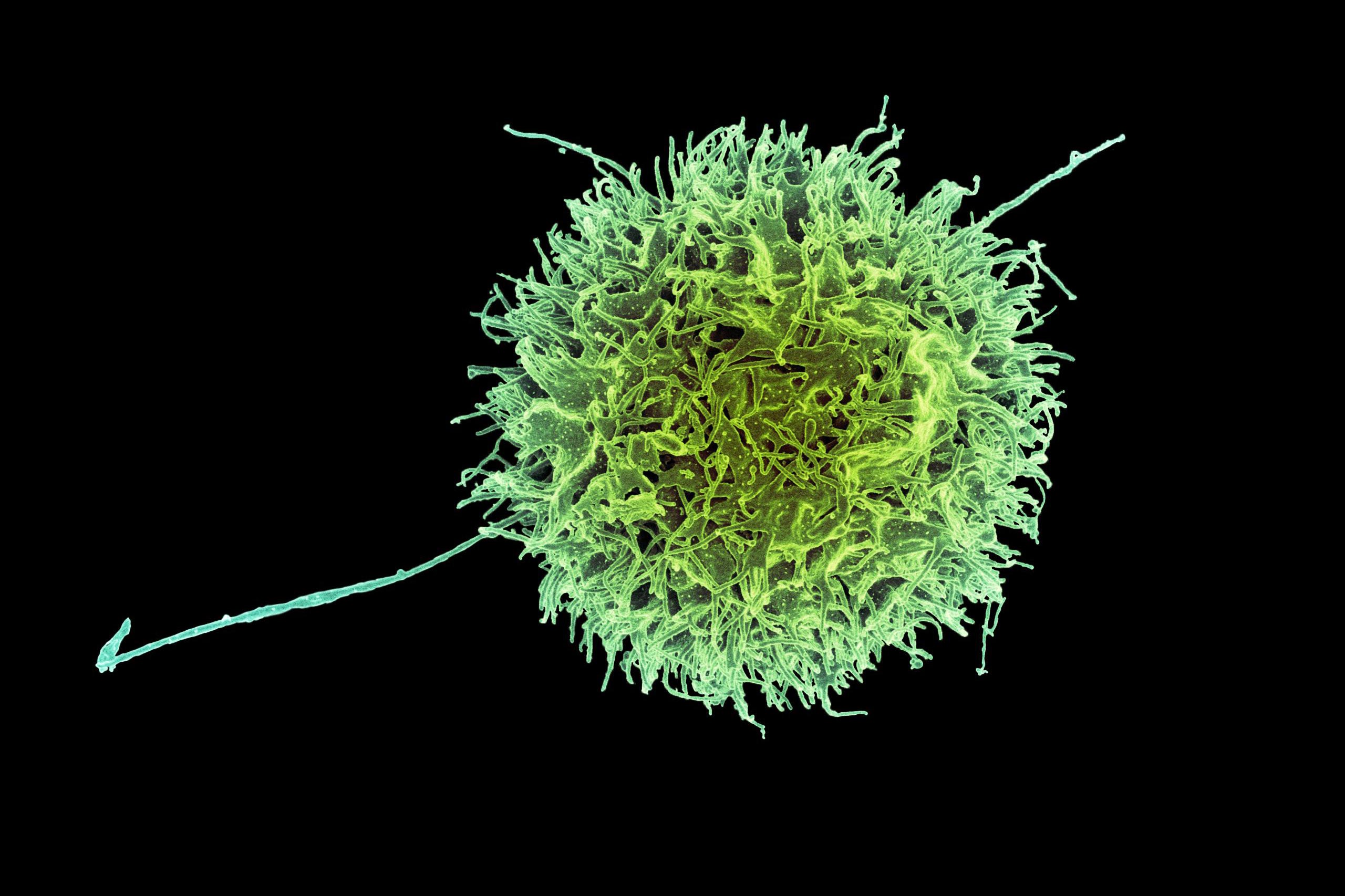
MIT and Harvard scientists have created engineered CAR-NK cells that can hide from the immune system and more effectively destroy cancer.
The cells are designed to suppress immune-rejection signals and enhance tumor-killing power. Tested in humanized mice, they wiped out cancer while avoiding dangerous immune reactions.
A Major Breakthrough in Immune Engineering
Scientists have recently developed a powerful new approach to fighting cancer using specially engineered immune cells called CAR-NK (natural killer) cells. These cells function much like CAR-T cells, which can be customized to seek out and destroy cancer, but rely on a different type of immune cell as their foundation.
Researchers at MIT and Harvard Medical School have now designed an improved version of CAR-NK cells that are far less likely to be attacked by a patient’s own immune system, a major obstacle in current cell-based therapies.
This breakthrough could also open the door to “off-the-shelf” CAR-NK treatments that doctors can administer immediately after diagnosis, eliminating the long preparation period required for most personalized cancer immunotherapies. Conventional CAR-NK and CAR-T cell production often takes several weeks.
Safer, Stronger Cancer Killers
“This enables us to do one-step engineering of CAR-NK cells that can avoid rejection by host T cells and other immune cells. And, they kill cancer cells better and they’re safer,” says Jianzhu Chen, an MIT professor of biology, a member of the Koch Institute for Integrative Cancer Research, and one of the senior authors of the study.
When tested in mice with human-like immune systems, the newly engineered cells successfully eliminated most cancer cells while avoiding detection and destruction by the host immune system.
Rizwan Romee, an associate professor of medicine at Harvard Medical School and Dana-Farber Cancer Institute, also served as a senior author of the study, published today (October 8) in Nature Communications. The lead author is Fuguo Liu, a postdoctoral researcher at the Koch Institute and a research fellow at Dana-Farber.
How NK Cells Naturally Hunt Cancer
NK cells are a critical part of the body’s natural immune defenses, and their primary responsibility is to locate and kill cancer cells and virus-infected cells. One of their cell-killing strategies, also used by T cells, is a process called degranulation. Through this process, immune cells release a protein called perforin, which can poke holes in another cell to induce cell death.
To create CAR-NK cells to treat cancer patients, doctors first take a blood sample from the patient. NK cells are isolated from the sample and engineered to express a protein called a chimeric antigen receptor (CAR), which can be designed to target specific proteins found on cancer cells.
Then, the cells spend several weeks proliferating until there are enough to transfuse back into the patient. A similar approach is also used to create CAR-T cells. Several CAR-T cell therapies have been approved to treat blood cancers such as lymphoma and leukemia, but CAR-NK treatments are still in clinical trials.
Overcoming Rejection and the Need for Donor Cells
Because it takes so long to grow a population of engineered cells that can be infused into the patient, and those cells may not be as viable as cells that came from a healthy person, researchers are exploring an alternative approach: using NK cells from a healthy donor.
Such cells could be grown in large quantities and would be ready whenever they were needed. However, the drawback to these cells is that the recipient’s immune system may see them as foreign and attack them before they can start killing cancer cells.
The Challenge: Hiding From the Immune System
In the new study, the MIT team set out to find a way to help NK cells “hide” from a patient’s immune system. Through studies of immune cell interactions, they showed that NK cells could evade a host T-cell response if they did not carry surface proteins called HLA class 1 proteins. These proteins, usually expressed on NK cell surfaces, can trigger T cells to attack if the immune system doesn’t recognize them as “self.”
To take advantage of this, the researchers engineered the cells to express a sequence of siRNA (short interfering RNA) that interferes with the genes for HLA class 1. They also delivered the CAR gene, as well as the gene for either PD-L1 or single-chain HLA-E (SCE). PD-L1 and SCE are proteins that make NK cells more effective by turning up genes that are involved in killing cancer cells.
All of these genes can be carried on a single piece of DNA, known as a construct, making it simple to transform donor NK cells into immune-evasive CAR-NK cells. The researchers used this construct to create CAR-NK cells targeting a protein called CD-19, which is often found on cancerous B cells in lymphoma patients.
NK Cells Unleashed in Mice
The researchers tested these CAR-NK cells in mice with a human-like immune system. These mice were also injected with lymphoma cells.
Mice that received CAR-NK cells with the new construct maintained the NK cell population for at least three weeks, and the NK cells were able to nearly eliminate cancer in those mice. In mice that received either NK cells with no genetic modifications or NK cells with only the CAR gene, the host immune cells attacked the donor NK cells. In these mice, the NK cells died out within two weeks, and the cancer spread unchecked.
The researchers also found that these engineered CAR-NK cells were much less likely to induce cytokine release syndrome — a common side effect of immunotherapy treatments, which can cause life-threatening complications.
A Safer Alternative to CAR-T Therapy
Because of CAR-NK cells’ potentially better safety profile, Chen anticipates that they could eventually be used in place of CAR-T cells. For any CAR-NK cells that are now in development to target lymphoma or other types of cancer, it should be possible to adapt them by adding the construct developed in this study, he says.
The researchers now hope to run a clinical trial of this approach, working with colleagues at Dana-Farber. They are also working with a local biotech company to test CAR-NK cells to treat lupus, an autoimmune disorder that causes the immune system to attack healthy tissues and organs.
Selective HLA knockdown and PD-L1 expression prevent allogeneic CAR-NK cells rejection and enhance safety and anti-tumor responses in xenograft mice.
Reference: “Selective HLA knockdown and PD-L1 expression prevent allogeneic CAR-NK cell rejection and enhance safety and anti-tumor responses in xenograft mice” by Fuguo Liu, Mubin Tarannum, Yingjie Zhao, Yiming J. Zhang, James Dongjoo Ham, Kewen Lei, Yuhao Qiang, Xingyu Deng, Maily Nguyen, Khanhlinh Dinh, Shaobo Yang, Alaa Kassim Ali, Toni K. Choueiri, Jerome Ritz, Rizwan Romee and Jianzhu Chen, 8 October 2025, Nature Communications.
DOI: 10.1038/s41467-025-63863-8
The research was funded, in part, by Skyline Therapeutics, the Koch Institute Frontier Research Program through the Kathy and Curt Marble Cancer Research Fund and the Elisa Rah Memorial Fund, the Claudia Adams Barr Foundation, and the Koch Institute Support (core) Grant from the National Cancer Institute.
Never miss a breakthrough: Join the SciTechDaily newsletter.
Follow us on Google and Google News.
20 Comments
I suggest, this this this
nSVvs
(neo-Synaptical Vesicles off villi)
WHAT ARE THEY GOING TO SELL OUT TO BIG PHARMA NOW AS THEY ALL DO FOR BILLIONS. SO WHY HAVENT WE HEARD MORE SINCE OCT 8 2025. ITS ALMOST JAN 2026. YEAH BLOODY WELL RIGHT ! NO WRONG
Great article.
If this is true are people with cancer going to get the treatment they deserve no expense spared.
Very good i hope it works on my lymphoma im in remission.
How could you join this trial?
Does it work with prostate cancer and if so can I join
I believe we, Australia has the prostate cancer cure within 48hrs.. find out in Melbourne vic. The plant came from Yidinji Tribe in the Rain Forest.. my father passed before it was released..
I too have cancer but, mine is rare..
How do you join the trial
Are you looking for a test person for CAR-NT or CAR-NK ??
I had cancer and was clean 4 months ago and now I was told I have it all over my mid area
Karl Pikna (918 697-1506
Tulsa okla.
What i hate about these kinds of “breakthroughs” is that we’ll never hear about it again after this article and cancer statistics will remain the same even a decade from now.
How can someone be apart of this? She’s stage 4 and I’m trying to get her some help. Please help me 9372449183
Do you accept candidates from Australia?
Do you accept candidates from overseas – Australia?
I would do a clinical study
Recent prostate cancer diagnosis- it’s spreading???
open to all options- thank you
Hi, I’m in remission 5 years after being diagnosed with endometrial cancer with lung metastases. I have 2 swollen lymphnodes, left para-aortic @1cm, and left external iliac @ 2.5cm. I have had allergies and sensitivities since childhood (I’m now 70), and take antihistamines. Could I be of any use in your trial? I live in Ireland, but can travel.
Regards,
Rachel Ryan
what bothers me is that the CAR-NK cells target CD-19. This protein is indeed found on cancerous B-cells. And on healthy B-cells. The idea is if you have B-cell lymphoma, kill all your B-cells. This appears to work as long as the CAR-NK cells are still present in your blood. But you really need all the healthy B-cells to fight infections from colds, flu, etc, and to maintain immunities acquired via prior exposure or vaccination. We really need a therapy that targets something that is unique to a cancerous B cell.
Hello my husband was just told he has prostate cancer Gleason score 8 please use him in your clinical trials he is 64 and in perfect health he is fit and hopes not to get radiation or prostectimy
How might this also help with lupus cure?ANY LATEST INNOVATIVE APPROACH TO TREATING/HELPING SYSYEMIC LUPUS PATIENTS?
How can I do a trial? State 4 long cancel with only trials in the next six months