
NASA is about to launch the Orbiting Carbon Observatory – a satellite dedicated to the study of global carbon dioxide sources that will help researchers predict the future of climate change.
In the lexicon of climate change, one word appears more often than any other: “carbon.” Carbon credits, carbon emissions, carbon sequestration…. These terms are on everyone’s lips.
The reason is carbon dioxide (CO2).
According to the Intergovernmental Panel on Climate Change, CO2 is the most important driver of global warming. At approximately 400 parts per million, atmospheric carbon dioxide is now at its highest level in at least the past 800,000 years. The burning of fossil fuels and other human activities are currently adding nearly 40 billion tons of carbon dioxide to the atmosphere each year, producing an unprecedented buildup.
NASA is about to launch a spacecraft to keep track of this greenhouse gas. The Orbiting Carbon Observatory-2 is in final preparations for a July 1st launch from Vandenberg Air Force Base in California.
A new ScienceCast video explores the goals and underlying technology of the Orbiting Carbon Observatory.
Also known as “OCO-2”, the polar orbiting satellite will provide a global picture of human and natural sources of carbon dioxide. Data from OCO-2 will also be used to quantify carbon dioxide “sinks”—that is, places in the ocean and land which naturally pull carbon dioxide out of Earth’s atmosphere for storage.
“Knowing what parts of Earth are helping remove carbon from our atmosphere will help us understand whether they can keep doing so in the future,” says Michael Gunson, OCO-2 project scientist at NASA’s Jet Propulsion Laboratory.
Although the mission is named OCO two, it is actually NASA’s first spacecraft dedicated to measuring atmospheric carbon dioxide levels. The original OCO spacecraft, launched from Vandenberg more than five years ago, never reached orbit because of a separation anomaly in the launch vehicle. OCO-2 is NASA’s second attempt.
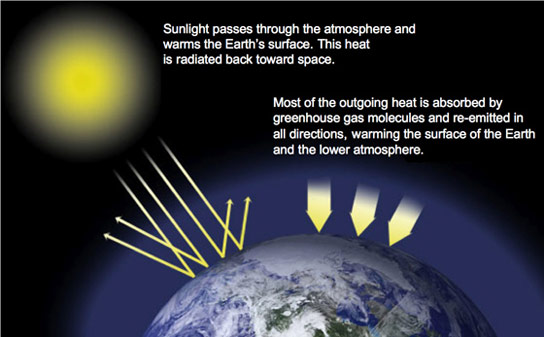
It’s coming just in time. Greenhouse gases like CO2 trap the sun’s heat within Earth’s atmosphere. By maintaining habitable temperatures, the greenhouse effect is essential to life on Earth. However, increasing CO2 levels may have given our planet too much of a good thing.
Most scientists agree that increased carbon dioxide from human activities, particularly fossil fuel burning and deforestation, has thrown Earth’s natural carbon cycle off balance. Global surface temperatures are increasing and changing our planet’s climate.
Currently, less than half the carbon dioxide emitted into Earth’s atmosphere by human activities stays there. Some of the extra CO2 is absorbed by Earth’s oceans. Natural land sinks take up the rest, but the amounts of CO2 taken up at various locations on the Earth’s surface are not well understood. OCO-2 scientists hope to coax these sinks out of hiding.
“Quantifying these sinks now will help us predict how fast CO2 will build up in the future,” adds Gunson. “Data from this mission will improve the accuracy of global climate change predictions.”
OCO-2 detects carbon dioxide using three onboard spectrometers. These devices work by spreading sunlight into its constituent colors. CO2 reveals itself by absorbing certain colors as sunlight crosses through the atmosphere. In this way the new spacecraft will dramatically increase the number of observations of carbon dioxide, collecting hundreds of thousands of measurements each day when the satellite flies over Earth’s sunlit hemisphere.
OCO-2 measurements will be combined with data from ground stations, aircraft and other satellites to help answer key questions about carbon dioxide and climate change.
The director of NASA’s Earth Science Division, Michael Freilich, sums it up: “With the OCO-2 mission, NASA will be making an important new contribution to the scientific challenge of better understanding our Earth and its future.”
Never miss a breakthrough: Join the SciTechDaily newsletter.
Follow us on Google and Google News.