
Close Menu
    Facebook X (Twitter) Instagram
    SciTechDaily
    • Biology
    • Chemistry
    • Earth
    • Health
    • Physics
    • Science
    • Space
    • Technology
    Facebook X (Twitter) Pinterest YouTube RSS
    SciTechDaily
    Home»Space»NASA’s Perseverance Mars Rover: A View of the Red Planet (in Blue)
    Space

    NASA’s Perseverance Mars Rover: A View of the Red Planet (in Blue)

    By NASAMarch 8, 20221 Comment2 Mins Read
    Facebook Twitter Pinterest Telegram LinkedIn WhatsApp Email Reddit
    Share
    Facebook Twitter LinkedIn Pinterest Telegram Email Reddit
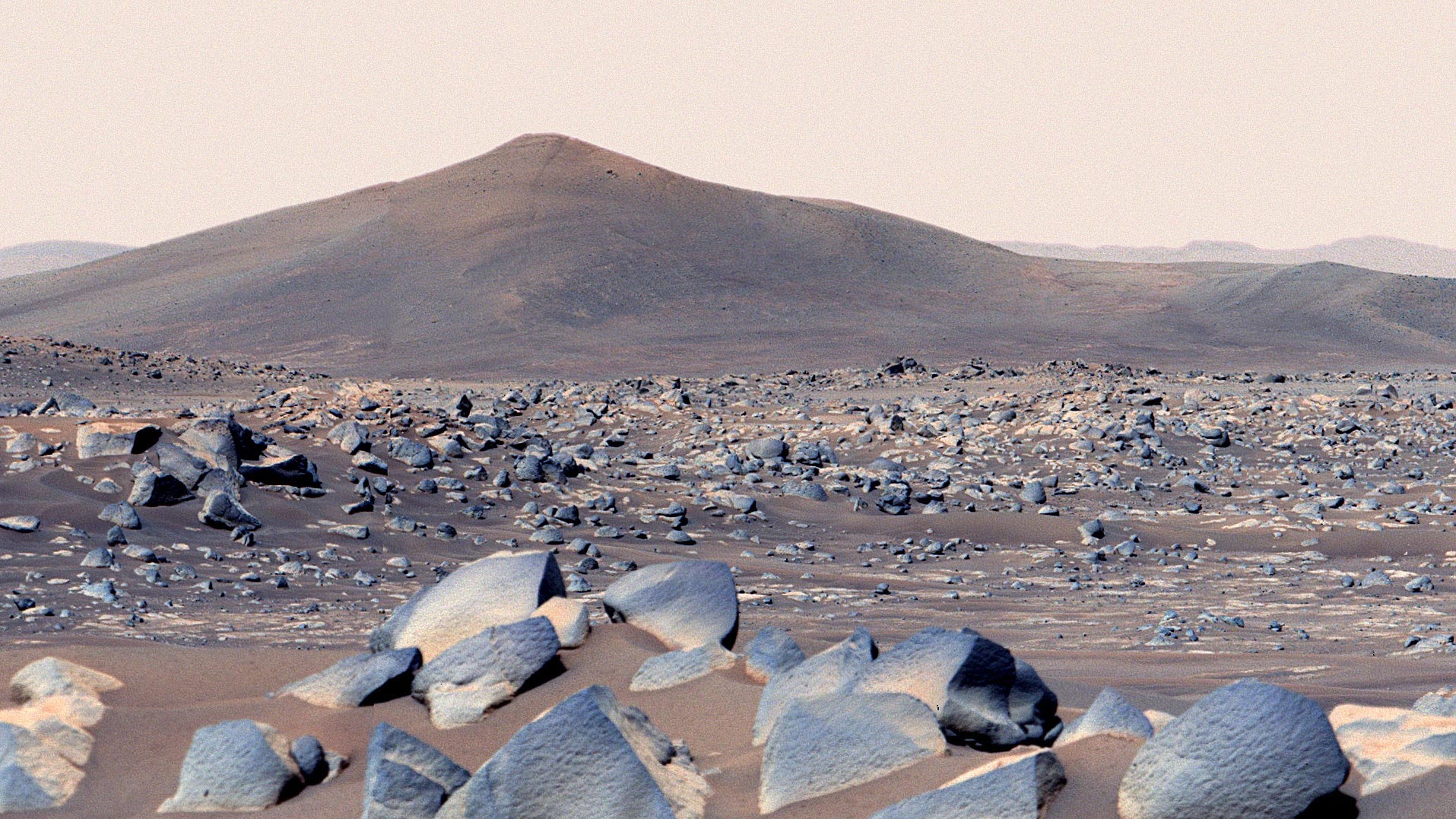
    Mars Perseverance Santa Cruz
    Perseverance snapped this view of a hill called “Santa Cruz” on April 29, 2021. About 20 inches (50 centimeters) across on average, the boulders in the foreground are among the type of rocks the rover team has named “Ch’al” (the Navajo term for “frog” and pronounced “chesh”). Perseverance will return to the area next week or so. Credit: NASA/JPL-Caltech/ASU/MSSS

    NASA’s Perseverance Mars rover snapped this view of a hill in Mars’ Jezero Crater called “Santa Cruz” on April 29, 2021, the 68th Martian day, or sol, of the mission. About 20 inches (50 centimeters) across on average, the boulders in the foreground are among the type of rocks the rover team has named “Ch’al” (the Navajo term for “frog” and pronounced “chesh”).

    Composed of multiple images, this enhanced-color mosaic was created using the left- and right-eye views of Perseverance’s Mastcam-Z camera system, merging the scene into a single, wider view. Santa Cruz hill is a possible eroded remnant of Jezero Crater’s western delta. The hill is about 164 feet (50 meters) tall and was roughly 1.6 miles (2.5 kilometers) east of the rover when the photo was taken, viewed from “Van Zyl Overlook.”

    A key objective for Perseverance’s mission on Mars is astrobiology, including the search for signs of ancient microbial life. The rover will characterize the planet’s geology and past climate, pave the way for human exploration of the Red Planet, and be the first mission to collect and cache Martian rock and regolith (broken rock and dust).

    Subsequent NASA missions, in cooperation with ESA (European Space Agency), would send spacecraft to Mars to collect these sealed samples from the surface and return them to Earth for in-depth analysis.

    Never miss a breakthrough: Join the SciTechDaily newsletter.
    Follow us on Google and Google News.

    JPL Mars Mars 2020 Perseverance Rover NASA
    Share. Facebook Twitter Pinterest LinkedIn Email Reddit

    Related Articles

    NASA’s Perseverance Rover Discovers Mysterious Striped Rock on Mars

    NASA’s Perseverance Rover Begins Ambitious Ascent of Jezero Crater Rim

    NASA’s Perseverance Mars Rover To Begin Epic Climb up Steep Martian Crater Rim

    Potential Evidence of Life Discovered on Mars by NASA’s Perseverance Rover

    Is There Life on Mars? NASA’s AI Rovers Might Soon Tell Us

    Charting the Red Planet: How Open Science Fuels Mars Exploration

    Perseverance Triumphs: How SHERLOC Was Brought Back to Life on Mars

    Atmospheric Time Capsules: Why Scientists Are Intrigued by Air in NASA’s Mars Sample Tubes

    NASA’s Perseverance Rover Crosses Ancient Martian River To Reach New Scientific Frontiers

    1 Comment

    1. The 10th Man on March 8, 2022 6:56 pm

      Cause yah, that picture is worth the 5 billion dollars it cost to land a camera on Mars. How about some science NASA.

      Reply
    Leave A Reply Cancel Reply

    • Facebook
    • Twitter
    • Pinterest
    • YouTube

    Don't Miss a Discovery

    Subscribe for the Latest in Science & Tech!

    Trending News

    Don’t Miss: August Brings Two Eclipses and the Perseid Meteor Shower

    Brain Waves Once Dismissed As Noise May Help Build Our Reality

    Perseverance Finds Organic Carbon Preserved Just Beneath the Martian Surface

    Tick Found in Austin Apartment Linked to Rare Relapsing Fever

    Ozempic Changes Your Body, but Does It Change Your Life? A New Study Suggests Not

    Ancient Super-Eruptions May Have Frozen Earth for Centuries

    A Common Sugar May Loosen Cancer Cells and Help Them Spread

    Scientists Discover a Major Brain Change That Starts Around Age 50

    Follow SciTechDaily
    • Facebook
    • Twitter
    • YouTube
    • Pinterest
    • Newsletter
    • RSS
    SciTech News
    • Biology News
    • Chemistry News
    • Earth News
    • Health News
    • Physics News
    • Science News
    • Space News
    • Technology News
    Recent Posts
    • Scientists Discover a Hidden Cell Signal That May Explain Congenital Heart Defects
    • A Major Dementia Study Finds Striking Differences After Age 90
    • Scientists Say Eating Less Protein May Help You Live Longer
    • Democracy Has a Math Problem No Country Can Fully Solve
    • Scientists Solve a Long-Standing Mystery About Bird and Dinosaur Eggs
    Copyright © 1998 - 2026 SciTechDaily. All Rights Reserved.
    • Science News
    • About
    • Contact
    • Editorial Board
    • Privacy Policy
    • Terms of Use

    Type above and press Enter to search. Press Esc to cancel.