
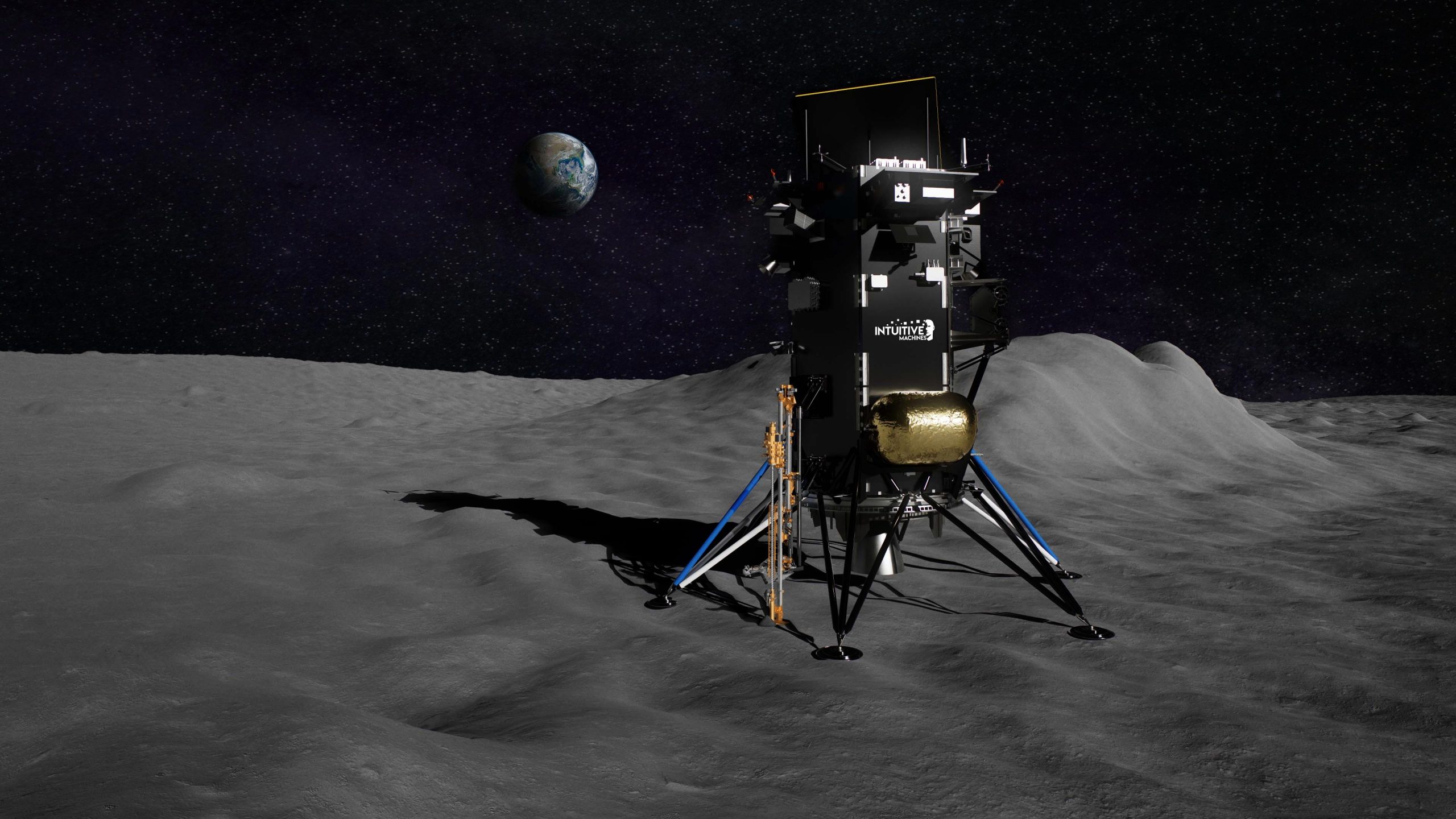
NASA’s PRIME-1 lunar mission will drill for ice, test 4G communications, and deploy a crater-hopping robot to prepare for long-term Moon exploration.
In late 2022, NASA will send an ice-mining experiment attached to a robotic lander to the lunar South Pole on a ridge not far from Shackleton crater – a location engineers and scientists have assessed for months. NASA and Intuitive Machines, an agency partner for commercial Moon deliveries, announced the location selection on November 3.
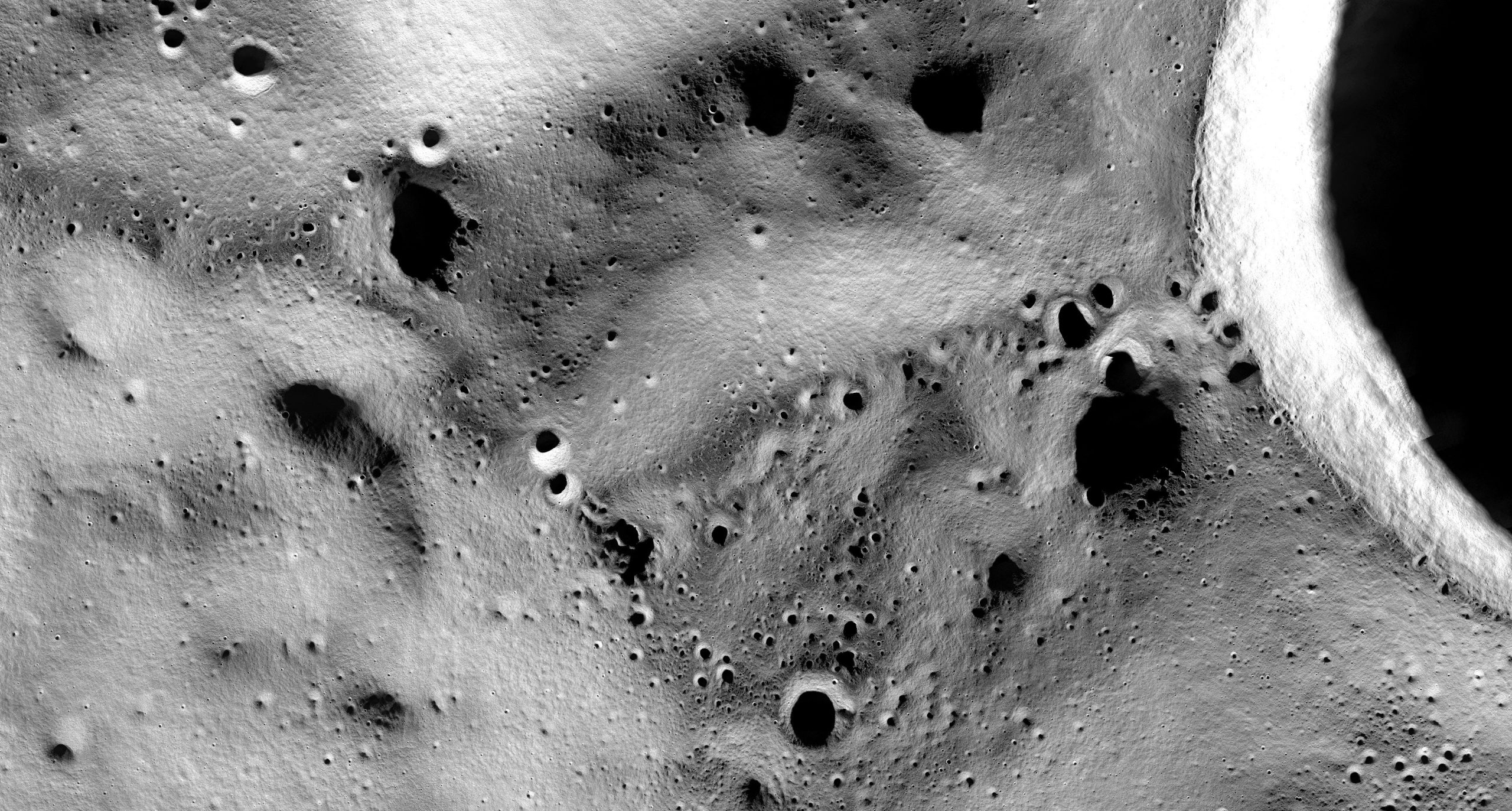
NASA data from spacecraft orbiting the Moon indicate this location, referred to as the “Shackleton connecting ridge,” could have ice below the surface. The area receives sufficient sunlight to power a lander for roughly a 10-day mission, while also providing a clear line of sight to Earth for constant communications. It also is close to a small crater, which is ideal for a robotic excursion.
These conditions offer the best chance of success for the three technology demonstrations aboard. This includes the NASA-funded Polar Resources Ice-Mining Experiment-1 (PRIME-1) – which consists of a drill paired with a mass spectrometer – a 4G/LTE communications network developed by Nokia of America Corporation, and Micro-Nova, a deployable hopper robot developed by Intuitive Machines.
The Challenge of Finding a ‘Goldilocks’ Site
“PRIME-1 is permanently attached to Intuitive Machines’ Nova-C lander, and finding a landing location where we might discover ice within three feet of the surface was challenging,” said Dr. Jackie Quinn, PRIME-1 project manager at NASA’s Kennedy Space Center in Florida. “While there is plenty of sunlight to power the payloads, the surface gets too warm to sustain ice within reach of the PRIME-1 drill. We needed to find a ‘goldilocks’ site that gets just enough sunlight to meet mission requirements while also being a safe place to land with good Earth communications.”
To select this final landing location, experts from NASA, Arizona State University, Johns Hopkins Applied Physics Lab, Nokia, and Intuitive Machines created “ice-mining” maps of the lunar surface using lunar remote sensing data.
After landing, the PRIME-1 drill, known as The Regolith Ice Drill for Exploring New Terrain (TRIDENT), will attempt to drill up to three feet deep, extract lunar soil – called regolith – and deposit it on the surface for water analysis. PRIME-1’s other instrument, the Mass Spectrometer observing lunar operations (MSolo), will measure volatile gases that readily escape from the material excavated by TRIDENT.
Stepping-Stone to Artemis and VIPER
PRIME-1 will be the first demonstration of finding and extracting resources on the Moon. Advancing these types of technologies are critical to establishing a robust, long-term presence in deep space, including at the Moon as part of the agency’s Artemis missions. Simply operating and drilling into the tough lunar surface will provide valuable insight to engineers for future lunar missions, such as the Volatiles Investigating Polar Exploration Rover, or VIPER, mission, which is slated to land at the lunar South Pole in late 2023.
While PRIME-1 will investigate the resources below the lunar surface, Nokia will set out to test its space-hardened 4G/LTE network. A small rover developed by Lunar Outpost will venture more than a mile away from the Nova-C lander and test Nokia’s wireless network at various distances. The rover will communicate to a base station located on Nova-C, and the lander will communicate data back to Earth. This demonstration could pave the way for a commercial 4G/LTE system for mission-critical communications on the lunar surface. This includes communications and even high-definition video streaming from astronauts to base stations, vehicles to base stations, and more.
Nearby, Intuitive Machines’ Micro-Nova will aim to deploy to the surface and hop into a nearby crater to acquire pictures and science data before hopping out. It will then send the data back to Nova-C. Micro-Nova can carry a two-pound payload more than 1.5 miles (2.4 kilometers) to access lunar craters and enable high-resolution surveying of the lunar surface. This demonstration could help pave the way for additional commercial lunar exploration services. In the future, scientists may have the opportunity to outfit a hopper with their own small science instruments, such as cameras, seismometers, lunar ranging systems, and more.
“These early technology demonstrations employ innovative partnerships to provide valuable information about operating on and exploring the lunar surface,” said Niki Werkheiser, director of technology maturation for NASA’s Space Technology Mission Directorate (STMD) at NASA Headquarters in Washington. “The data will inform the designs for future in-situ resource utilization, mobility, communication, power, and dust mitigation capabilities.”
Never miss a breakthrough: Join the SciTechDaily newsletter.
Follow us on Google and Google News.