
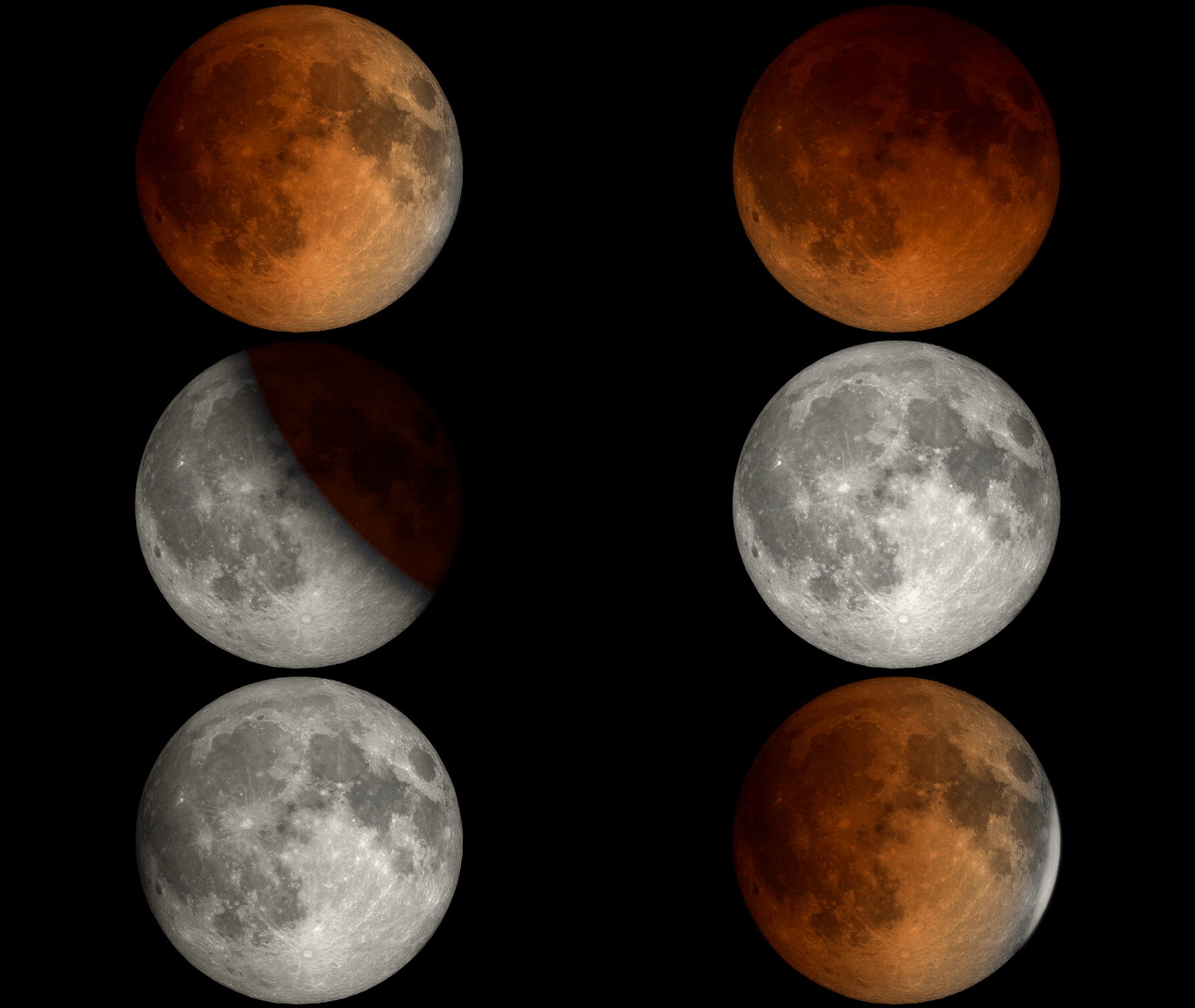
On the night of May 15, 2022, and into the early hours of May 16, skywatchers will be treated to a spectacular phenomenon that takes place every 1.5 years or so: a total lunar eclipse.
Total lunar eclipses occur when the Moon and Sun are on opposite sides of Earth and the planet casts a complete shadow, or umbra, over its sole natural satellite. There may be multiple partial lunar eclipses each year, but total eclipses are a bit rarer. Best of all, unlike the precautions one must take to safely observe a total solar eclipse, it’s completely safe to watch a lunar eclipse unfold with the unaided eye. Even so, binoculars or a powerful telescope definitely can greatly enhance the experience.
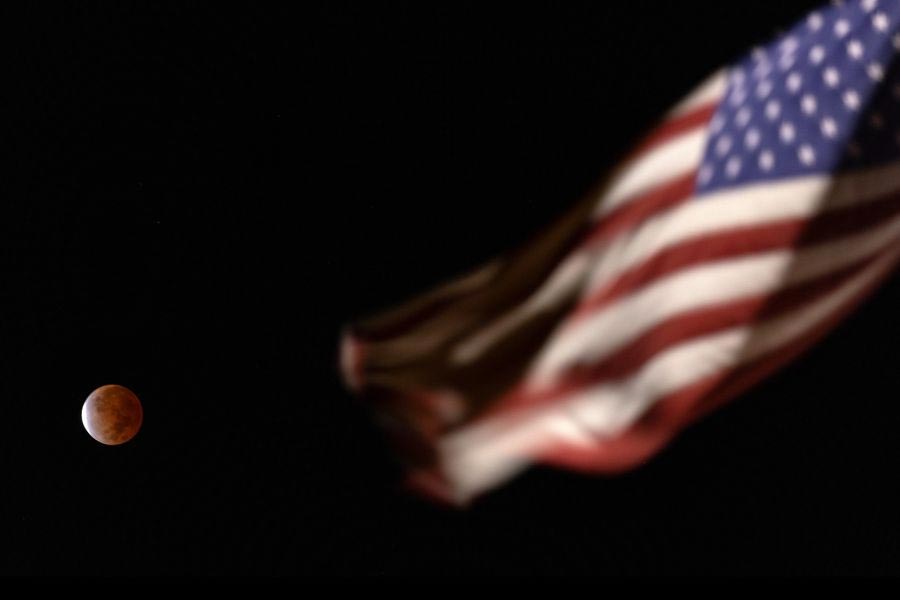
The partial eclipse phase will begin over North America at 9:28 p.m. Central Daylight Time (10:28 p.m. Eastern Daylight Time, 7:28 p.m. Pacific Daylight Time) on May 15. Totality will begin at 10:29 p.m. CDT (11:29 p.m. EDT, 8:29 p.m. PDT) , concluding about midnight. After totality, the partial phase will end about 2 1/2 hours later at 12:56 a.m. CDT on May 16.
This full Moon was known by early Native American tribes as the Flower Moon because this was the time of year when spring flowers appeared in abundance.
Mitzi Adams and Alphonse Sterling, both astronomers at NASA’s Marshall Space Flight Center in Huntsville, Alabama, are particularly excited to observe the lunar eclipse. One of the most recent such events they documented – in January 2018 – was very low on the horizon, with trees and buildings partially obscuring the eclipse during totality.
The appearance of the Moon during the May 2022 total lunar eclipse. Includes annotations of the contact times and various eclipse statistics. The total lunar eclipse of May 16, 2022 (the night of May 15 in the Western Hemisphere) occurs near perigee, making the Moon appear about 7% larger than average. This eclipse is ideally timed for viewing from most of the Western Hemisphere, including the Lower 48 of the United States. The total phase occurs near moonset in Africa and western Europe. Credit: NASA’s Scientific Visualization Studio
Then, of course, the global COVID-19 pandemic put a damper on eclipse watch parties in 2020-2021.
“It’s exciting to get back to holding astronomical society events in person, where it’s safer to share a telescope eyepiece,” Adams said.
Unlike a total solar eclipse – in which ideal viewing is limited to a roughly 100-mile-wide “path of totality” as the shadow of Earth’s Moon sweeps across the land relative to the position of the Sun – a lunar eclipse has no such limits.
“The whole half of Earth in darkness during those hours will be able to see it,” Sterling said. “You don’t have to work too hard to find a good vantage point. Just go outside!”
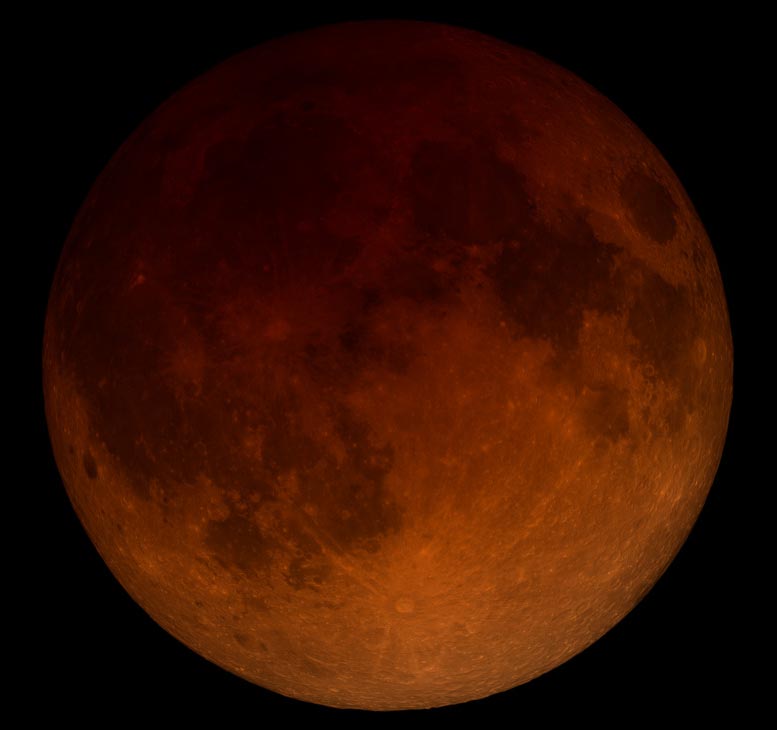
What can viewers expect to see? As Earth’s shadow deepens on the face of the Moon, it will darken to a ruddy, red color, with its intensity depending on atmospheric interference.
It’s no surprise observers coined the ominous-sounding phrase “blood moon,” but the effect is completely natural. During the eclipse, most visible-spectrum light from the Sun is filtered out. Only the red and orange wavelengths reach the surface.
The blocking of the Moon’s reflected light has another benefit, Adams said.
“No moon means more visible stars,” she said. “During totality, if the skies are clear, we may even be able to see the Milky Way itself, showing up as a hazy white river of stars stretching away in a curving arc.”
Watch the total lunar eclipse live with NASA. This is especially useful if you are not in an area where you can go outside and observe it directly.
Sterling notes that the long duration of the total eclipse offers amateur shutterbugs plenty of time to experiment with photographing the event. He recommends trying varying exposure times with conventional cameras for maximum effect.
He and Adams both emphasize the value of putting the camera aside, as well.
“Just watch it happen,” Adams said. “Looking at the Moon, it’s hard not to think about the people who actually walked there, and about those who soon will do so again – when NASA’s Artemis program launches the next human explorers to the Moon in coming years.”
Sterling said the most valuable aspect of the event is the chance to spark wonder in young minds. “We don’t get a lot of groundbreaking astronomical information from lunar eclipses, but they’re a great way to inspire discussion and engage the astronomers and explorers of tomorrow,” he said.
Find out how to watch the total lunar eclipse with NASA Science Live on Facebook. Learn more about NASA’s observations of eclipses, and inspire young stargazers with activities and information.
You can also learn more about lunar eclipses via the video below:
It’s not often that we get a chance to see our planet’s shadow, but a lunar eclipse gives us a fleeting glimpse. During these rare events, the full Moon rapidly darkens and then glows red as it enters the Earth’s shadow. Though a lunar eclipse can be seen only at night, it’s worth staying up to catch the show. Credit: NASA’s Goddard Space Flight Center
Happy skywatching!
Never miss a breakthrough: Join the SciTechDaily newsletter.
Follow us on Google and Google News.