
New Instrument Suites Selected for Lunar Exploration
NASA has major plans for moon exploration under the Artemis Program. While one of the chief goals is to send astronauts to establish the first long-term presence on the Moon and learn what is necessary to send the first astronauts to Mars, there are also many scientific investigations on the agenda.
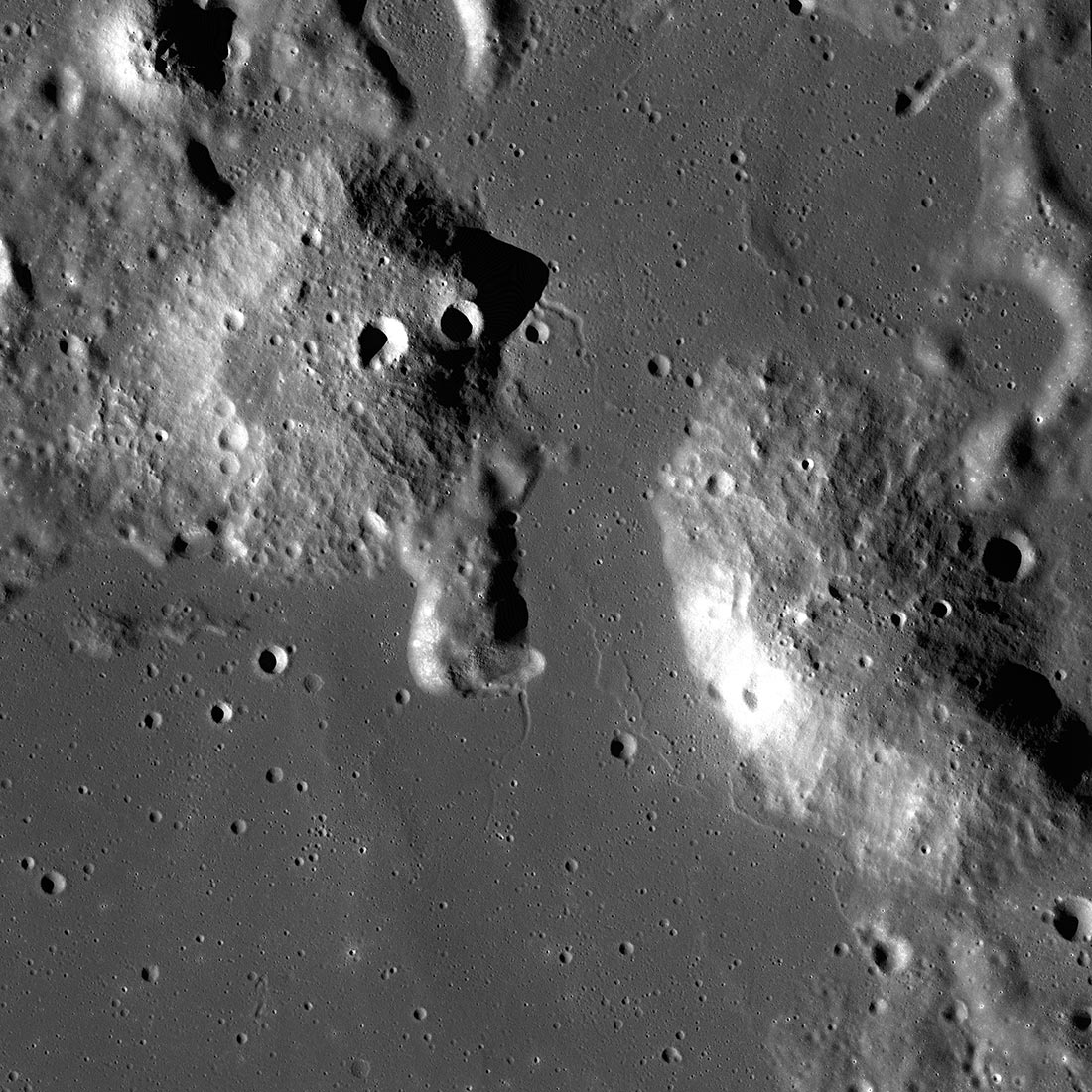
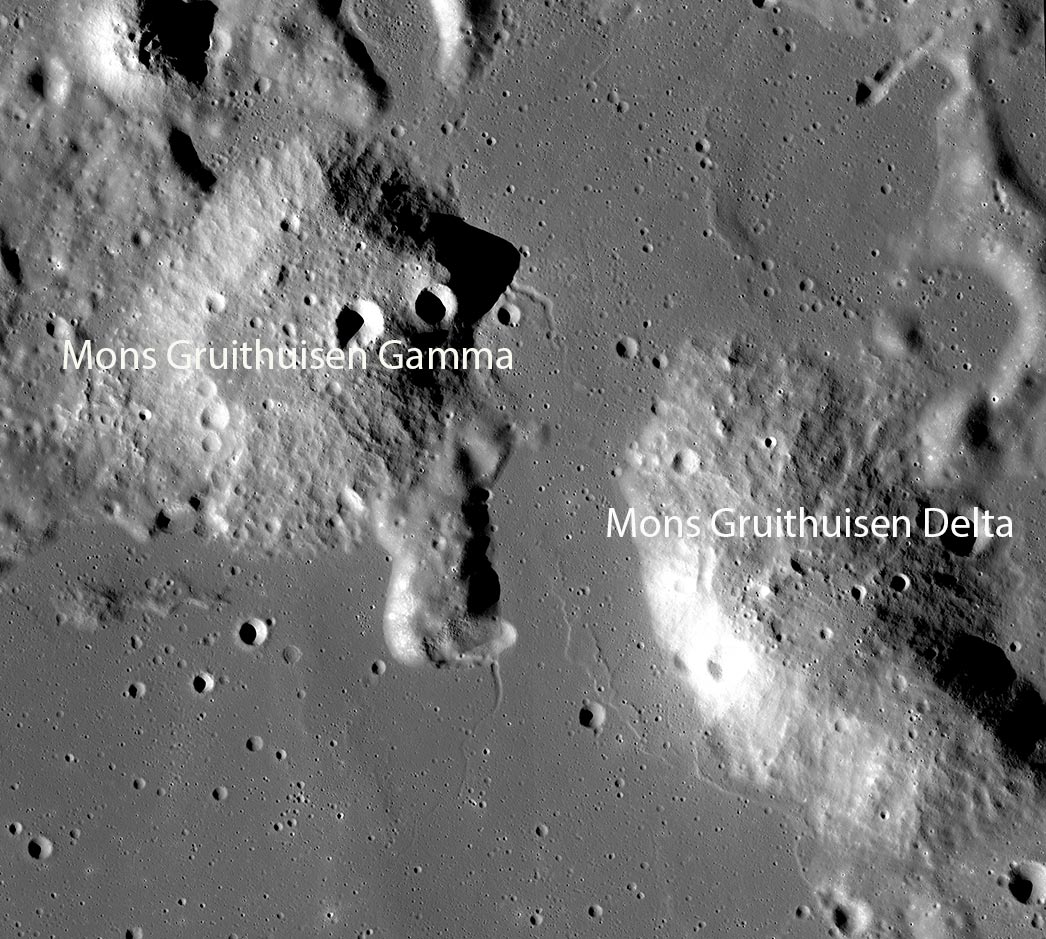
In fact, that list is growing, as NASA just selected two new instruments for priority Artemis science on the moon. One is called Lunar Vulkan Imaging and Spectroscopy Explorer (Lunar-VISE) and its goal is to explore the mysterious Gruithuisen Domes. What makes these geological features so puzzling to scientists is that they appear to have been formed by a magma rich in silica, similar in composition to granite.
How did these silicic magmas form on the moon, when silicic volcanoes on Earth typically form in the presence of both water and plate tectonics?
Adding to the growing list of commercial deliveries slated to explore more of the Moon than ever before under Artemis, NASA has selected two new science instrument suites, including one that will study the mysterious Gruithuisen Domes for the first time.
These payload suites mark the second selection through the agency’s Payloads and Research Investigations on the Surface of the Moon (PRISM) call for proposals. Both payloads will be delivered to the lunar surface on future flights through NASA’s Commercial Lunar Payload Services (CLPS) initiative, which is one part of the agency’s larger lunar exploration architecture planned for this decade.
“The two selected studies will address important scientific questions related to the Moon,” said Joel Kearns, deputy associate administrator for exploration in NASA’s Science Mission Directorate. “The first will study geologic processes of early planetary bodies that are preserved on the Moon, by investigating a rare form of lunar volcanism. The second will study the effects of the Moon’s low gravity and radiation environment on yeast, a model organism used to understand DNA damage response and repair.”
The Lunar-VISE Investigation
The Lunar Vulkan Imaging and Spectroscopy Explorer (Lunar-VISE) investigation consists of a suite of five instruments, two of which will be mounted on a stationary lander and three mounted on a mobile rover to be provided as a service by the CLPS vendor.
Over the course of 10 Earth days (one lunar day), Lunar-VISE will explore the summit of one of the Gruithuisen Domes. These domes are suspected to have been formed by a sticky magma rich in silica, similar in composition to granite. On Earth, formations like these need oceans of liquid water and plate tectonics to form, but without these key ingredients on the Moon, lunar scientists have been left to wonder how these domes formed and evolved over time.
By analyzing the lunar regolith at the top of one of these domes, the data collected and returned by Lunar-VISE’s instruments will help scientists answer fundamental open questions regarding how these formations came to be. The data also will help inform future robotic and human missions to the Moon. Dr. Kerri Donaldson Hanna of the University of Central Florida will lead this payload suite.
The LEIA Investigation for Biological Research
The second selected investigation, the Lunar Explorer Instrument for space biology Applications (LEIA) science suite, is a small CubeSat-based device. LEIA will provide biological research on the Moon – which cannot be simulated or replicated with high fidelity on the Earth or International Space Station – by delivering the yeast Saccharomyces cerevisiae to the lunar surface and studying its response to radiation and lunar gravity. S. cerevisiae is an important model of human biology, especially in the areas of genetics, cellular and molecular replication and division processes, and DNA damage response to environmental factors such as radiation. The data returned by LEIA, in conjunction with previously existing data from other biological studies, could help scientists answer a decades-old question of how partial gravity and actual deep space radiation in combination influence biological processes. Dr. Andrew Settles of NASA’s Ames Research Center in Silicon Valley, California will lead the LEIA payload suite.
With these selections in place, NASA will work with the CLPS office at the agency’s Johnson Space Center in Houston to issue task orders to deliver these payload suites to the Moon in the 2026 timeframe.
For these payload suites, the agency also has selected two project scientists to coordinate science activities for the selected instrument suites, including working with the payloads on landing site selection, developing concepts of operations, and archiving science data acquired during surface operations. Dr. John Karcz of NASA Ames Research Center in California will coordinate the Lunar-VISE investigation suite for delivery to the Gruithuisen Domes, and Dr. Cindy Young of NASA’s Langley Research Center in Hampton, Virginia, will coordinate the LEIA investigation suite for delivery.
CLPS is a key part of NASA’s Artemis lunar exploration plans. The science and technology payloads sent to the Moon’s surface will help lay the foundation for human missions on and around the Moon. The agency has made seven task order awards to CLPS providers for lunar deliveries between in the early 2020s with more delivery awards expected through 2028.
Never miss a breakthrough: Join the SciTechDaily newsletter.
Follow us on Google and Google News.
3 Comments
please kindly send me more news about health thanking you in advance
Someone must have gone to a school to learn to write such terrible headlines.
Alien mining on the moon..
Word..