
NASA has successfully extracted oxygen from simulated lunar soil in a vacuum, using a specialized carbothermal reactor. This achievement is a major stride towards enabling sustained human presence on the Moon by providing vital oxygen resources for life support and transportation, potentially revolutionizing future Artemis missions and broader space exploration.
As NASA works toward sending astronauts to the Moon through Artemis missions, one of the agency’s primary goals is to establish a long-term presence on the lunar surface. Resources like oxygen are crucial building blocks for making that vision a reality. In addition to using oxygen for breathing, it can also be used as a propellant for transportation, helping lunar visitors stay longer and venture farther.
During a recent test, scientists at NASA’s Johnson Space Center in Houston successfully extracted oxygen from simulated lunar soil. Lunar soil refers to the fine-grained material covering the Moon’s surface. This was the first time that this extraction has been done in a vacuum environment, paving the way for astronauts to one day extract and use resources in a lunar environment, called in-situ resource utilization.
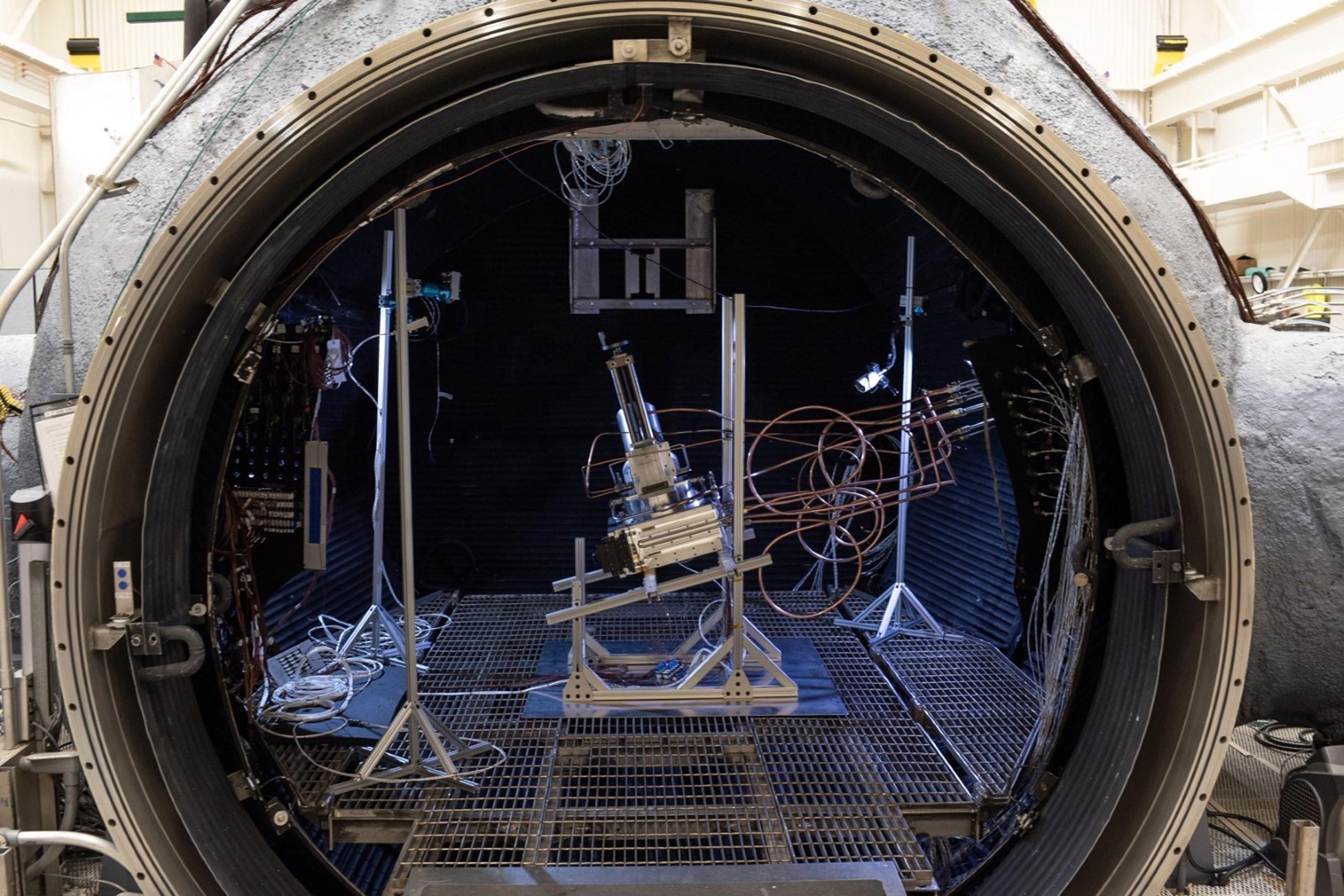
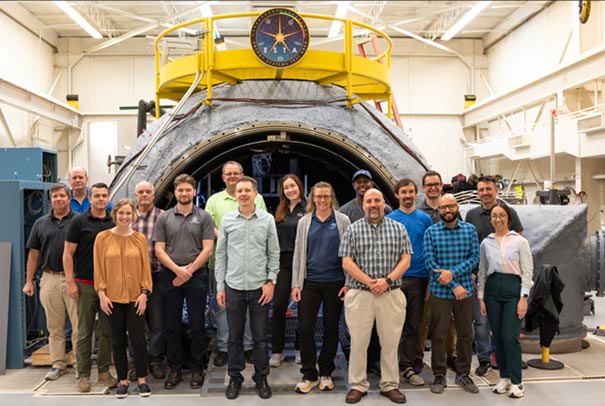
NASA’s Carbothermal Reduction Demonstration (CaRD) team conducted the test in conditions similar to those found on the Moon by using a special spherical chamber with a 15-foot diameter called the Dirty Thermal Vacuum Chamber. The chamber is considered “dirty” because unclean samples can be tested inside.
The team used a high-powered laser to simulate heat from a solar energy concentrator and melted the lunar soil simulant within a carbothermal reactor developed for NASA by Sierra Space Corp., of Broomfield, Colorado. A carbothermal reactor is where the process of heating and extracting the oxygen takes place. Carbothermal reduction has been used for decades on Earth to produce items like solar panels and steel by producing carbon monoxide or dioxide using high temperatures.
After the soil was heated, the team was able to detect carbon monoxide using a device called the Mass Spectrometer Observing Lunar Operations (MSolo). A similar device will fly on two upcoming exploration missions to the Moon’s South Pole — the Polar Resources Ice Mining Experiment-1 in 2023, which will help scientists search for water, and NASA’s Volatiles Investigating Polar Exploration Rover (VIPER) in November 2024, which will explore Mons Mouton, a large flat-topped mountain, to get a close-up view of the location and concentration of water ice and other potential resources.
Scaling Oxygen Production for Lunar Habitats
“This technology has the potential to produce several times its own weight in oxygen per year on the lunar surface, which will enable a sustained human presence and lunar economy,” said Aaron Paz, NASA senior engineer and CaRD project manager at Johnson.
To apply this process to oxygen production on the Moon, a carbothermal reactor needs to be able to hold pressure to keep gases from escaping to space, while still allowing lunar material to travel in and out of the reaction zone. Operating the reactor in a vacuum environment for the CaRD test simulated the conditions at the lunar surface and increased the technical readiness level of the reactor to a six, which means the technology has a fully functional prototype or representational model and is ready to be tested in space.

“Our team proved the CaRD reactor would survive the lunar surface and successfully extract oxygen,” said Anastasia Ford, NASA engineer and CaRD test director at Johnson. “This is a big step for developing the architecture to build sustainable human bases on other planets.”
Advancing Lunar Sustainability and Beyond
The Game Changing Development (GCD) program within the Science Technology Mission Directorate (STMD) sponsored the test in order to build the technology needed to extract oxygen from lunar soil, which was identified as a critical technology gap.
CaRD is part of STMD’s Lunar Surface Innovation Initiative (LSII). Through LSII, NASA is developing the essential capabilities required for humans and systems to successfully live and operate in multiple environments on the lunar and other planetary body surfaces.
The same technology that was proved by the CaRD test could be applied to Artemis missions, and one day to journeys deeper into our solar system. With the successful completion of this demonstration test, NASA has established that oxygen can be extracted from existing lunar material to provide humans with resources critical for survival and transportation on extraterrestrial worlds.
Through Artemis missions, NASA will land the first woman and the first person of color on the surface of the Moon, paving the way for a long-term lunar presence and serving as a steppingstone for astronauts on the way to Mars.
Never miss a breakthrough: Join the SciTechDaily newsletter.
Follow us on Google and Google News.
3 Comments
Exciting Exploration !
Do we never learn? We mess up the Earth and now they want to go ahead and chop up the moon. They just can’t leave well enough alone….
Who is paying you to sell illusions and sophistries???