
NASA has partnered with three companies to develop commercial space stations as part of a broader strategy to maintain a U.S. presence in low-Earth orbit.
The agreements, totaling $415.6 million, are the first phase of a two-step approach that will transition activity from the ISS to these new platforms. The space stations are expected to be operational by the mid-2020s, supporting both government and private-sector needs.
NASA has signed agreements with three U.S. companies to develop designs of space stations and other commercial destinations in space. The agreements are part of the agency’s efforts to enable a robust, American-led commercial economy in low-Earth orbit.
The total estimated award amount for all three funded Space Act Agreements is $415.6 million. The companies that received awards are:
- Blue Origin of Kent, Washington, for $130 million
- Nanoracks LLC, of Houston for $160 million
- Northrop Grumman Systems Corporation of Dulles, Virginia, for $125.6 million
Developing the Next-Generation Low-Earth Orbit Destinations
NASA seeks to maintain an uninterrupted U.S. presence in low-Earth orbit by transitioning from the International Space Station to other platforms. These awards will stimulate U.S. private sector development of commercial, independent space stations that will be available to both government and private-sector customers.
“Building on our successful initiatives to partner with private industry to deliver cargo, and now our NASA astronauts, to the International Space Station, NASA is once again leading the way to commercialize space activities,” said NASA Administrator Bill Nelson. “With commercial companies now providing transportation to low-Earth orbit in place, we are partnering with U.S. companies to develop the space destinations where people can visit, live, and work, enabling NASA to continue forging a path in space for the benefit of humanity while fostering commercial activity in space.”
The awards are the first in a two-phase approach to ensure a seamless transition of activity from the International Space Station to commercial destinations. During this first phase, private industry, in coordination with NASA, will formulate and design commercial low-Earth orbit destination capabilities suitable for potential government and private sector needs. The first phase is expected to continue through 2025.
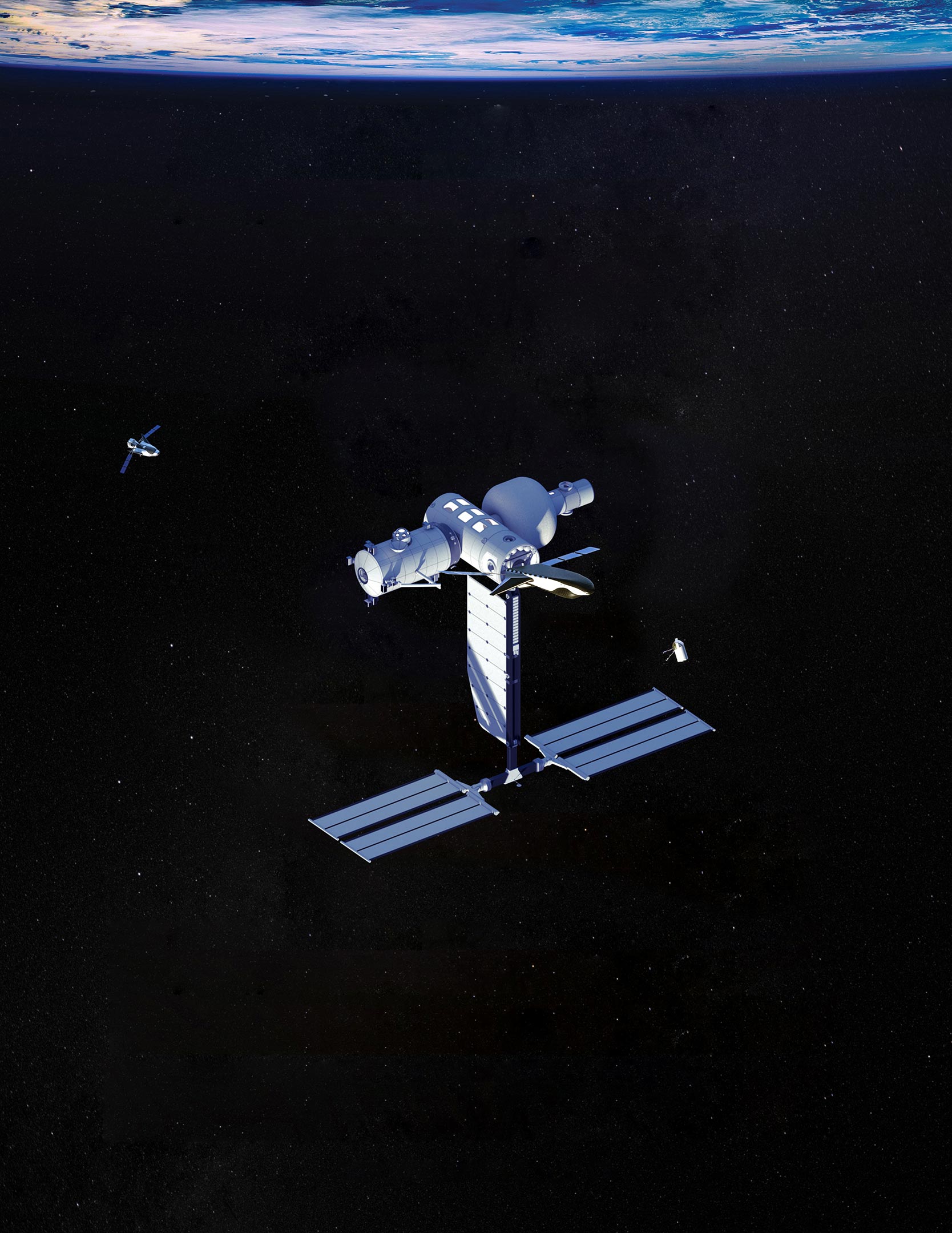
Blue Origin’s Orbital Reef: A Mixed-Use Space Business Park
Blue Origin and Sierra Space have partnered to develop Orbital Reef, a commercially owned and operated space station to be built in low-Earth orbit, which will start operating in the second half of this decade. Orbital Reef teammates include Boeing, Redwire Space, Genesis Engineering, and Arizona State University. Orbital Reef’s human-centered space architecture is designed to be a “mixed-use space business park” that provides essential infrastructure needed to support all types of human spaceflight activity in low-Earth orbit and can be scaled to serve new markets.
The station’s shared infrastructure will support the proprietary needs of diverse U.S. and international users, tenants, and visitors, including those representing research, industry, government, and the commercial sector. Features such as reusable space transportation and advanced automation can minimize cost and complexity to enable the widest range of users. Accommodations, vehicle docking ports, and utilities can all be scaled with growth in market demand.
Nanoracks’ Starlab: A Continuously Crewed Space Station
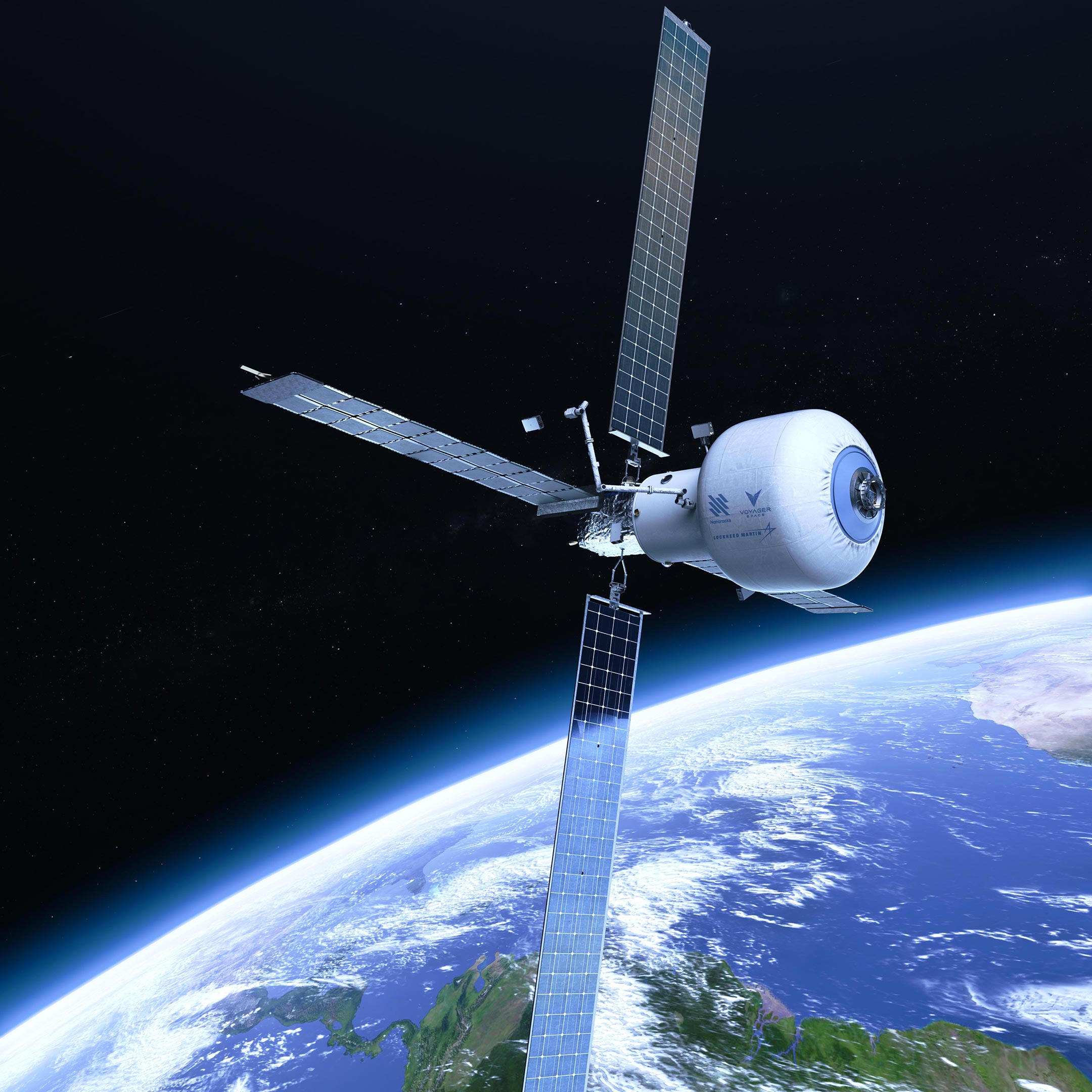
Nanoracks’ commercial low-Earth orbit destination, in collaboration with Voyager Space and Lockheed Martin, is called “Starlab.” Starlab is targeted for launch in 2027 on a single flight as a continuously crewed, commercial space station dedicated to conducting advanced research, fostering commercial industrial activity, and ensuring continued U.S. presence and leadership in low-Earth orbit. Starlab is designed for four astronauts and will have power, volume, and a payload capability equivalent to the International Space Station.
Starlab will host the George Washington Carver Science Park featuring four main operational departments – a biology lab, plant habitation lab, physical science and materials research lab, and an open workbench area – to meet the needs of researchers and commercial customers for commercial space activities. The station will be built with flexible growth in mind, featuring interfaces both internal and external to the spacecraft to allow Nanoracks to expand the architecture as new demand sources are identified, and new markets emerge.
Northrop Grumman’s Modular Space Station Design
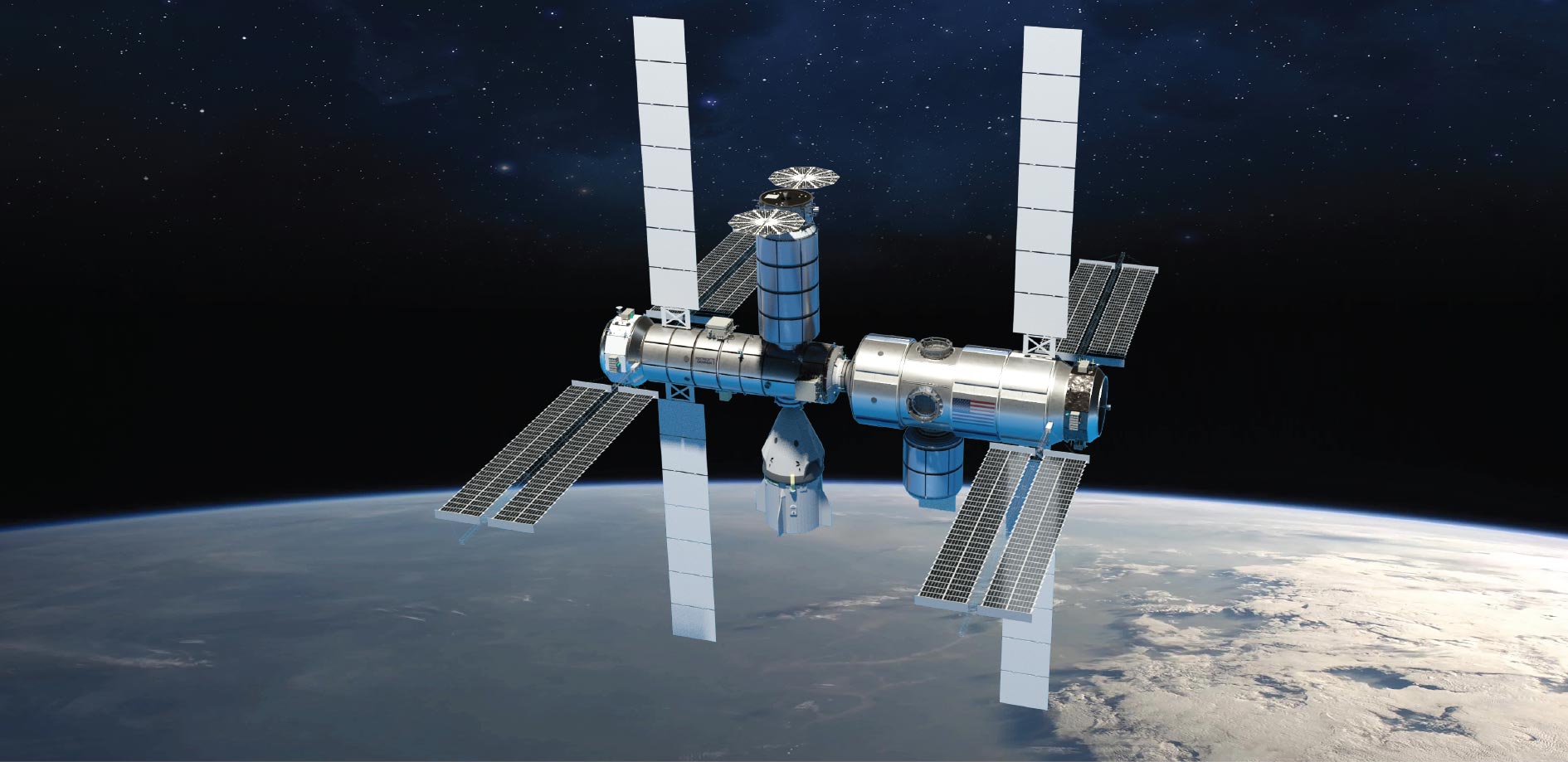
Northrop Grumman’s design for a modular, commercial destination in low-Earth orbit is built on decades of experience supporting NASA, defense, and commercial programs. The design leverages flight-proven elements, such as the Cygnus spacecraft that provides cargo delivery to the International Space Station, to provide a base module for extended capabilities including science, tourism, industrial experimentation, and the building of infrastructure beyond initial design.
Multiple docking ports will allow future expansion to support crew analog habitats, laboratories, crew airlocks, and facilities capable of artificial gravity, in support of multiple customers. This Space Act Agreement will enable Northrop Grumman to provide a detailed commercialization, operations, and capabilities plan, as well as space station requirements, mission success criteria, risk assessments, key technical and market analysis requirements, and preliminary design activities. Northrop Grumman’s team includes Dynetics, with other partners to be announced.
For the second phase of NASA’s approach to a transition toward commercial low-Earth orbit destinations, the agency intends to certify for NASA crew member use commercial low-Earth orbit destinations from these and potential other entrants, and ultimately, purchase services from destination providers for crew to use when available. This strategy will provide services the government needs at a lower cost, enabling NASA to focus on its Artemis missions to the Moon and on to Mars while continuing to use low-Earth orbit as a training and proving ground.
NASA’s Vision for Future Low-Earth Orbit Economy
NASA estimates the agency’s future needs in low-Earth orbit will require continuous accommodations and training for at least two crew members, as well as the ability to support a national orbiting laboratory and the performance of approximately 200 investigations annually to support human research, technology demonstrations, biological and physical science.
Developing commercial destinations in low-Earth orbit is part of NASA’s broader efforts to build a robust low-Earth orbit economy, including supporting commercial activity and enabling the first private astronaut mission to the space station. In addition to these new awards NASA selected Axiom Space in January 2020 to design and develop commercial modules to attach to the station. NASA and Axiom recently completed the preliminary design review of two modules as well as the critical design review of the module’s primary structure.
By transitioning to a model where commercial industry owns and operates the assets in low-Earth orbit and where NASA is one of many customers, the agency can save on costs to live and work in low-Earth orbit and focus on pushing innovation and exploration of the Moon and Mars through NASA’s Artemis missions.
Never miss a breakthrough: Join the SciTechDaily newsletter.
Follow us on Google and Google News.
5 Comments
Can i help you
Hi Arsham1054
study materials science for new uses in space.
🙂
Hi thanks for answering my questions 🙏🙏🙏my family work in nasa thanks can I help you
Hello 👋 okay thanks great,🙏🙏🙏👋🙏🙏🙏🙏
Arsham1054