
Close Menu
    Facebook X (Twitter) Instagram
    SciTechDaily
    • Biology
    • Chemistry
    • Earth
    • Health
    • Physics
    • Science
    • Space
    • Technology
    Facebook X (Twitter) Pinterest YouTube RSS
    SciTechDaily
    Home»Space»NASA Plans Space Outpost on the Far Side of the Moon at Earth Moon Lagrange Point 2
    Space

    NASA Plans Space Outpost on the Far Side of the Moon at Earth Moon Lagrange Point 2

    By SciTechDailyFebruary 11, 20121 Comment2 Mins Read
    Facebook Twitter Pinterest Telegram LinkedIn WhatsApp Email Reddit
    Share
    Facebook Twitter LinkedIn Pinterest Telegram Email Reddit
    earth-moon-lagrange-eml2
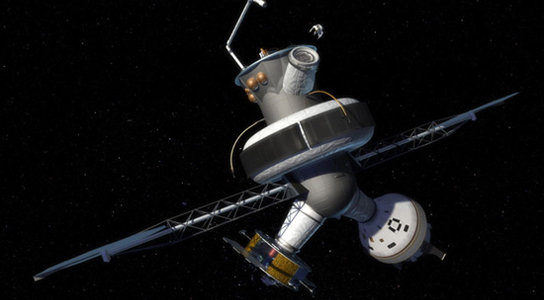
    Artist’s concept of Lagrange outpost. Credit: NASA

    NASA wants to plan a space outpost parked near the Lagrange point, where the Earth’s and moon’s gravitation fields nearly cancel each other out, making it a lot easier to stage manned space missions into space.
    orion-earth-moon-telerobotics

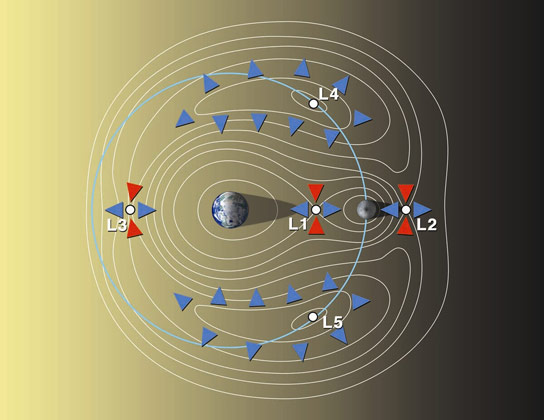
    The Lagrange points, or libration points or L-points, would allow the outpost to remain in an almost fixed position. There are five Lagrange points around Earth. For this outpost, NASA is looking at the Earth-moon Lagrange point 2 (EML-2) as the best possible site for the next manned outpost. EML-2 is actually situated beyond the moon.
    moon-telepresence

    The outpost could prove a staging ground for operations on and around the moon, but also act as a launch point toward Mars, the Kuiper Belt, and beyond. This project will need international support, and the agency is currently checking the possibility of an EML-2 outpost. The report will be handed in by March 30, 2012.
    lagrange-points

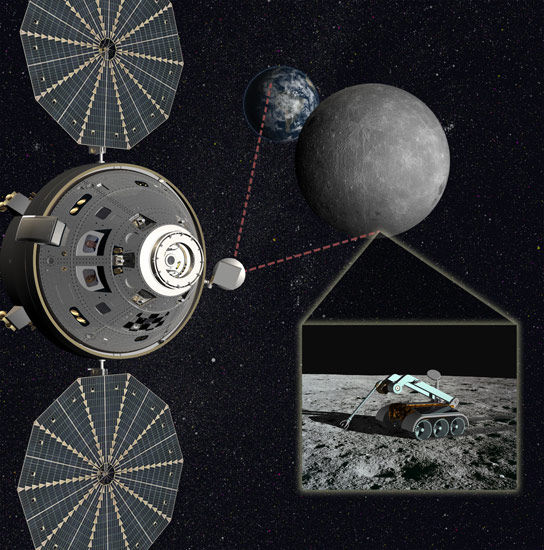
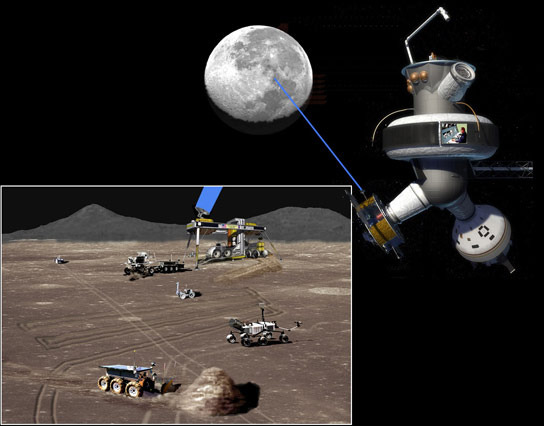
    An EML-2 waypoint could also enable a significant telerobotic presence on the far side of the moon, and could serve as a platform for solar and Earth-based scientific observation, radio astronomy, and other scientific pursuits in the quiet zone behind the moon. If the EML-2 waypoint is established it would represent the farthest that humans have traveled from Earth to date. Extended stays at EML-2 could provide advancements in life sciences and radiation shielding for long-duration missions outside the Van Allen radiation belts.

    Never miss a breakthrough: Join the SciTechDaily newsletter.
    Follow us on Google and Google News.

    Exploration Moon NASA Space Station
    Share. Facebook Twitter Pinterest LinkedIn Email Reddit

    Related Articles

    Don’t Miss: Mars and the Wolf Moon Align in Epic Sky Spectacle

    Countdown to the Moon: NASA, SpaceX, and Firefly’s Bold Blue Ghost Mission Launches Next Week

    2028 Moon Mission: NASA Teams Up With Firefly Aerospace To Explore Ancient Lunar Volcanoes

    Mars Ablaze: Witness Retrograde, Opposition, and a Cosmic Dance With the Moon

    NASA’s LEXI Will Unveil Earth’s Magnetic Shield With Lunar X-Ray Vision

    Astronaut’s Moon Photo Reveals a View We’ll Never See on Earth

    Five Fascinating Facts About the Moon

    NASA and Firefly’s Bold Lunar Mission: Exploring the Moon’s Gruithuisen Domes

    Unraveling the Moon Illusion: How It Plays Tricks on Your Eyes

    1 Comment

    1. Mike Bindner on March 2, 2025 1:04 am

      Error in document. You referred to a 2012 ELM report deadline.

      Reply
    Leave A Reply Cancel Reply

    • Facebook
    • Twitter
    • Pinterest
    • YouTube

    Don't Miss a Discovery

    Subscribe for the Latest in Science & Tech!

    Trending News

    Black Hole Shredded a Massive Star in the Most Powerful Stellar Explosion Ever Seen

    Building the Brain Requires Millions of Dangerous DNA Breaks

    Endless Supply of Cancer-Fighting Immune Cells Unlocked by USC Scientists

    XRISM Reveals Galaxy-Shaping Winds Erupting From a Supermassive Black Hole

    New Molecule Restores the Brain’s Natural Defenses Against Alzheimer’s

    Could Creatine Boost More Than Muscles? It May Also Help Depression

    Scientists Discover a Natural Molecule That Could Help Prevent Vision Loss

    Scientists Thought Royal Jelly Made Queen Bees. They Were Wrong

    Follow SciTechDaily
    • Facebook
    • Twitter
    • YouTube
    • Pinterest
    • Newsletter
    • RSS
    SciTech News
    • Biology News
    • Chemistry News
    • Earth News
    • Health News
    • Physics News
    • Science News
    • Space News
    • Technology News
    Recent Posts
    • Scientists Develop a Food Ingredient That May Prevent Obesity
    • The Richest 10% Cause up to $5.7 Trillion in Environmental Damage Each Year
    • Scientists May Have Finally Solved a Decades-Old Mystery Beneath the Pacific Ocean
    • NASA Satellites Spot a Powerful El Niño Building Beneath the Pacific
    • A 60-Year-Old Mystery About Collagen May Finally Be Solved
    Copyright © 1998 - 2026 SciTechDaily. All Rights Reserved.
    • Science News
    • About
    • Contact
    • Editorial Board
    • Privacy Policy
    • Terms of Use

    Type above and press Enter to search. Press Esc to cancel.