
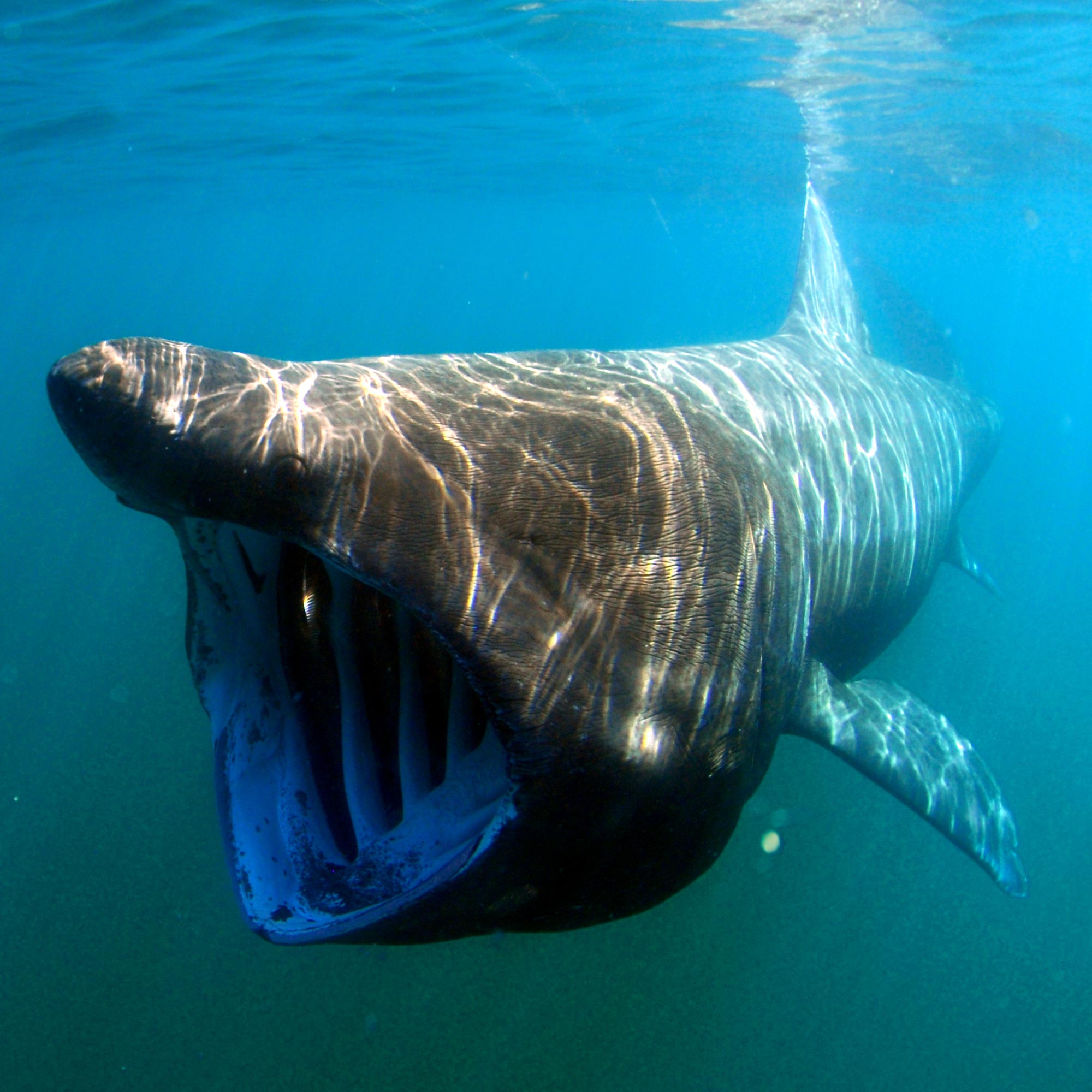
Basking sharks, known for their gentle, plankton-feeding behavior, have been unexpectedly identified as regional endotherms, maintaining a higher body temperature than the water they inhabit, a trait usually associated with fast-swimming apex predators.
Approximately 99.9% of fish and shark species are “cold-blooded,” meaning their body tissues generally match the temperature of the water they swim in – but researchers have just discovered the mighty basking shark is a one-in-a-thousand exception.
Instead, these sharks keep the core regions of their bodies warmer than the water like the most athletic swimmers in the sea such as great white sharks, mako sharks, and tuna.
Comparative Traits of Marine Predators and Plankton-Feeders
The latter examples are so-called “regional endotherms” and are all fast swimming, apex predators at the top of the food chain. Scientists have long reasoned that their ability to keep warm helped with this athletic predatory lifestyle, and that evolution had shaped their physiology to match their requirements.
However, an international team of researchers led by those from Trinity College Dublin, has now shown that gentle, plankton-feeding basking sharks are also regional endotherms despite having very different lifestyles to white sharks and tunas.
This surprising discovery has implications for conservation, as well as raising a plethora of ecological and evolutionary questions.
Unveiling the Mysteries of Basking Sharks
Haley Dolton, PhD Candidate in Trinity’s School of Natural Sciences, was lead author of the study that has just been published in international journal, Endangered Species Research. She said:
“The basking shark is a shining example of how little we know about shark species in general. That we still have lots to uncover about the second biggest fish in the world – such a huge, charismatic animal that most people would recognize it – just highlights the challenge facing researchers to gather what they can about species to aid in effective conservation strategies.”
Basking sharks gained legal protection in Irish waters just last year, with the species having undergone significant population declines throughout the NE Atlantic in the last century. But they still face many challenges in the future.
Implications of the New Findings
Haley Dolton added: “Regional endotherms are thought to use more energy, and possibly respond differently to ocean warming than other fish species. So lots more work will need to be done to work out how these new findings regarding an endangered species might change previous assumptions about their metabolism or potential distribution shifts during our climate crisis, which is something marine biologists are focusing on as our planet and its seas continue to warm.
“Hopefully this kind of research will continue the momentum needed to effectively protect these incredible animals in Irish waters and further afield.”
Research Methodology and Findings
To make the discovery, the research team (including scientists from University of Pretoria, Marine Biological Association, Queen’s University Belfast, Zoological Society of London, University of Southampton, and Manx Basking Shark Watch) first undertook dissections of dead basking sharks that washed up in Ireland and the UK.
They found that the sharks have cruise-swimming muscles located deep inside their bodies as seen in white sharks and tunas; in most fish this “red” muscle is instead found toward the outside of the animals.
They also discovered basking sharks have strong muscular hearts that probably help generate high blood pressures and flows. Most fish species have relatively “spongy” hearts, whereas basking shark hearts are more typical of the regional endotherm species.
Next, the team designed a new low-impact tagging method to record body temperature of free-swimming basking sharks off the coast of Co Cork, Ireland. Researchers were able get close enough to 8 m (26 feet) basking sharks to safely deploy the tags, which recorded muscle temperature just under the skin for up to 12 hours before they automatically detached from the animals and were collected by the researchers.
These tags revealed that basking shark muscles are consistently elevated above water temperatures, and to almost exactly the same extent as their regionally-endothermic predatory cousins.
Re-Evaluating Assumptions About Marine Species
Nicholas Payne, Assistant Professor in Trinity’s School of Natural Sciences, was senior author of the study. He said:
“These results cast an interesting new light on our perception of form versus function in fishes because until now we thought regional endothermy was only found in apex predatory species living at high positions in the marine food web.
“Now we have found a species that grazes on tiny plankton but also shares those rather uncommon regional endotherm features, so we might have to adjust our assumptions about the advantages of such physiological innovations for these animals.
“It’s a bit like suddenly finding that cows have wings.”
Reference: “Regionally endothermic traits in planktivorous basking sharks Cetorhinus maximus” by Haley R. Dolton, Andrew L. Jackson, Robert Deaville, Jackie Hall, Graham Hall, Gavin McManus, Matthew W. Perkins, Rebecca A. Rolfe, Edward P. Snelling, Jonathan D. R. Houghton, David W. Sims and Nicholas L. Payne, 20 July 2023, Endangered Species Research.
DOI: 10.3354/esr01257
Haley Dolton is funded by the Irish Research Council, with support from the Fisheries Society of the British Isles. Dr. Nicholas Payne was funded by Science Foundation Ireland.
Never miss a breakthrough: Join the SciTechDaily newsletter.
Follow us on Google and Google News.