
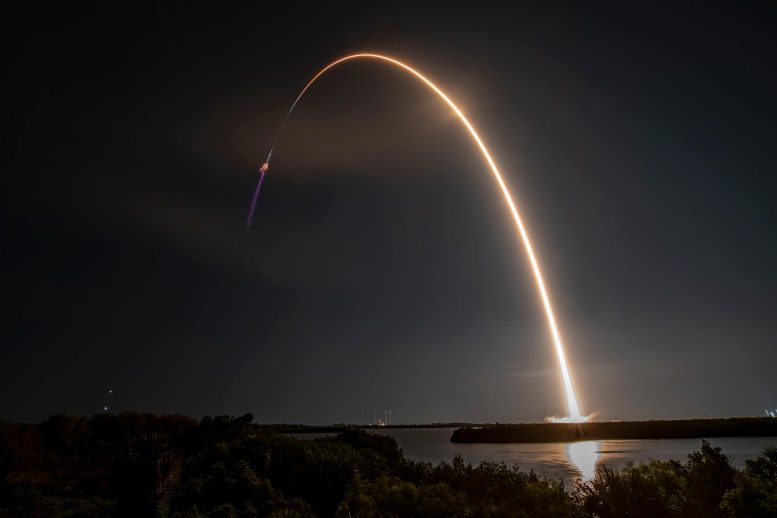
NASA has another cargo shipment en route to the International Space Station following a successful Falcon 9 launch of SpaceX’s 27th resupply mission for the agency.
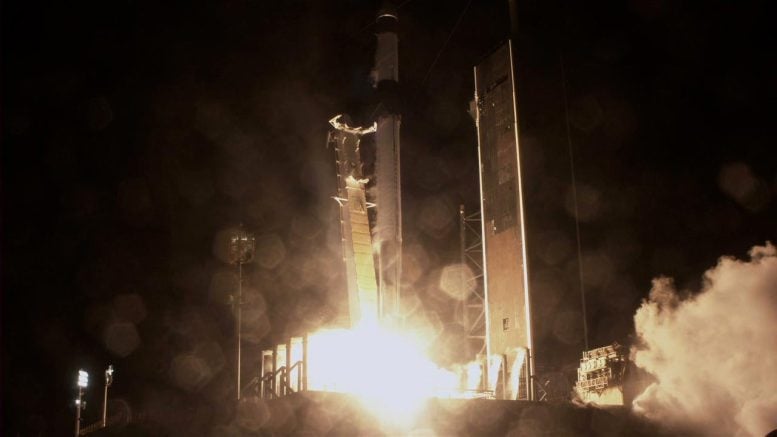
Carrying more than 6,200 pounds (3,800 kilograms) of science experiments, crew supplies, and other cargo, the SpaceX Dragon spacecraft was launched to the space station by a Falcon 9 rocket at 8:30 p.m. EDT Tuesday from NASA’s Kennedy Space Center in Florida.
The cargo spacecraft is scheduled to autonomously dock with the space station at 7:52 a.m. EDT on Thursday, March 16, and remain at the station for about 30 days. Coverage of arrival will begin at 6:15 a.m. EDT on NASA Television, the agency’s website, and the NASA app.
Among the science experiments Dragon is delivering to the space station for NASA and its partners are:
3D Heart Cells, Tissue
The first Cardinal Heart investigation conducted aboard the space station showed that four weeks of microgravity exposure can cause significant changes in heart cell function and gene expression. Researchers concluded that these changes could lead to long-term medical issues. The Cardinal Heart 2.0 experiment builds on these results, using heart organoids, 3D structures made up of all the different types of cells, to test whether clinically approved drugs reduce these microgravity-induced changes in heart cell function. Results could support the development of effective drug combinations to improve the health of astronauts and patients on Earth.
The Engineered Heart Tissues-2 study continues work with 3D cultured cardiac muscle tissue to assess human cardiac function in microgravity. Previous work with 3D cultures in space detected changes at the cellular and tissue level that could provide early indication of the development of cardiac disease. This investigation tests whether new therapies prevent these adverse spaceflight effects from occurring. The model used in this study has potential use in drug development and other applications related to diagnosing and treating cardiac dysfunction on Earth.
Cardinal Heart 2.0 and Engineered Heart Tissues-2 are the final two experiments comprising the National Institutes for Health and International Space Station National Lab’s Tissue Chips in Space initiative. Researchers hope to learn more about the impact of microgravity on human health and disease, and translate that understanding to improved human health on Earth.
Student Ball Clamp Monopod Project
NASA’s HUNCH (High school students United with NASA to Create Hardware) program enables students to fabricate real-world products for NASA as they apply their science, technology, engineering, and mathematics skills. The HUNCH Ball Clamp Monopod attempts to address astronaut comments on the difficulty of positioning video or still cameras in the middle of a module. The student-manufactured project is composed of an aluminum monopod fitted with a camera shoe and ball clamp that can be attached to a standard space station handrail. The ball clamp serves as a pivoting platform for photography and video.
Liquid Life Support Systems
Because microgravity makes it difficult to control the flow of liquids, the space station has been unable to take advantage of carbon dioxide removal methods that use specialized liquids. Liquid-based carbon dioxide removal systems such as those on submarines offer higher efficiency than other types of systems. The CapiSorb Visible System study demonstrates liquid control using capillary forces, the interaction of a liquid with a solid that can draw a fluid up a narrow tube, which are characteristic of liquids that can absorb carbon dioxide. This is an important consideration for future longer-duration space missions where improved efficiency will support crews over many months or years.
Bacterial Biofilms
Microbial biofilms are combinations of microorganisms that embed themselves in a self-produced slimy matrix. Biofilms are of concern for spaceflight because they can cause damage to equipment, are resistant to cleaning agents, and can harbor microorganisms that might cause infections. The ESA (European Space Agency) Biofilms investigation studies bacterial biofilm formation and antimicrobial properties of different metal surfaces under spaceflight conditions. Antimicrobial surfaces that can inhibit biofilm growth, such as copper and its alloys with and without laser surface treatment, are used in this study. This project provides additional information to help develop suitable antimicrobial surfaces for future spacecraft.
Lifeform Origins, Survival
An investigation from JAXA (Japan Aerospace Exploration Agency) known as Tanpopo-5 could provide insight into whether terrestrial life can survive in space and help scientists understand the key ingredients that sparked life on Earth. The experiment studies the response to space exposure in radiation-resistant microbes, moss spores, and biochemical compounds including amino acids. Amino acids have been detected in extraterrestrial bodies such as meteorites and are possible precursors to life on Earth. Tanpopo-5 follows four earlier experiments that could all inform strategies to protect other planets from contamination by humans and for returning samples from other planets safely to Earth.
These are just a few of the hundreds of investigations currently conducted aboard the orbiting laboratory in the areas of biology and biotechnology, physical sciences, and Earth and space science. Advances in these areas will help keep astronauts healthy during long-duration space travel and demonstrate technologies for future human and robotic exploration beyond low-Earth orbit to the Moon and Mars.
Never miss a breakthrough: Join the SciTechDaily newsletter.
Follow us on Google and Google News.