

Close Menu
    Facebook X (Twitter) Instagram
    SciTechDaily
    • Biology
    • Chemistry
    • Earth
    • Health
    • Physics
    • Science
    • Space
    • Technology
    Facebook X (Twitter) Pinterest YouTube RSS
    SciTechDaily
    Home»Technology»NASA to Begin High-Voltage Testing on X-57 Maxwell All-Electric Aircraft
    Technology

    NASA to Begin High-Voltage Testing on X-57 Maxwell All-Electric Aircraft

    By NASAMarch 2, 2021No Comments4 Mins Read
    Facebook Twitter Pinterest Telegram LinkedIn WhatsApp Email Reddit
    Share
    Facebook Twitter LinkedIn Pinterest Telegram Email Reddit
    NASA X 57 Maxwell Aircraft
    This artist’s concept of NASA’s X-57 Maxwell aircraft shows the plane’s specially designed wing and 14 electric motors. NASA Aeronautics researchers will use the Maxwell to demonstrate that electric propulsion can make planes quieter, more efficient and more environmentally friendly. Credit: NASA Langley/Advanced Concepts Lab, AMA, Inc.

    NASA’s X-57 Maxwell enters high-voltage testing, marking its move toward flight readiness.

    NASA is set to start high-voltage functional ground testing of the agency’s first all-electric X-plane, the X-57 Maxwell, which will perform flights to help develop certification standards for emerging electric aircraft. NASA is also supporting these new electric aircraft by developing quiet, efficient, reliable technology these vehicles will need in routine use.

    The testing will take place at NASA’s Armstrong Flight Research Center in Edwards, California, marking a pivotal milestone for the project as NASA proceeds from the component design and prototype phase to the operation of the vehicle as an integrated aircraft, taking a critical step closer toward taxi tests and first flight.

    The X-57, currently in its first configuration as an electric aircraft, called Mod 2, will use a battery support system for this phase of testing, drawing power from a large, high-voltage power supply as development on the X-plane’s battery control system nears completion.
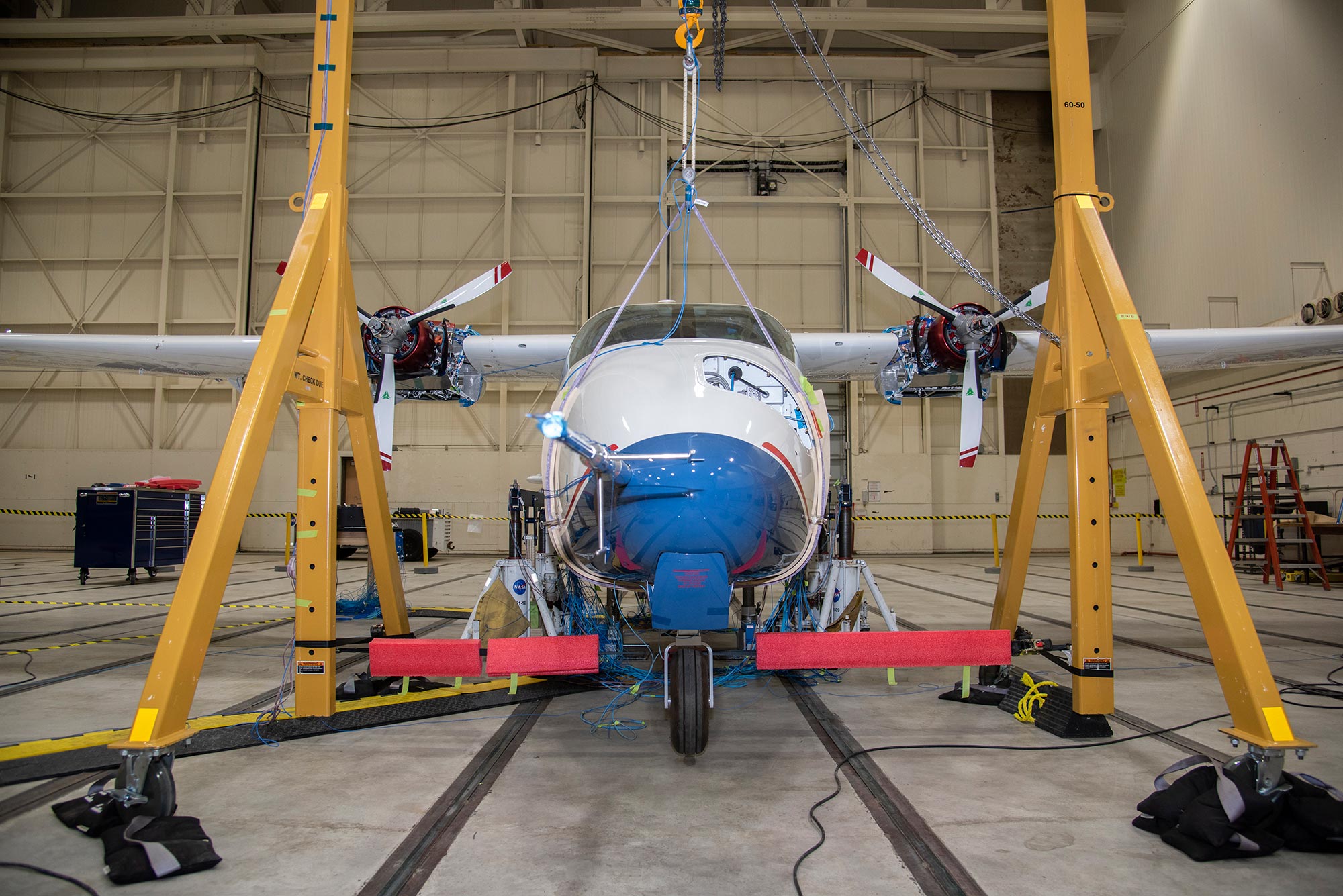
    NASA X-57 Plane Vibration Testing
    NASA’s all-electric X-57 Maxwell prepares for ground vibration testing, or GVT, at NASA’s Armstrong Flight Research Center in California. Done in parallel with cruise motor controller testing, the GVT tested the vehicle at various vibration levels, helping engineers to examine and validate the integrity of the vehicle for flight conditions. A goal of X-57 is to help the Federal Aviation Administration set certification standards for emerging electric aircraft markets. Credit: NASA Photo / Lauren Hughes

    Testing is expected to start with low power, checking the startup and shutdown sequences and verifying that the new motor control software boots up and controls the motors as expected. This software and other major components were recently redesigned based on lessons learned from previous testing by the project’s prime contractor, Empirical Systems Aerospace, or ESAero, of San Luis Obispo, California.

    These tests will include higher-power operation of the vehicle. The first pair of electric cruise motors to fly on the X-57, which were delivered by ESAero, will be powered up and activated, allowing engineers to ensure that the vehicle’s propellers spin as designed.

    This will be followed by throttling up the motors to make sure they provide all the power intended, validating the vehicle’s instrumentation system, and verifying whether all the sensors installed across the aircraft are functional.

    NASA X-57 Maxwell Electric Plane
    This artist’s concept image shows NASA’s first all-electric X-plane, the X-57 Maxwell, in its final configuration, flying in cruise mode over NASA’s Armstrong Flight Research Center in Edwards, California. In Mod IV test flights, X-57’s high-lift motors will deactivate during cruise mode, and their propeller blades will fold into the nacelles to reduce drag. The motors will reactivate and use centrifugal force to spin the blades back out to provide the necessary lift for landing. Credit: NASA Langley/Advanced Concepts Lab, AMA, Inc

    This high-voltage testing will feed directly into final verification and validation testing, a critical final step before taxi tests begin.

    “Many of the team members operating this test will be the same ones who will be sitting in the control room for flight, and that’s why I’m excited,” said Sean Clarke, NASA’s X-57 principal investigator. “We’ve turned a corner from system design and lab tests, to turning it over to the NASA flight systems and operations engineers to actually operate the vehicle. What they’re learning in this test, they’ll take with them into the control room for first flight.”

    Never miss a breakthrough: Join the SciTechDaily newsletter.
    Follow us on Google and Google News.

    NASA X-57 Maxwell
    Share. Facebook Twitter Pinterest LinkedIn Email Reddit

    Related Articles

    Mission Accomplished: NASA’s X-57, the Pioneering Electric Aircraft That Never Took Off

    Major Milestone for NASA’s X-57 Maxwell All-Electric Aircraft

    NASA’s X-57 Maxwell All-Electric Aircraft Powers Up

    NASA Takes Delivery of X-57 Maxwell – First All-Electric Experimental Aircraft

    NASA Engineers Test J-2X Powerpack

    SCaN Testbed Headed for International Space Station Later This Year

    NASA Searching for Green Propellant Technology

    NASA Mobile Launcher Reacted as Expected During Move to Launch Pad 39B

    NASA Reviews Ideas for Greener Aircraft

    Leave A Reply Cancel Reply

    • Facebook
    • Twitter
    • Pinterest
    • YouTube

    Don't Miss a Discovery

    Subscribe for the Latest in Science & Tech!

    Trending News

    Monster Storms on Jupiter Unleash Lightning Beyond Anything on Earth

    Scientists Create “Liquid Gears” That Spin Without Touching

    The Simple Habit That Could Help Prevent Cancer

    Millions Take These IBS Drugs, But a New Study Finds Serious Risks

    Scientists Unlock Hidden Secrets of 2,300-Year-Old Mummies Using Cutting-Edge CT Scanner

    Bread Might Be Making You Gain Weight Even Without Eating More Calories

    Scientists Discover Massive Magma Reservoir Beneath Tuscany

    Europe’s Most Active Volcano Just Got Stranger – Here’s Why Scientists Are Rethinking It

    Follow SciTechDaily
    • Facebook
    • Twitter
    • YouTube
    • Pinterest
    • Newsletter
    • RSS
    SciTech News
    • Biology News
    • Chemistry News
    • Earth News
    • Health News
    • Physics News
    • Science News
    • Space News
    • Technology News
    Recent Posts
    • Simple Blood Test May Predict Alzheimer’s Years Before Brain Scans Show Signs
    • Scientists Say Adding This Unusual Seafood to Your Diet Could Reverse Signs of Aging
    • U.S. Waste Holds $5.7 Billion Worth of Crop Nutrients
    • Scientists Say a Hidden Structure May Exist Inside Earth’s Core
    • Doctors Surprised by the Power of a Simple Drug Against Colon Cancer
    Copyright © 1998 - 2026 SciTechDaily. All Rights Reserved.
    • Science News
    • About
    • Contact
    • Editorial Board
    • Privacy Policy
    • Terms of Use

    Type above and press Enter to search. Press Esc to cancel.