
Close Menu
    Facebook X (Twitter) Instagram
    SciTechDaily
    • Biology
    • Chemistry
    • Earth
    • Health
    • Physics
    • Science
    • Space
    • Technology
    Facebook X (Twitter) Pinterest YouTube RSS
    SciTechDaily
    Home»Earth»NASA’s AIM Spacecraft Observes Noctilucent Clouds
    Earth

    NASA’s AIM Spacecraft Observes Noctilucent Clouds

    By Mike Carlowicz; NASAJune 19, 2015No Comments2 Mins Read
    Facebook Twitter Pinterest Telegram LinkedIn WhatsApp Email Reddit
    Share
    Facebook Twitter LinkedIn Pinterest Telegram Email Reddit
    Night-Shining Clouds
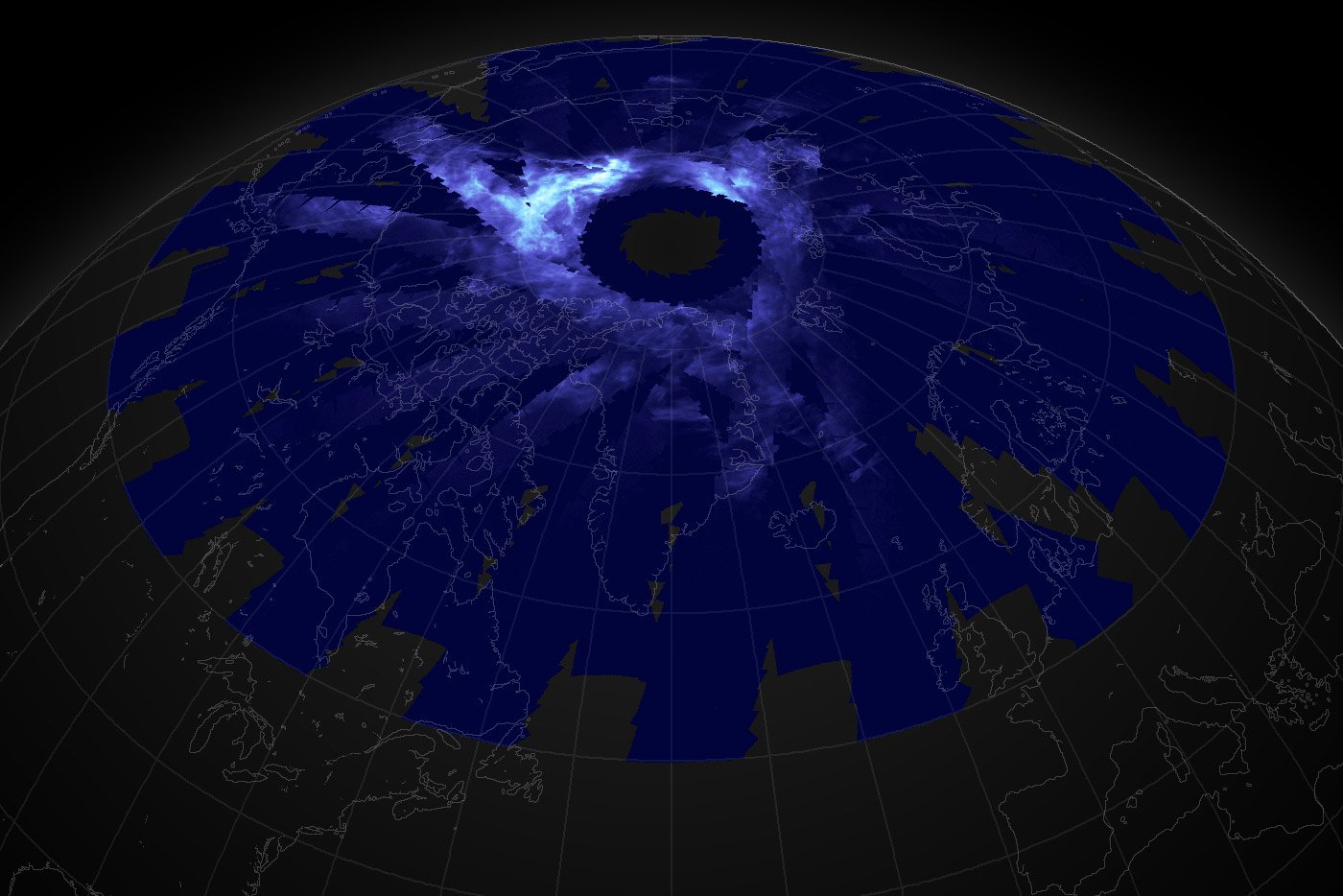
    Composite image captured by NASA’s Aeronomy of Ice in the Mesosphere Spacecraft shows noctilucent clouds over the Arctic. Credit: NASA Earth Observatory map by Joshua Stevens, using Polar Mesospheric Cloud data from the University of Colorado Laboratory for Atmospheric and Space Physics

    This composite image shows noctilucent clouds over the Arctic captured by NASA’s Aeronomy of Ice in the Mesosphere Spacecraft.

    In the late spring and summer, unusual clouds form high in the atmosphere above the polar regions of the world. As the lower atmosphere warms, the upper atmosphere gets cooler, and ice crystals form on meteor dust and other particles high in the sky. The result is noctilucent or “night-shining” clouds (NLCs)—electric blue wisps that grow on the edge of space.

    NASA’s Aeronomy of Ice in the Mesosphere (AIM) spacecraft observed noctilucent clouds on June 10, 2015. This image is a composite of several satellite passes over the Arctic, and the clouds appear in various shades of light blue to white, depending on the density of the ice particles. The instrument measures albedo—how much light is reflected back to space by the high-altitude clouds.

    Noctilucent clouds were first described in the mid-19th century after the eruption of the Krakatau volcano. Volcanic ash spread through the atmosphere, making for vivid sunsets around the world and provoking the first known observations of NLCs. At first people thought they were a side-effect of the volcano, but long after Krakatau’s ash settled, the wispy, glowing clouds remained.

    In the past decade, AIM has been observing and measuring these seasonal, high-altitude cloud formations. Researchers have found that they are appearing earlier and stretching to lower latitudes with greater frequency. There is some evidence that this is a result of increased greenhouse gases in the atmosphere.

    Though they were not thick enough to appear in AIM imagery, some noctilucent clouds were visible to ground-based observers in the continental United States on June 9 and 10.

    Never miss a breakthrough: Join the SciTechDaily newsletter.
    Follow us on Google and Google News.

    Clouds NASA NASA AIM
    Share. Facebook Twitter Pinterest LinkedIn Email Reddit

    Related Articles

    Electric Blue Streaks: High, Dry, and Rare in the Sky

    NASA Super Soaker Mission Seeks to Understand Bright Night-Shining Clouds by Creating One

    Mysterious Hovering Clouds Spotted Over the Transantarctic Mountains

    NASA’s AIM Mission Spots First Night-Shining Clouds of Antarctic Summer

    Breathtaking Night-Shining Clouds: Electric Blue Streaks Form High in the Atmosphere

    Unusual “Volcano Track” Clouds Investigated

    First Arctic Ice-Blue Noctilucent Clouds of the Season Spotted by NASA’s AIM

    AIM Spacecraft Observes Early Noctilucent Ice Clouds Over Antarctica

    Surfer-Shaped Waves Discovered at the Boundaries of Near-Earth Space

    Leave A Reply Cancel Reply

    • Facebook
    • Twitter
    • Pinterest
    • YouTube

    Don't Miss a Discovery

    Subscribe for the Latest in Science & Tech!

    Trending News

    Breakthrough Parkinson’s Drug Targets Disease at Its Genetic Roots

    Just 4 Weeks of Simple Diet Changes Reversed Signs of Aging in Older Adults

    Scientists May Have Finally Solved Why Humans Are Right-Handed

    NASA’s Hubble Accidentally Witnesses a Comet Shattering in Space

    Researchers Discover the Body’s Hidden “Off Switch” for Inflammation

    Scientists Discover Metformin Doesn’t Work the Way We Thought

    Tea or Coffee? Your Daily Choice Could Affect Osteoporosis Risk

    Vitamin C May Fight Cancer in a Surprising Way

    Follow SciTechDaily
    • Facebook
    • Twitter
    • YouTube
    • Pinterest
    • Newsletter
    • RSS
    SciTech News
    • Biology News
    • Chemistry News
    • Earth News
    • Health News
    • Physics News
    • Science News
    • Space News
    • Technology News
    Recent Posts
    • New Research Uncovers Lithium’s Surprising Effect on Alzheimer’s
    • New Anti-Clotting Medication Prevents Strokes Without the Usual Bleeding Risk
    • Simple Fiber Supplement Cuts Knee Arthritis Pain in Just 6 Weeks, Study Finds
    • Scientists Discover the Secret Bacteria Behind Artisan Cheeses – and They May Be Good for Your Health
    • Banned Antibiotic Discovered in Fish Raises Food Safety Concerns
    Copyright © 1998 - 2026 SciTechDaily. All Rights Reserved.
    • Science News
    • About
    • Contact
    • Editorial Board
    • Privacy Policy
    • Terms of Use

    Type above and press Enter to search. Press Esc to cancel.