
Close Menu
    Facebook X (Twitter) Instagram
    SciTechDaily
    • Biology
    • Chemistry
    • Earth
    • Health
    • Physics
    • Science
    • Space
    • Technology
    Facebook X (Twitter) Pinterest YouTube RSS
    SciTechDaily
    Home»Earth»First Arctic Ice-Blue Noctilucent Clouds of the Season Spotted by NASA’s AIM
    Earth

    First Arctic Ice-Blue Noctilucent Clouds of the Season Spotted by NASA’s AIM

    By NASA's Goddard Space Flight CenterMay 30, 2020No Comments3 Mins Read
    Facebook Twitter Pinterest Telegram LinkedIn WhatsApp Email Reddit
    Share
    Facebook Twitter LinkedIn Pinterest Telegram Email Reddit
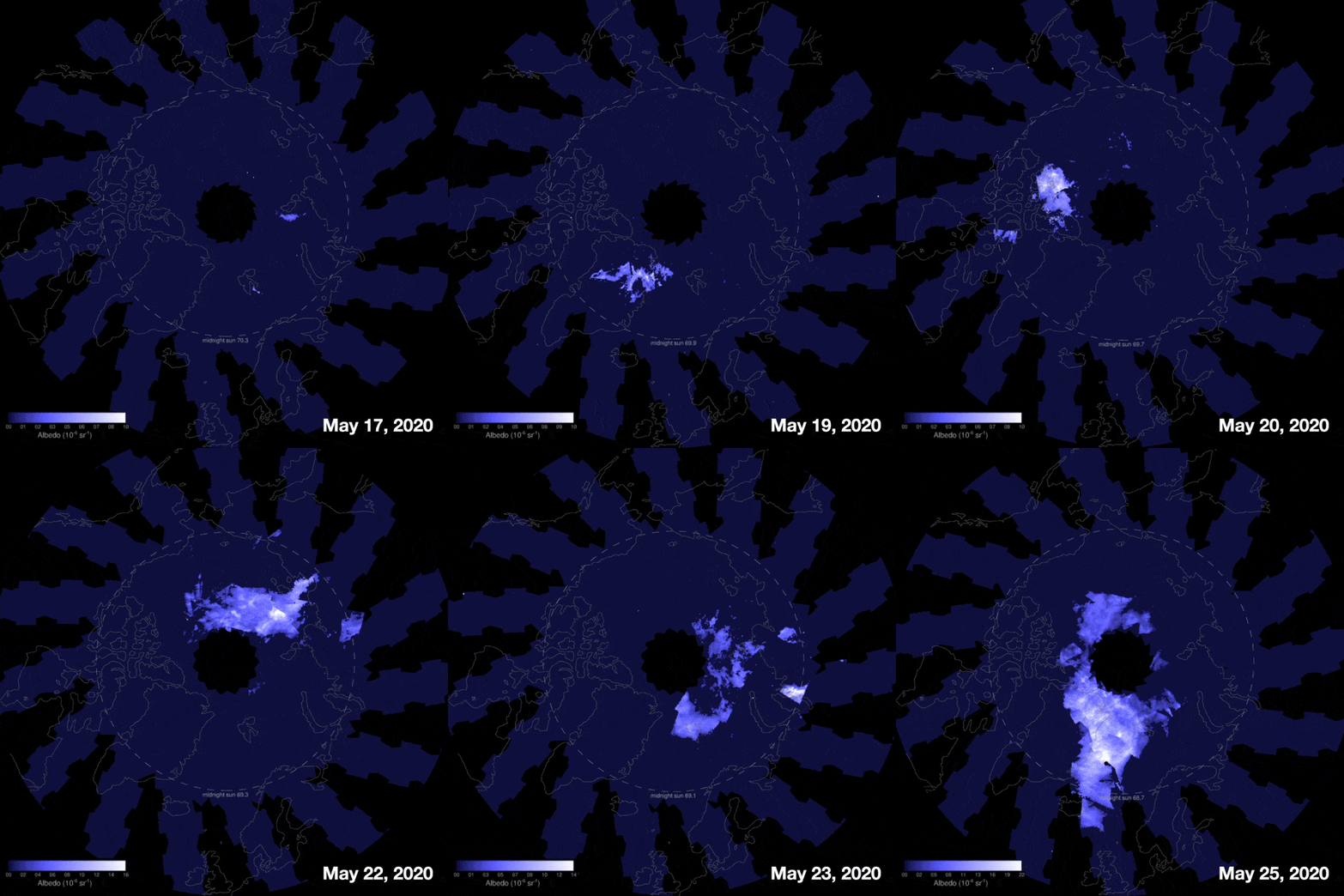
    Arctic Noctilucent Clouds
    These animated images show AIM’s observations from the first week of the Arctic noctilucent cloud season, which began on May 17, 2020. The colors — from dark blue to light blue and bright white — indicate the clouds’ albedo, which refers to the amount of light that a surface reflects compared to the total sunlight that falls upon it. Things that have a high albedo are bright and reflect a lot of light. Things that don’t reflect much light have a low albedo; they are dark. Credit: NASA/HU/VT/CU-LASP/AIM/Joy Ng

    Ice-blue clouds are drifting high above the Arctic, which means the Northern Hemisphere’s noctilucent cloud season is here.

    NASA’s Aeronomy of Ice in the Mesosphere spacecraft — AIM for short — first spotted wisps of these noctilucent, or night-shining, clouds over the Arctic on May 17, 2020. In the week that followed, the ghost-like wisps grew into a blur, quickly filling more of the Arctic sky. This is the second-earliest start of the northern season yet observed, and the season is expected to run through mid-August.

    The seasonal clouds hover high above the ground, about 50 miles overhead in a layer of the atmosphere called the mesosphere. Most meteors burn up when they reach the mesosphere; there are enough gases there to slough plummeting meteors into nothing more than dust and smoke. Noctilucent clouds form when water molecules congregate around the fine dust and freeze, forming ice crystals. The icy clouds, reflecting sunlight, shine bright blue and white. They first appear in summer — around mid-May in the Northern Hemisphere and mid-November in the Southern — when the mesosphere is most humid, with the season’s heat lofting moisture up to the sky.

    “Every year, twice a year, the start of the season is a big event for us,” said Jim Russell, AIM principal investigator at Hampton University in Virginia. “The reason we’re excited is we’re trying to find out what the causes of the season’s starting are and what does it really mean with regard to the larger picture in the atmosphere.”

    Also known as polar mesospheric clouds (because they tend to huddle around Earth’s poles), these clouds help scientists better understand the mesosphere and how it’s connected to the rest of the atmosphere, weather, and climate.

    Scientists are eager to see what this Arctic season brings. For the most part, the brilliant clouds usually cling to the polar regions. But sometimes, they stray south. Last year, they were spotted as far south as southern California and Oklahoma — lower latitudes than have ever been seen before, Russell said. The new season is another chance to better understand the fleeting clouds and their possible migration south. Some evidence indicates this could be the result of changing atmospheric conditions.

    “With every year, we get new data to help us put together a picture of the atmosphere,” Russell said.

    Never miss a breakthrough: Join the SciTechDaily newsletter.
    Follow us on Google and Google News.

    Clouds NASA NASA AIM NASA Goddard Space Flight Center
    Share. Facebook Twitter Pinterest LinkedIn Email Reddit

    Related Articles

    2 Trillion Pulses Unleashed: NASA’s Space Laser Reveals Earth’s Shifting Ice

    NASA Satellites Find Upper Atmosphere Cooling and Contracting Due to Climate Change

    Electric Blue Streaks: High, Dry, and Rare in the Sky

    NASA Super Soaker Mission Seeks to Understand Bright Night-Shining Clouds by Creating One

    NASA’s AIM Mission Spots First Night-Shining Clouds of Antarctic Summer

    Breathtaking Night-Shining Clouds: Electric Blue Streaks Form High in the Atmosphere

    NASA’s AIM Spacecraft Observes Noctilucent Clouds

    NASA Study Reveals Multi-Year Ice Declining Faster than Perennial Ice that Surrounds It

    NASA’s GISS Releases Data Showing 2011 was Ninth-Warmest Year on Record

    Leave A Reply Cancel Reply

    • Facebook
    • Twitter
    • Pinterest
    • YouTube

    Don't Miss a Discovery

    Subscribe for the Latest in Science & Tech!

    Trending News

    The Universe Is Expanding Too Fast and Scientists Can’t Explain Why

    “Like Liquid Metal”: Scientists Create Strange Shape-Shifting Material

    Early Warning Signals of Esophageal Cancer May Be Hiding in Plain Sight

    Common Blood Pressure Drug Shows Surprising Power Against Deadly Antibiotic-Resistant Superbug

    Scientists Uncover Dangerous Connection Between Serotonin and Heart Valve Disease

    Scientists Discover a “Protector” Protein That Could Help Reverse Hair Loss

    Bone-Strengthening Discovery Could Reverse Osteoporosis

    Scientists Uncover Hidden Trigger Behind Stem Cell Aging

    Follow SciTechDaily
    • Facebook
    • Twitter
    • YouTube
    • Pinterest
    • Newsletter
    • RSS
    SciTech News
    • Biology News
    • Chemistry News
    • Earth News
    • Health News
    • Physics News
    • Science News
    • Space News
    • Technology News
    Recent Posts
    • A Common Diabetes Drug May Hold the Key to Stopping HIV From Coming Back
    • Ancient “Syphilis-Like” Disease in Vietnam Challenges Key Scientific Assumptions
    • Drinking Alcohol To Cope in Your 20s Could Damage Your Brain for Life
    • Scientists Crack Alfalfa’s Chromosome Mystery After Decades of Debate
    • Ancient Ant-Plant Alliance Collapses As Predatory Wasps Move In
    Copyright © 1998 - 2026 SciTechDaily. All Rights Reserved.
    • Science News
    • About
    • Contact
    • Editorial Board
    • Privacy Policy
    • Terms of Use

    Type above and press Enter to search. Press Esc to cancel.