
Close Menu
    Facebook X (Twitter) Instagram
    SciTechDaily
    • Biology
    • Chemistry
    • Earth
    • Health
    • Physics
    • Science
    • Space
    • Technology
    Facebook X (Twitter) Pinterest YouTube RSS
    SciTechDaily
    Home»Space»NASA’s Van Allen Probes Celebrate Fifth Year in Space
    Space

    NASA’s Van Allen Probes Celebrate Fifth Year in Space

    By Mara Johnson-Groh, NASA's Goddard Space Flight CenterSeptember 1, 2017No Comments3 Mins Read
    Facebook Twitter Pinterest Telegram LinkedIn WhatsApp Email Reddit
    Share
    Facebook Twitter LinkedIn Pinterest Telegram Email Reddit
    Van Allen Probes Survive Extreme Radiation Five Years On
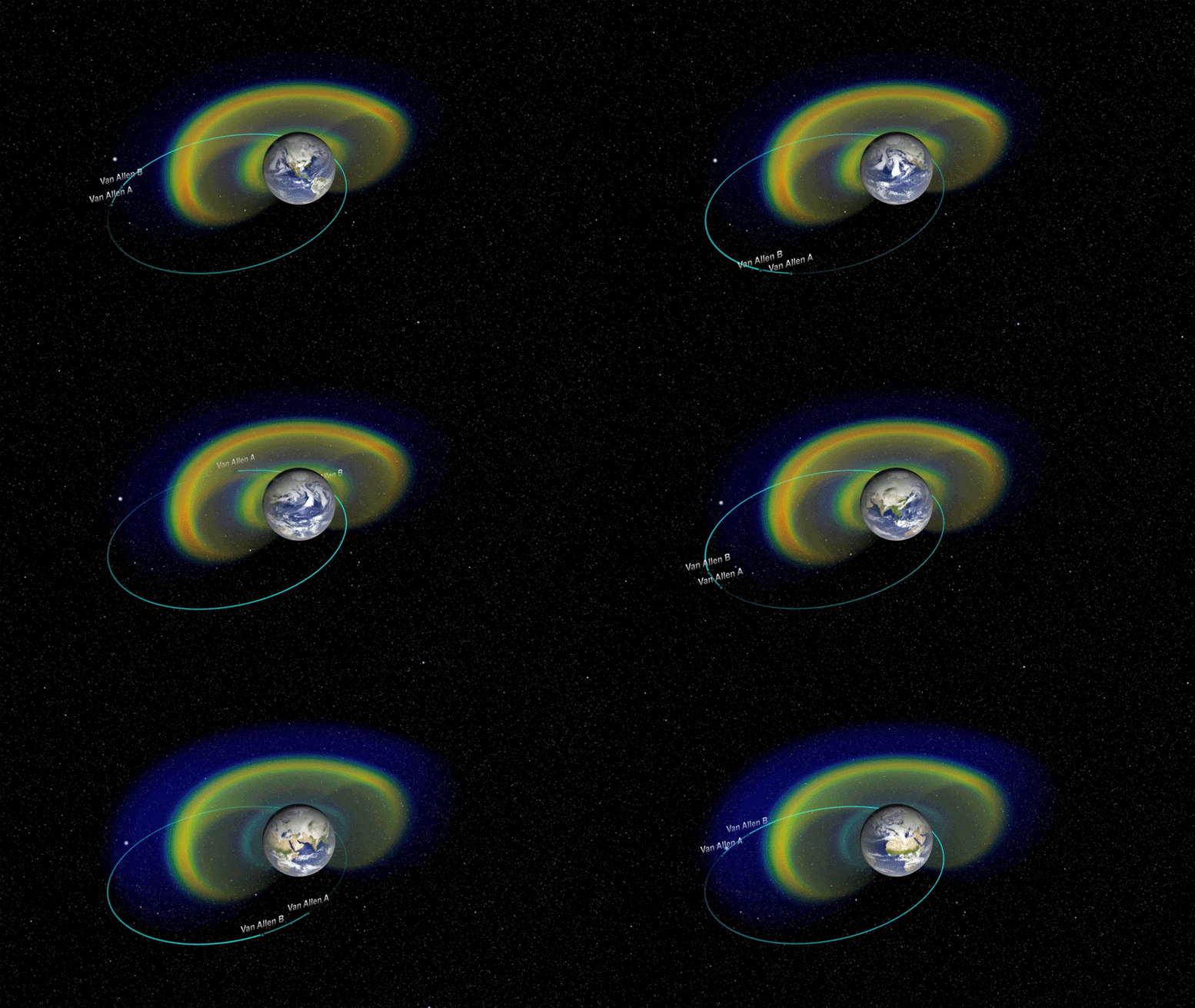
    The spacecrafts’ orbit can be seen in this cutaway view of the Van Allen Belts. Credit: NASA’s Goddard Space Flight Center

    Launched in 2012, NASA’s Van Allen Probes are now celebrating their fifth year in space studying the Van Allen Radiation belts.

    Most satellites, not designed to withstand high levels of particle radiation, wouldn’t last a day in the Van Allen Radiation belts. Trapped by Earth’s magnetic field into two giant belts around the planet, high-energy particles in the region can batter the spacecraft and even interfere with onboard electronics. But NASA’s Van Allen Probes have been traveling through this hazardous area since August 30, 2012 – they are now celebrating their fifth year in space studying this dynamic region.

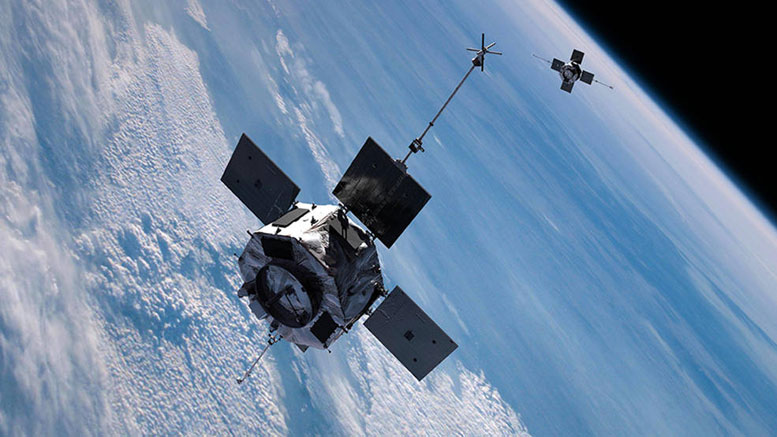
    The Van Allen Probes mission is the second of NASA’s Living with a Star missions, which is tasked with understanding our near-Earth environment. The two identical spacecraft, built with radiation-hardened components, study how high-energy particles are accelerated and lost from the belts. This information helps scientists understand and predict space weather, which, in addition to creating shimmering auroras, can disrupt power grids and GPS communications.
    Van Allen Probes Survive Extreme Radiation
    The two Van Allen Probes work as a team, following one behind the other to uniquely observe changes in the belts. Credit: NASA’s Goddard Space Flight Center/JHUAPL

    “During its first five years, the Van Allen Probes have made enormously significant contributions to our understanding of radiation belt physics, including truly exceptional discoveries,” said Shri Kanekal, Van Allen Probes deputy mission scientist at NASA’s Goddard Space Flight Center in Greenbelt, Maryland.

    The Van Allen Probes mission has provided invaluable information about the very shape of the belts, discovering a third radiation belt that can appear during certain circumstances, and used uniquely capable instruments to unveil inner radiation belt features that were all but invisible to previous sensors. The mission has also extended beyond the practical considerations of the hazards of Earth’s space environment: Observations have found process that generates intense particle radiation inside the belts also occur across the universe, making the region a unique natural laboratory for developing our understanding of the particle energization processes.

    In celebration of the Van Allen Probes’ fifth year in space, here are five facts about the spacecraft.

    • 14+ gigabits – the amount of data downloaded daily from each spacecraft
    • 2,000 miles (3,200 kilometers) per hour – spacecrafts’ cruising speed
    • 164 feet – length of the longest instruments aboard the spacecraft
    • 3.8 square yards (3.2 square meters) – the size of solar panels used to power the instruments
    • 9 hours – the time each spacecraft takes to encircle Earth

    Originally tasked with a two-year mission, the Van Allen Probes continue to make new discoveries five years on, continuing to solve scientific puzzles about the dynamic belt region around Earth.

    Related Links

    • Learn more about the Van Allen Probes

    Never miss a breakthrough: Join the SciTechDaily newsletter.
    Follow us on Google and Google News.

    Astronomy Earth Science Planetary Science Van Allen Radiation Belts
    Share. Facebook Twitter Pinterest LinkedIn Email Reddit

    Related Articles

    New Physical Model Explains the Origin of Water in Our Solar System

    NASA’s Van Allen Probes Uncover Relativistic Electrons

    Scientists Develop New Space Weather Model to Help Simulate Magnetic Structure of Solar Storms

    NASA GRAIL Mission Provides Insights into Moon Impacts

    10 Years of Revolutionary Solar Views from NASA’s STEREO Mission

    NASA Probes Reveal the Changing Shape of the Van Allen Belts

    New Study Proposes Dense Dark Matter “Hairs” Spreading Out from Earth and Other Compact Bodies

    Van Allen Probes Reveal ‘Zebra Stripes’ in Earth’s Inner Radiation Belt

    NASA Probes Reveal Source of Particle Acceleration in Van Allen Radiation Belts

    Leave A Reply Cancel Reply

    • Facebook
    • Twitter
    • Pinterest
    • YouTube

    Don't Miss a Discovery

    Subscribe for the Latest in Science & Tech!

    Trending News

    Millions Take These IBS Drugs, But a New Study Finds Serious Risks

    Scientists Unlock Hidden Secrets of 2,300-Year-Old Mummies Using Cutting-Edge CT Scanner

    Bread Might Be Making You Gain Weight Even Without Eating More Calories

    Scientists Discover Massive Magma Reservoir Beneath Tuscany

    Europe’s Most Active Volcano Just Got Stranger – Here’s Why Scientists Are Rethinking It

    Alzheimer’s Symptoms May Start Outside the Brain, Study Finds

    Millions Take This Popular Supplement – Scientists Discover a Concerning Link to Heart Failure

    The Universe Is Expanding Too Fast and Scientists Can’t Explain Why

    Follow SciTechDaily
    • Facebook
    • Twitter
    • YouTube
    • Pinterest
    • Newsletter
    • RSS
    SciTech News
    • Biology News
    • Chemistry News
    • Earth News
    • Health News
    • Physics News
    • Science News
    • Space News
    • Technology News
    Recent Posts
    • Doctors Surprised by the Power of a Simple Drug Against Colon Cancer
    • Why Popular Diabetes Drugs Like Ozempic Don’t Work for Everyone: The “Genetic Glitch”
    • Scientists Create Improved Insulin Cells That Reverse Diabetes in Mice
    • Scientists Stunned After Finding Plant Thought Extinct for 60 Years
    • A Common Diabetes Drug May Hold the Key to Stopping HIV From Coming Back
    Copyright © 1998 - 2026 SciTechDaily. All Rights Reserved.
    • Science News
    • About
    • Contact
    • Editorial Board
    • Privacy Policy
    • Terms of Use

    Type above and press Enter to search. Press Esc to cancel.