
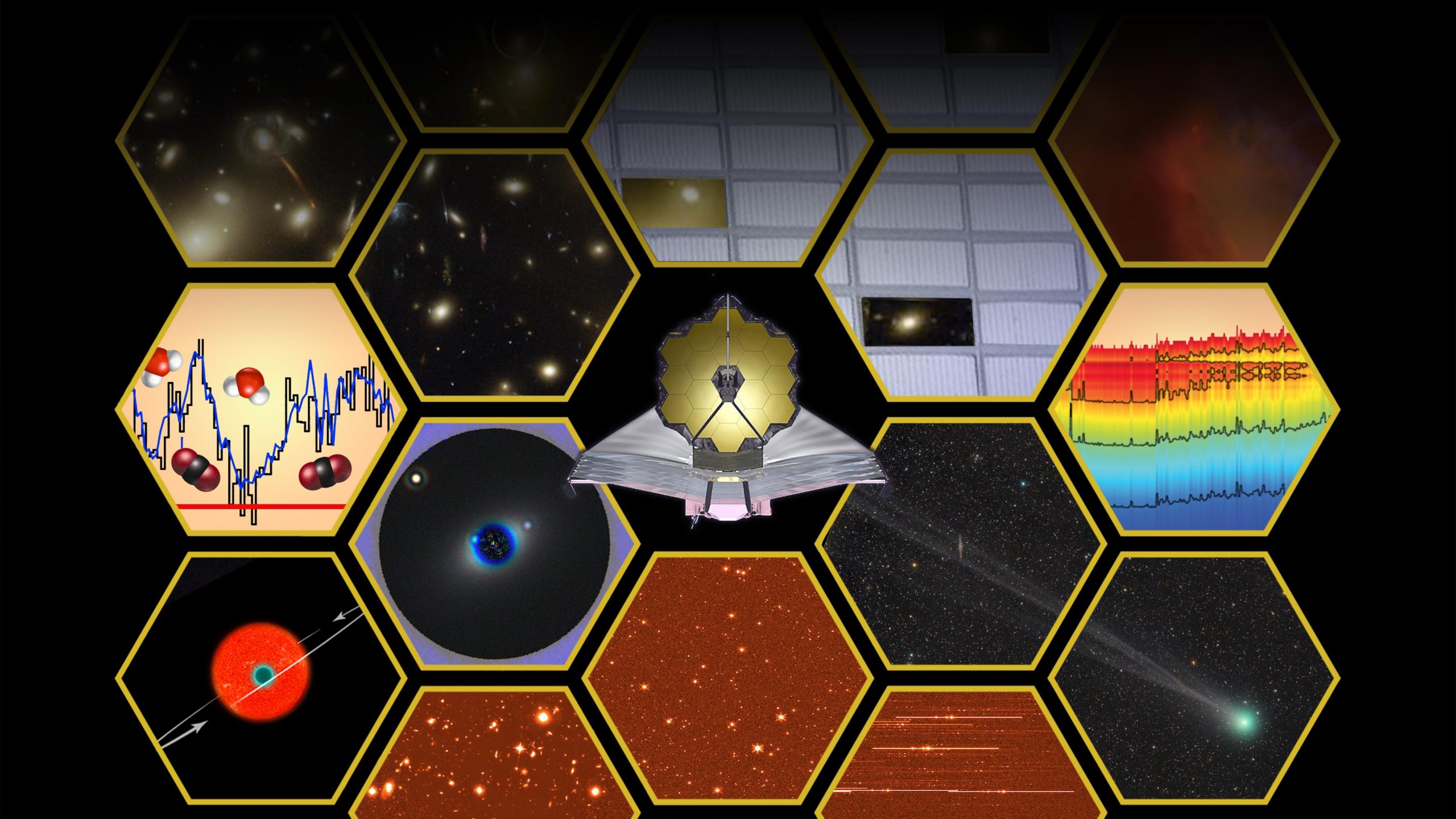
NASA, ESA, and A. Feild (STScI)
NASA’s Webb Program Director Named to TIME100 List
The head of NASA’s largest space science mission has been named one of the most influential people in the world by TIME magazine. Gregory Robinson, NASA’s James Webb Space Telescope Program Director, was named to the TIME100, the magazine’s annual list of the 100 most influential leaders. Robinson shares this year’s recognition with other TIME100 honorees such as President Joe Biden and Oprah Winfrey.
Robinson oversees the Webb telescope, the premier space observatory for the next decade. Webb will explore every phase of 13.5 billion years of cosmic history – from within our solar system to the most distant observable galaxies, to everything in between, in order to help us understand our place in the universe. Robinson, who leads the program from NASA’s Science Mission Directorate in Washington, joined the team in 2018.
“Greg has demonstrated remarkable leadership on NASA’s James Webb Space Telescope, through both the challenges and incredible successes of this historic mission,” said NASA Administrator Bill Nelson. “Congratulations, Greg, and thank you for your incredible service on behalf of NASA and all of humanity.”
TIME says its list recognizes the impact, innovation, and achievement of the world’s most influential individuals. TIME published a tribute by John Mather, Webb senior project scientist at NASA’s Goddard Space Flight Center in Greenbelt, Maryland, and Nobel Prize in Physics laureate, on Robinson’s achievements.
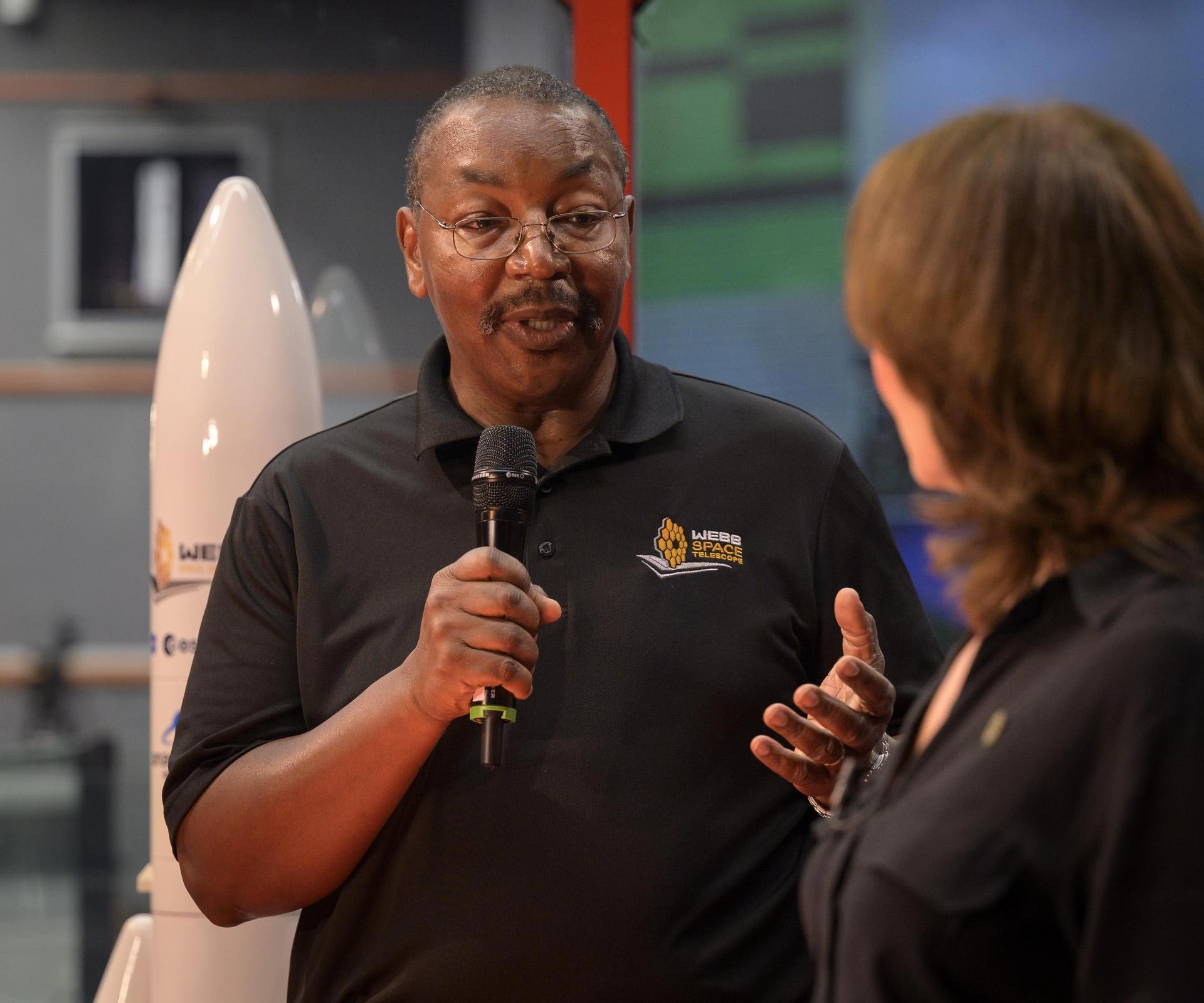
“I am thrilled and honored to be recognized as part of the TIME100. I certainly want to acknowledge an incredible team of NASA engineers, scientists, technicians; our contractor and academia base; and partners across the globe, who have demonstrated amazing resiliency on the Webb mission through design, development, testing, launch, and now commissioning,” said Robinson. “We watched an extraordinary moment when Webb launched on Christmas Day – a gift to the world. As we approach the end of the science instrument and observatory commissioning process, we have broken new ground and overcome many challenges to deliver breathtaking views of our early universe this summer and for many years to come.”
Robinson earned bachelor’s degrees in math from Virginia Union University and electrical engineering from Howard University, in a dual-degree program. He later acquired a Master of Business Administration from Averett University and attended Harvard University’s Senior Executive Fellows Program at the Kennedy School of Government. He also attended the Federal Executive Institute’s Leadership for a Democratic Society. Robinson has over 30 years of engineering, program and project management, and senior executive leadership at NASA.
He teaches a graduate-level class in leading complex projects at Columbia University’s School of Professional Studies, and he previously taught the essentials of project management at the George Washington University’s Department of Engineering Management and Systems Engineering.
In 1989, Robinson began his career at NASA, where he worked on several high-profile missions. He held numerous leadership roles, working on many spaceflight and space shuttle missions. As a veteran executive, he served as deputy center director at NASA’s John H. Glenn Research Center in Cleveland and as NASA deputy chief engineer. He also served as the acting National Environmental Satellite, Data, and Information Service deputy assistant administrator at the National Oceanic and Atmospheric Administration. Prior to leading Webb, Robinson was the deputy associate administrator for programs in NASA’s Science Mission Directorate at NASA Headquarters.
“I’ve had an enriching career with great colleagues, and I am so proud to be a part of this first chapter in Webb’s science story, with a team that has shown exemplary steadfastness after years of work on the program,” said Robinson. “Webb will begin a consequential science journey, and to see that we are getting so close to unfolding the universe at long last is mind-blowing.”
Fundamental astronomy questions propelled Webb’s complex design. Webb will seek to answer age-old questions: How did the universe begin? How do galaxies form and evolve? How do we fit in the cosmos?
After launching on December 25, 2021, the Webb team endured a harrowing multi-week spacecraft commissioning period where hundreds of parts synchronized to work intricately in the harsh environment of space while on its journey to its final orbit one million miles from Earth. Webb is the first space telescope to use a large deployable primary mirror that consists of 18 segments and an unparalleled optical system. As its science instruments cooled to their operating temperatures, the team then successfully aligned the telescope. Now, the team is preparing the observatory’s instruments to deliver its first spectacular science images and spectra this summer.
More About the Mission
The James Webb Space Telescope, the largest and most complex science observatory ever built, is an international program led by NASA with its partners, the European Space Agency and the Canadian Space Agency. As the scientific successor to the Hubble Space Telescope, Webb will explore the secrets of the universe and reveal new discoveries to help us understand our place in the cosmos.
Never miss a breakthrough: Join the SciTechDaily newsletter.
Follow us on Google and Google News.