
Close Menu
    Facebook X (Twitter) Instagram
    SciTechDaily
    • Biology
    • Chemistry
    • Earth
    • Health
    • Physics
    • Science
    • Space
    • Technology
    Facebook X (Twitter) Pinterest YouTube RSS
    SciTechDaily
    Home»Biology»Neuroscientists Isolate Chills at a Cellular Level, Turn Off the Ability to Feel Cold
    Biology

    Neuroscientists Isolate Chills at a Cellular Level, Turn Off the Ability to Feel Cold

    By Robert Perkins, USCFebruary 13, 2013No Comments3 Mins Read
    Facebook Twitter Pinterest Telegram LinkedIn WhatsApp Email Reddit
    Share
    Facebook Twitter LinkedIn Pinterest Telegram Email Reddit
    Neurons Neuroscience
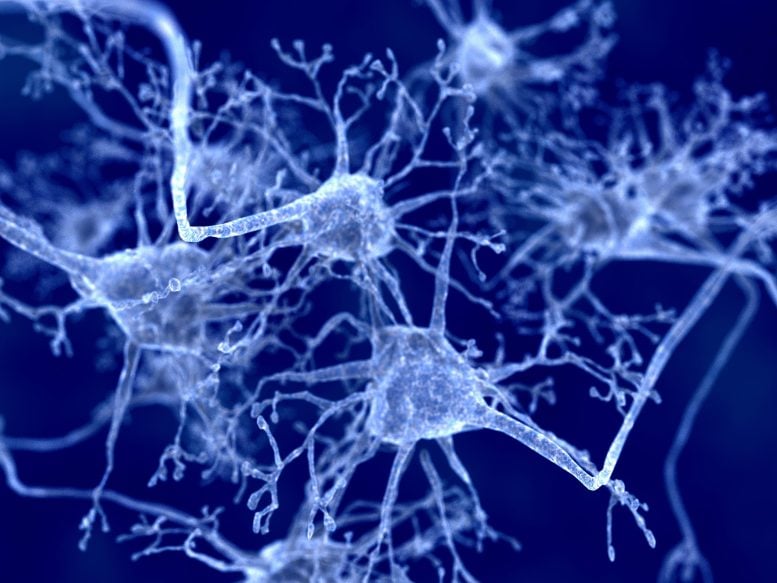
    USC neuroscientists have identified and removed TRPM8-expressing neurons, revealing that mice without these neurons could not sense cold but still felt heat.

    Neuroscientists at USC have isolated and ablated the neurons that express TRPM8, finding that mice depleted of TRPM8 neurons could not feel cold but still responded to heat.

    USC researchers have isolated chills at a cellular level, identifying the sensory network of neurons in the skin that relays the sensation of cold.

    David McKemy, associate professor of neurobiology at the USC Dornsife College of Letters, Arts and Sciences, and his team managed to selectively shut off the ability to sense cold in mice while still leaving them able to sense heat and touch.

    In prior work, McKemy discovered a link between the experience of cold and a protein known as TRPM8 (pronounced trip-em-ate), which is a sensor of cold temperatures in neurons in the skin, as well as a receptor for menthol, the cooling component of mint.

    scientists-turn-off-the-ability-to-feel-cold
    David McKemy, associate professor of neurobiology at the USC Dornsife College of Letters, Arts and Sciences. Credit: Photo/Alexandra Bissonnette

    Now, in a paper that will appear in The Journal of Neuroscience on February 13, McKemy and his co-investigators have isolated and ablated the neurons that express TRPM8, giving them the ability to test the function of these cells specifically.

    Using mouse-tracking software program developed by one of McKemy’s students, the researchers tested control mice and mice without TRPM8 neurons on a multi-temperature surface. The surface temperature ranged from 0 degrees to 50 degrees Celsius (32 to 122 degrees Fahrenheit), and mice were allowed to move freely among the regions.

    The researchers found that mice depleted of TRPM8 neurons could not feel cold but still responded to heat. Control mice tended to stick to an area around 30 degrees Celsius (86 degrees Fahrenheit) and avoided both colder and hotter areas. But mice without TRPM8 neurons avoided only hotter plates and not cold — even when the cold should have been painful or was potentially dangerous.

    In tests of grip strength, responses to touch or coordinated movements, such as balancing onto a rod while it rotated, there was no difference between the control mice and the mice without TRPM8-expressing neurons.

    By better understanding the specific ways in which people feel sensations, scientists hope to one day develop better pain treatments without knocking out all ability to feel for suffering patients.

    “The problem with pain drugs now is that they typically just reduce inflammation, which is just one potential cause of pain, or they knock out all sensation, which often is not desirable,” McKemy said. “One of our goals is to pave the way for medications that address the pain directly in a way that does not leave patients completely numb.”

    Reference: “A Sensory-Labeled Line for Cold: TRPM8-Expressing Sensory Neurons Define the Cellular Basis for Cold, Cold Pain, and Cooling-Mediated Analgesia” by Wendy M. Knowlton, Radhika Palkar, Erika K. Lippoldt, Daniel D. McCoy, Farhan Baluch, Jessica Chen and David D. McKemy, 13 February 2013, The Journal of Neuroscience.
    DOI: 10.1523/JNEUROSCI.1943-12.2013

    Co-authors on the paper were Wendy Knowlton, Radhika Palkar, Erika Lippoldt, Daniel McCoy, Farhan Baluch, and Jessica Chen, all of USC.

    Funding for this research came from the National Institutes of Health (grants NS054069 and NS078530).

    Never miss a breakthrough: Join the SciTechDaily newsletter.
    Follow us on Google and Google News.

    Neurology Neuroscience USC
    Share. Facebook Twitter Pinterest LinkedIn Email Reddit

    Related Articles

    Researchers Develop Gene Therapy, Promotes Remyelination in a Mouse Model of MS

    Researchers Use FDDNP–PET Scanning to Predict Cognitive Decline

    Stimulating the Entorhinal Cortex of the Brain Boosts Memory

    Neuroscientists Create Model to Study Burst Suppression and Brain States

    Scientists Create Brain Cells from Skin Cells

    Alzheimer’s Spreads Throughout the Brain by Jumping From Neuron to Neuron

    Researchers Use fMRI to Study How Humor Activates Kids’ Brain Regions

    Neuroscientists Decode Correlation Between Sound and Brain Activity

    Mother’s Nurturing Results in Larger Hippocampus in Children

    Leave A Reply Cancel Reply

    • Facebook
    • Twitter
    • Pinterest
    • YouTube

    Don't Miss a Discovery

    Subscribe for the Latest in Science & Tech!

    Trending News

    Textbooks May Need Rewriting After Researchers Debunk a Core Chemistry Concept

    Alzheimer’s May Start With a Surprising Symptom – Not Memory Loss

    The “Hobbits” Mysteriously Disappeared 50,000 Years Ago – Scientists Have Revealed What Happened to Their Home

    One Sugar Tells Your Brain You’re Full. Another Barely Does

    One of Arizona’s Largest Reservoirs Is Less Than 1% Full After Snowpack Collapse

    This 400-Year-Old Shark May Hold the Secret to Preserving Human Vision

    Your Daily Orange Juice Could Have an Unexpected Health Benefit

    Black Hole Shredded a Massive Star in the Most Powerful Stellar Explosion Ever Seen

    Follow SciTechDaily
    • Facebook
    • Twitter
    • YouTube
    • Pinterest
    • Newsletter
    • RSS
    SciTech News
    • Biology News
    • Chemistry News
    • Earth News
    • Health News
    • Physics News
    • Science News
    • Space News
    • Technology News
    Recent Posts
    • 567-Million-Year-Old Fossils Suggest Animals Evolved Earlier Than We Thought
    • Scientists Discover a 5-Million-Year-Old Whale Graveyard Deep Beneath the Indian Ocean
    • Ancient DNA Reveals the Hidden Origins of China’s Mysterious Shimao Civilization
    • Scientists Finally Solve a 50-Year Mystery Hidden in Solid Nitrogen
    • Saturn’s Largest Moon May Hold the Resources for a Space Colony
    Copyright © 1998 - 2026 SciTechDaily. All Rights Reserved.
    • Science News
    • About
    • Contact
    • Editorial Board
    • Privacy Policy
    • Terms of Use

    Type above and press Enter to search. Press Esc to cancel.