
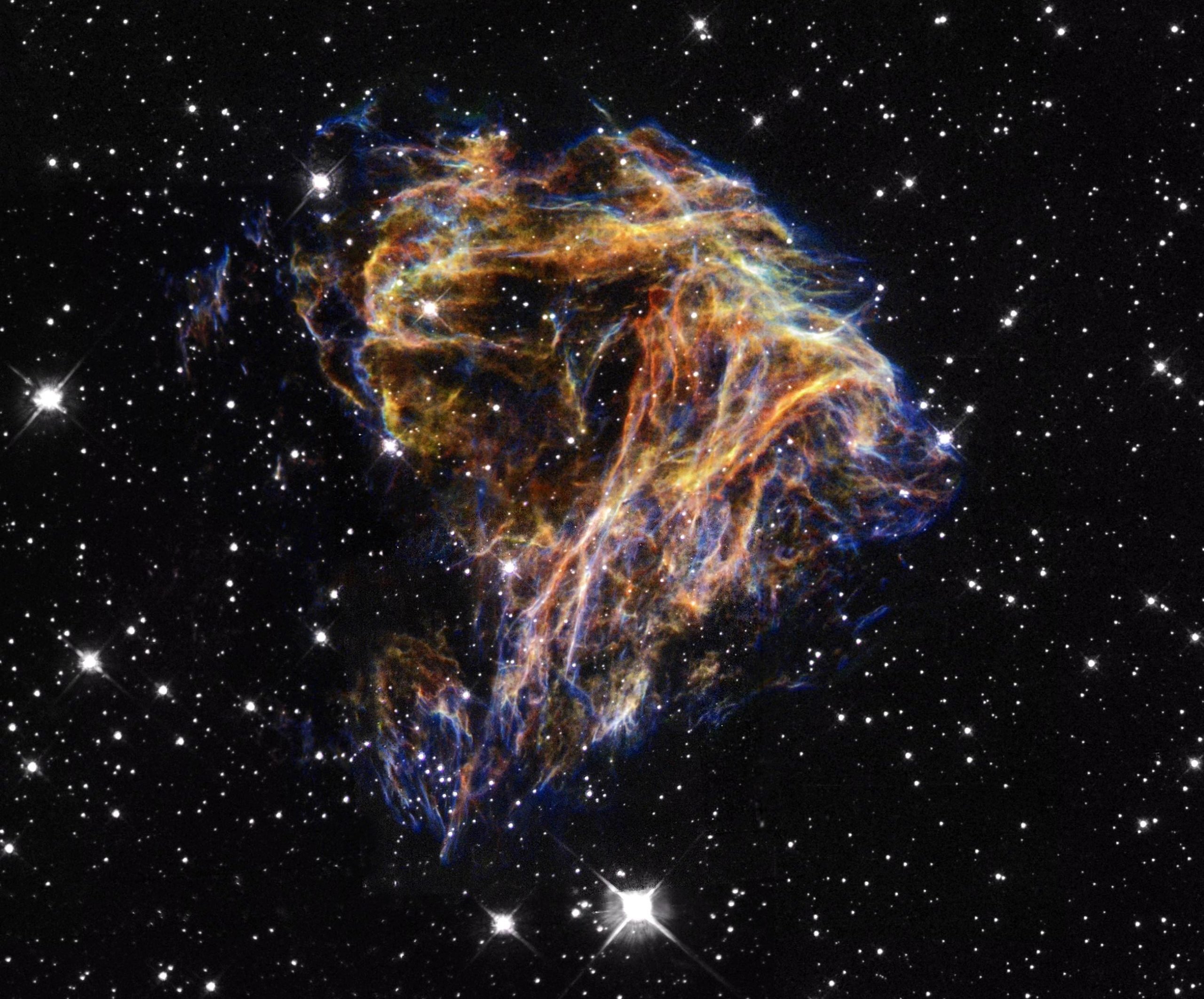
Scientists have proposed a new nucleosynthesis process, the νr-process, which may explain the origin of rare isotopes in the solar system.
A new nucleosynthesis process denoted the νr-process has been suggested by scientists. It operates when neutron-rich material is exposed to a high flux of neutrinos. The theoretical proposal, which was recently published in Physical Review Letters by researchers from GSI Helmholtzzentrum für Schwerionenforschung, Technische Universität Darmstadt, and the Max Planck Institute for Astrophysics, may be the solution to a long-standing issue related to the production of a group of rare isotopes present in the solar system but whose origin is still poorly understood, the so-called p-nuclei.
Nucleosynthesis in Stars
Fusion processes operating in massive stars produce nuclei up to iron and nickel. Beyond them, most of the stable heavy nuclei, such as lead and gold, are produced via slow or rapid neutron capture processes. For the production of the rest of them, which are neutron-deficient, scientists have suggested a variety of nucleosynthesis processes. However, it has remained a challenge to explain the large abundances of 92,94Mo, 96,98Ru, and 92Nb in the (early) solar system.
Mechanism of the νr-Process
The νr-process allows for the simultaneous production of all those nuclei because neutrinos catalyze a series of capture reactions. This is how the process works: The νr-process operates in neutron-rich outflows in astrophysical explosions that initially, when the temperatures are high, consist of neutrons and nuclei located around iron and nickel. As the temperature of the material decreases, heavier nuclei are produced from lighter nuclei by a sequence of neutron captures and weak interaction processes.
However, different from the rapid neutron capture process, in which the weak reactions are beta-decays, for the νr-process they are neutrino absorption reactions. Once the free neutrons are exhausted, further neutrino absorption reactions convert neutrons bound in nuclei into protons pushing the produced nuclei towards and even beyond the beta-stability line.
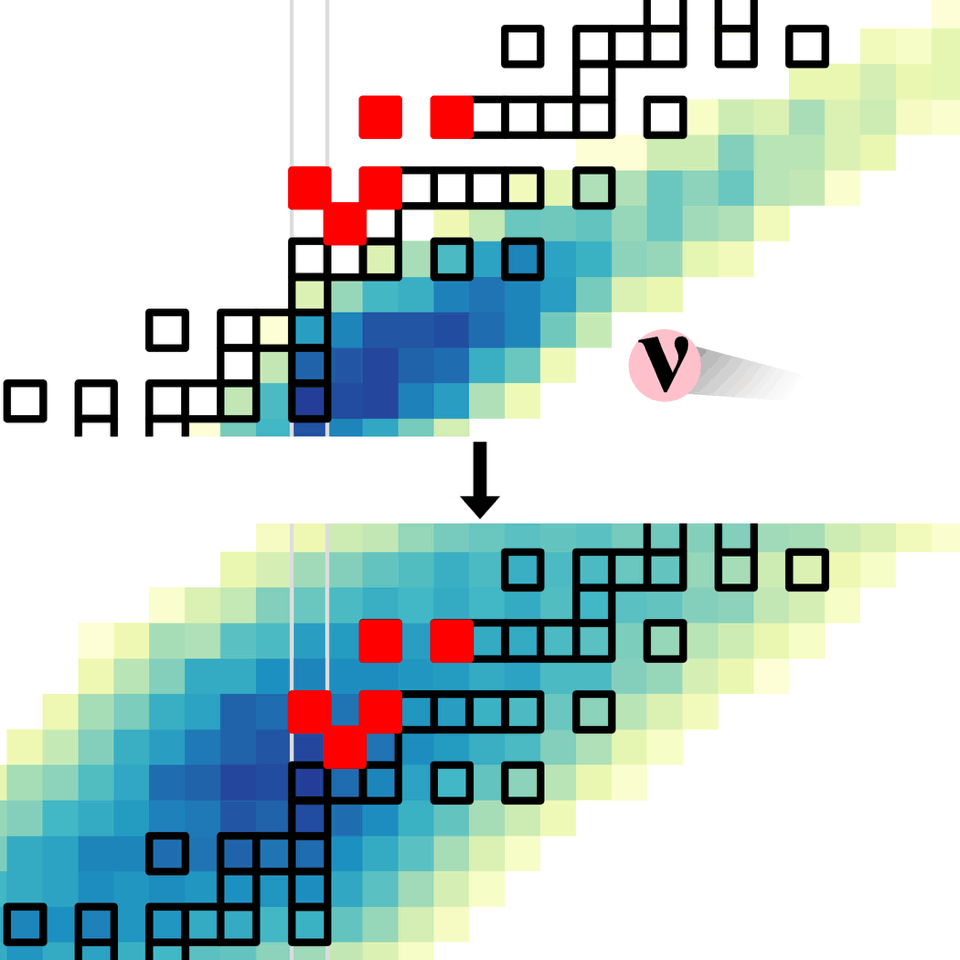
The energies of the neutrinos are large enough to excite nuclei to states that decay by the emission of neutrons, protons, and alpha particles. The emitted particles are captured by the heavy nuclei. This triggers a series of capture reactions catalyzed by neutrinos that determine the final abundances of elements produced by the νr-process. In this way, neutrinos can produce neutron-deficient nuclei which are otherwise inaccessible.
“Our finding opens a new possibility to explain the origin of p-nuclei via neutrino absorption reactions on nuclei,” says Zewei Xiong, scientist at GSI/FAIR Nuclear Astrophysics and Structure Department and the corresponding author of the publication.
Identifying the Stellar Environment
Having determined the series of reactions that drive the νr-process, the type of stellar explosion where it occurs remains to be identified. In their publication, the authors proposed that the νr-process operates in material that is ejected in an environment with strong magnetic fields, such as in magneto-rotational supernovae, collapsars, or magnetars. This suggestion has triggered astrophysicists to search for the suitable conditions, and indeed a first publication has already reported that magnetically driven ejecta reach the necessary conditions.
Future Research and Implications
The νr-process requires the knowledge of neutrino reactions and neutron-capture reactions on nuclei located at both sides of the beta-stability line. Measuring the relevant reactions will become possible with the unique storage ring capabilities at the GSI/FAIR facility.
Reference: “Production of 𝑝 Nuclei from 𝑟-Process Seeds: The 𝜈𝑟 Process” by Zewei Xiong, Gabriel Martínez-Pinedo, Oliver Just and Andre Sieverding, 9 May 2024, Physical Review Letters.
DOI: 10.1103/PhysRevLett.132.192701
Never miss a breakthrough: Join the SciTechDaily newsletter.
Follow us on Google and Google News.